
IBM AIX 4.3.3 through 7.1 now boot with graphical CDE in QEMU
Antoni Sawicki has released portable QEMU packages for IBM AIX 4.3.3 through 7.2, adding graphical CDE desktop support and CPU idle detection.
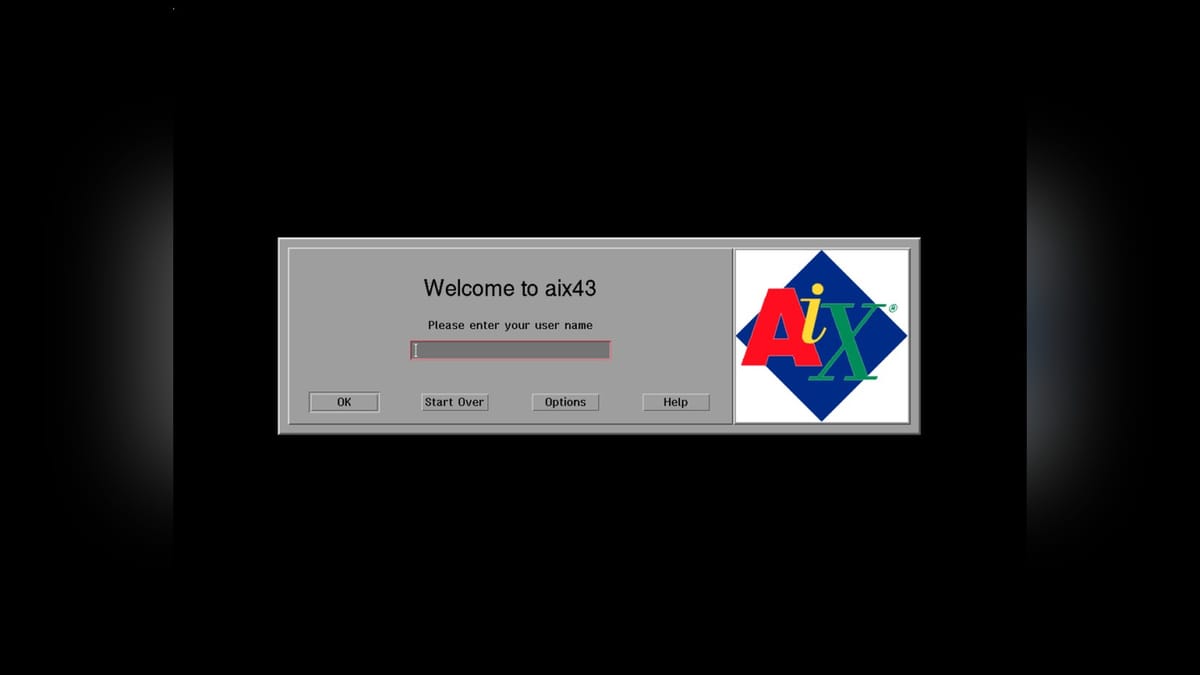
Unix researcher Antoni Sawicki, known online as Tenox, has released pre-packaged QEMU builds that boot IBM AIX versions 4.3.3, 5.1, 5.3, 6.1, and 7.1 directly into a graphical Common Desktop Environment (CDE) login screen. The Virtually Fun release also includes an image for AIX 7.2, though that version remains limited to a serial console.
This update expands local framebuffer support across the rest of the AIX product line, building on Sawicki's October releases that brought graphical consoles to AIX 4.1.5 in QEMU and AIX 3.2.5. Prior to these recent builds, booting AIX 4.3.3 in the emulator required using Artyom Tarasenko's QEMU 40p fork over a text-only serial connection. Those older attempts also lacked proper idle loop detection, which meant the emulated PowerPC chip pinned your host CPU core at 100% the entire time it ran.
Sawicki's new packages include full idle detection, so keeping an emulated IBM workstation sitting at a login prompt won't turn your modern desktop into a space heater. Each download bundles the pre-configured disk image alongside portable QEMU binaries for Windows, macOS, and Linux.
What AIX and QEMU are doing under the hood
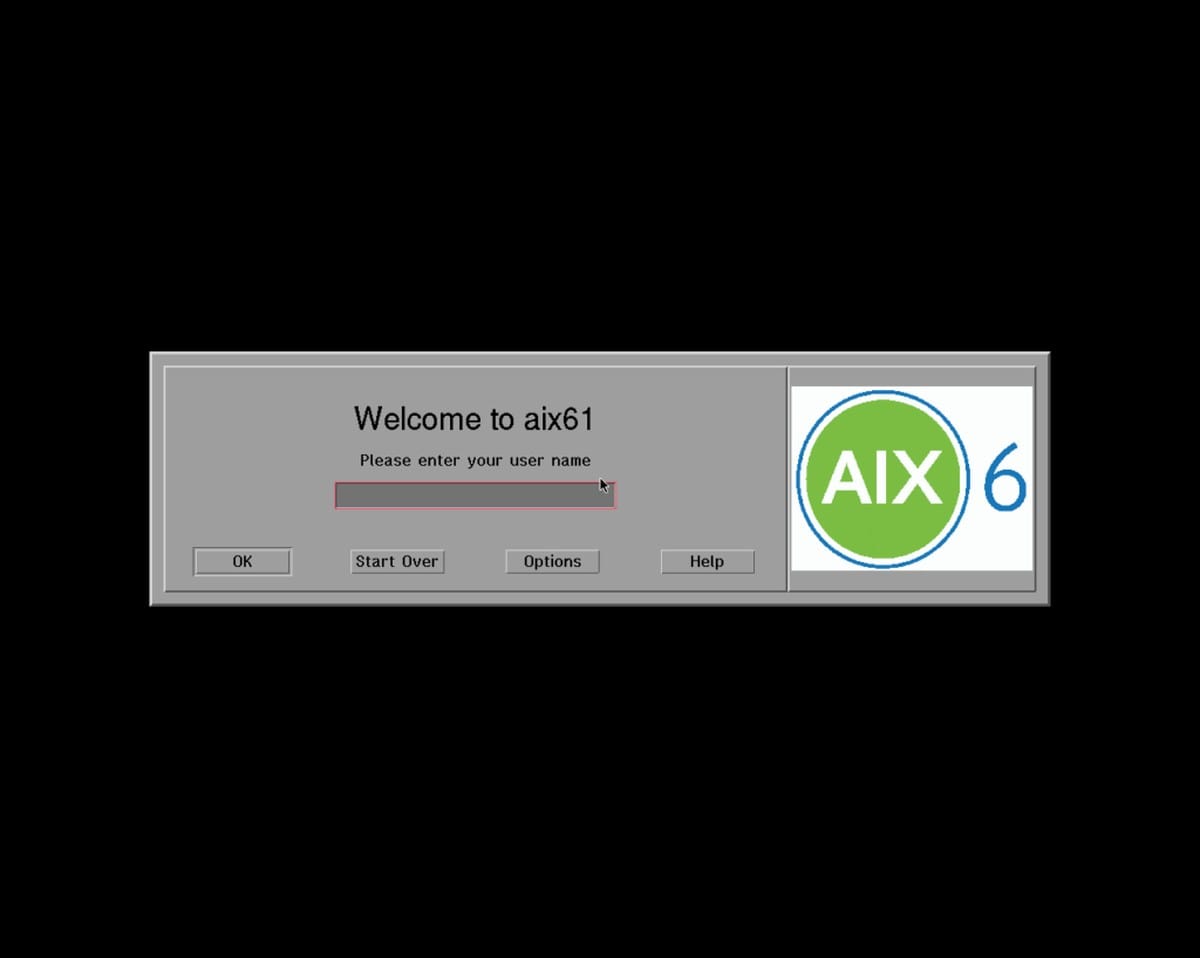
AIX (Advanced Interactive Executive) is IBM's proprietary enterprise Unix operating system. First introduced in 1986 for the IBM RT PC, it became the standard operating system for the company's RS/6000 workstations and later Power Systems servers. Throughout the 1990s and 2000s, graphical AIX installations relied on X11 and CDE, a motif-based desktop workspace with chunky bezels and muted color palettes that was once standard across commercial Unix vendors like Sun Microsystems and Hewlett-Packard.
Running that software without a physical IBM server relies on QEMU, the open-source machine emulator and virtualizer created by Fabrice Bellard in 2003. While QEMU is widely used for standard x86 virtualization or ARM translation, it also emulates legacy PowerPC hardware architectures. Historically, its support for IBM's proprietary machine types was partial and required manual patching to get past the boot loader, let alone initialize a display adapter for X11.
Two IBM architectures across six versions
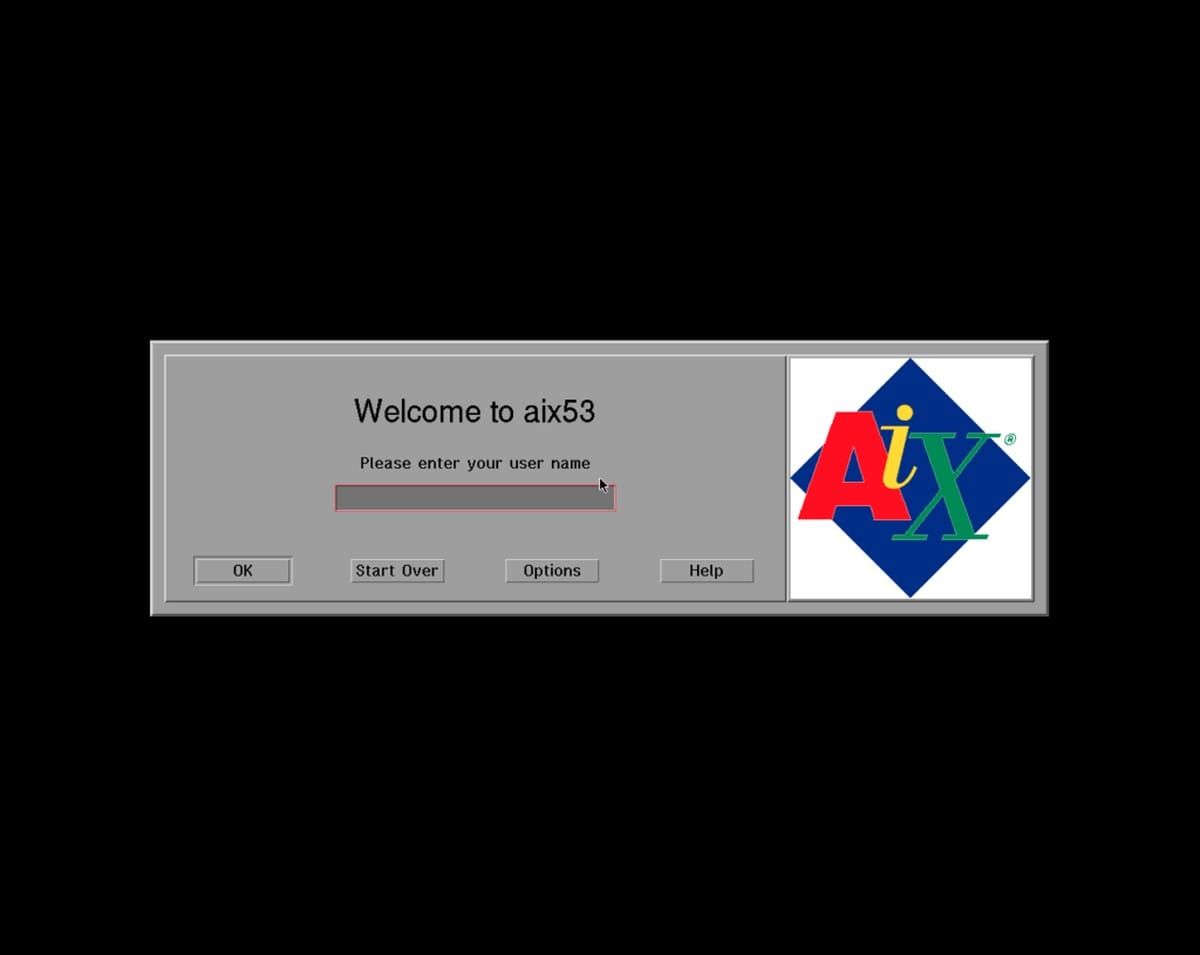
Because the newly supported operating systems span two decades of IBM hardware design, these packages split the emulation across two different virtual machine targets. The older releases, AIX 4.3.3 and 5.1, run on an emulated IBM RS/6000 7020-40P. Originally released in 1994, the 40P was an entry-level desktop workstation built on the PowerPC Reference Platform (PReP) architecture using PowerPC 601 and 604 processors.
The newer releases (AIX 5.3, 6.1, 7.1, and 7.2) target an emulated IBM pSeries server architecture instead. Setting up proprietary PowerPC Unix in an emulator usually involves hours of fighting virtual SCSI controllers and hunting down obscure framebuffer drivers, so having portable archives that unpack and boot straight into CDE is a massive relief. I'm curious whether AIX 7.2 will eventually get the same graphical framebuffer treatment, or if changes in how modern AIX handles display hardware make a virtual graphics card impractical for that release.

Comments ()