
Godot 4.6 Release Candidate 2 arrives, signaling imminent stable launch
The open-source engine team has issued a second release candidate to squash final bugs, paving the way for the official 4.6 stable release.
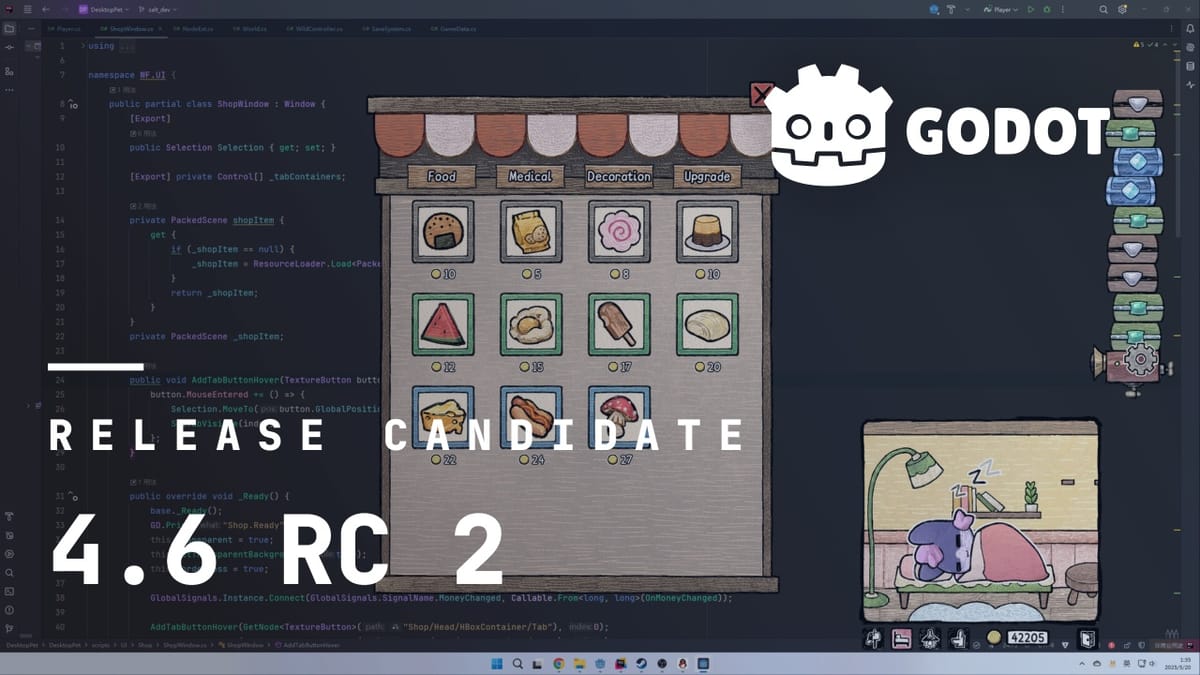
The Godot Engine team has officially released Release Candidate 2 for version 4.6, a critical snapshot intended to squash the final bugs before the stable build launches. According to the announcement posted on January 20, 2026, this update addresses a handful of critical regressions that were discovered following the release of the first candidate last Wednesday. Unless testers discover a catastrophic "show-stopping" error in this build, the stable version of Godot 4.6 is effectively next in line.
For the uninitiated, a Release Candidate (RC) represents the "pencils down" phase of software development. Feature freeze is long past. The developers are no longer adding shiny new toys to the engine. Instead, they are aggressively hunting for reasons not to ship the software. The team notes that this is the community's last opportunity to report critical regressions before the code is cemented into a stable release.
The Open Source Alternative
Godot has occupied a fascinating space in the development landscape since Juan Linietsky and Ariel Manzur open-sourced it in 2014. While giants like Unity and Unreal Engine dominate the AAA and mobile spaces with massive proprietary toolsets, Godot has quietly built a fortress around the concept of accessibility and freedom. It is free, it is open-source under the MIT license, and it is surprisingly lightweight.
This release continues the momentum of the Godot 4.x series, which marked a massive architectural overhaul from the 3.x days. The 4.0 branch introduced Vulkan support, significantly improved 3D rendering capabilities, and a revamped GDScript system. Version 4.6 aims to refine that foundation. The rapid iteration between RC 1 and RC 2 suggests the codebase is already quite stable, with the team focused on polishing the edges rather than rebuilding the core.
Testing Across the Spectrum
One of Godot's more ambitious quirks is its dedication to running the editor itself on almost anything with a screen. The announcement highlights the availability of the editor not just for Windows, macOS, and Linux, but also for the Web and Android. There is even an XR editor for those brave souls who want to build virtual reality worlds while wearing a headset. The team is actively encouraging users to test these specific builds, particularly the Android version.
The blog post also highlights Eggo, a creature-collecting life simulator that serves as the cover illustration for this release. The game involves raising a "scrungly companion" and hunting for treasure. It serves as a solid reminder that while we often get bogged down in technical specs and render pipelines, the ultimate point of an engine is to let people make weird, charming games about digital pets.
Upgrading Is Scary
The official announcement includes a call for financial support. Godot is not a publicly traded company. It is maintained by a mix of volunteers and a small team of paid contributors funded by donations. It is a fragile but resilient model that has somehow survived over a decade in an industry known for swallowing independent tools whole.
If you are currently developing in Godot, the advice is standard but necessary: backup your project, download the RC, and see if your code breaks. If it does, tell them now. If you wait until the stable release to complain, you have only yourself to blame.

Comments ()