
Commodore 64 Ultimate v1.2.1 fixes save data loss and cartridge bugs
Firmware v1.2.1 patches save data bugs, cartridge compatibility, and IEC drive commands on the FPGA-powered Commodore 64 Ultimate.
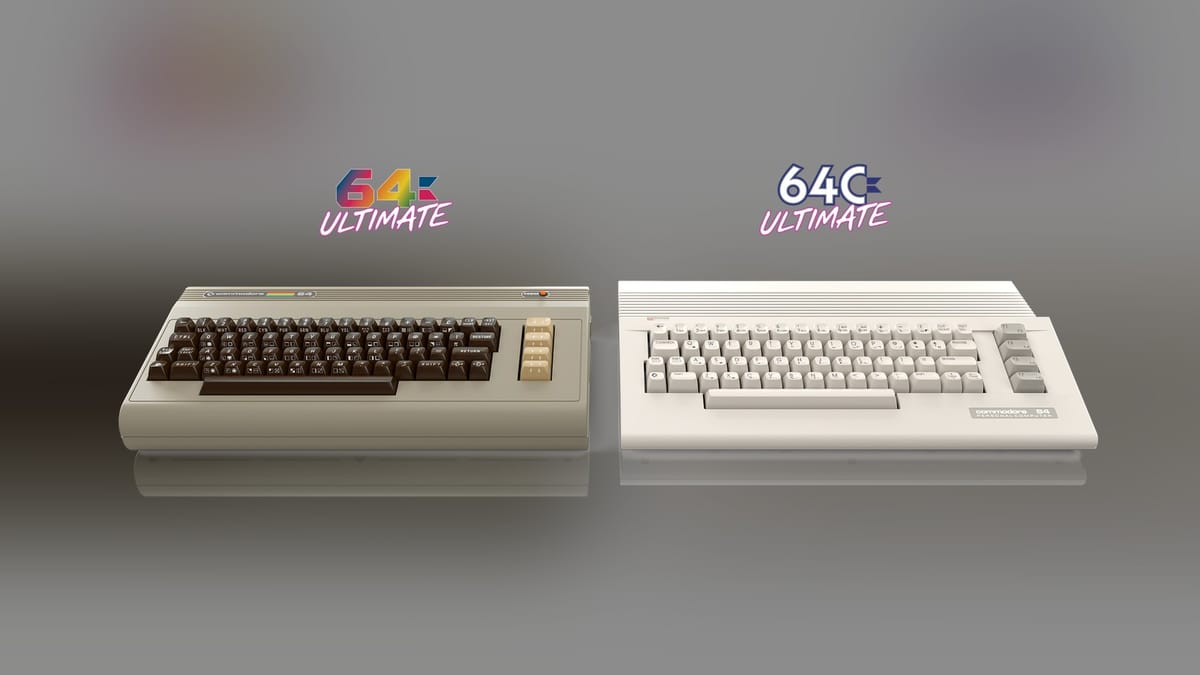
Official Commodore has released firmware v1.2.1 (Build 302) for the Commodore 64 Ultimate, a maintenance update that resolves disk image and cartridge save data loss, restores broken cartridge titles, expands software IEC drive compatibility, and adds network mouse control. Released on November 7, the patch is available now through the Commodore Download Center for Breadbin and Slimline models across the Basic Beige, Starlight, and Founders editions.
Commodore promoted the current firmware branch in its recent PEEK before you POKE overview video, which groups this November maintenance build together with the much larger v1.2.0 update (Build 268) from September 10. That split is worth keeping straight if you haven't flashed your machine in a couple of months, since v1.2.0 added the headline tools while v1.2.1 cleans up the rough edges underneath.
What v1.2.1 fixes in Build 302
Data integrity is the main reason to install v1.2.1 right away. In the previous release, writing to a mounted disk image from the C64 and then copying a file into that same image over FTP or the file browser could silently wipe out what the computer had written, and opening the System Information screen before saving a GMod2 cartridge discarded new EEPROM saves. Build 302 closes both holes, adds an sd2iec-style write lock for disk images, and prevents accidental wildcard file deletions on the built-in software IEC drive.
An updated FPGA image also comes bundled to bring back cartridges that failed to boot, including COMAL 80, the C64 Game System 4-in-1 cart, and 256K Ocean releases like RoboCop 2, Shadow of the Beast, and Space Gun. On the storage and input side, the software IEC drive now understands far more CMD hard drive and sd2iec commands (making it play nicely with C64 OS and native formatting), USB mice track at a 1:1 step ratio like a real Commodore 1351, and remote control tools can move a C64 mouse pointer and scroll wheel over the network.
The bigger tools arrived in September's v1.2.0
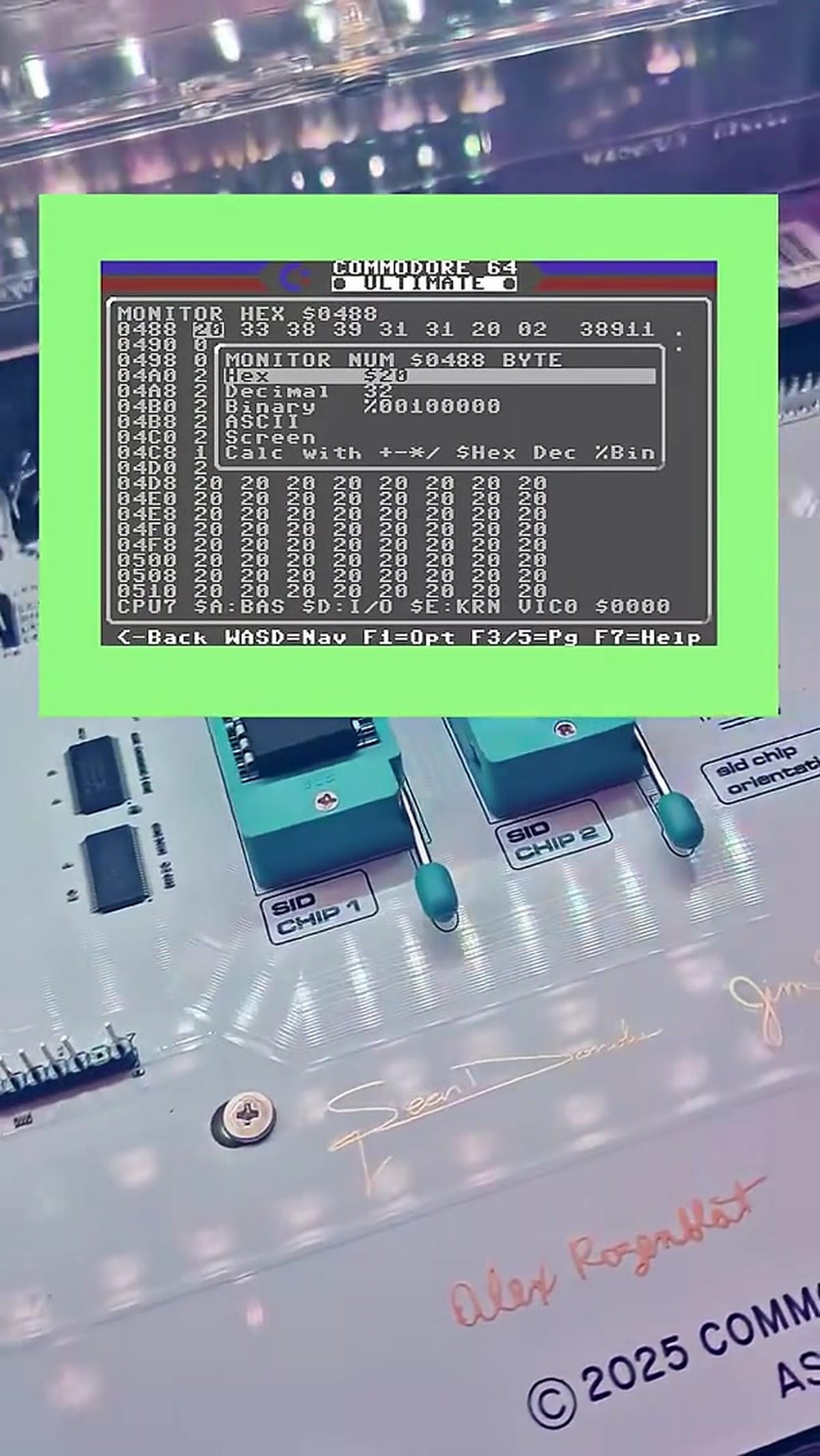
Most of the flashier additions shown in Commodore's video actually landed two months earlier in v1.2.0. That September release added a built-in FTP client inside the local file browser, automatic per-game .cfg profile loading, an on-screen Shift Lock glyph, dark mode for the web interface, and a gray Commodore 128-style color scheme as an alternative to the default blue menu. Having per-title configs fire automatically just by matching a filename is a welcome quality-of-life touch, though I'm curious how many owners will actually swap to a gray C128 menu on a machine famous for that bright blue border.
Developers and tinkerers also got a built-in machine code monitor in v1.2.0, letting you inspect memory, assemble small routines, or poke infinite lives into games without leaving the menu, alongside a hex viewer, an on-device REST API explorer, and programmatic control over the 154 RGB LEDs split across the 70-LED keyboard and translucent case on illuminated editions like the Starlight and Founders models. That earlier update is also what introduced 4MB cartridge image support, more accurate 1541 and 1571 drive head positioning for copy-protected disks, stuck-key and joystick-swapper fixes, automatic Wi-Fi reconnects, and network service changes that apply without a full reboot.
An FPGA board under original 1986 plastic
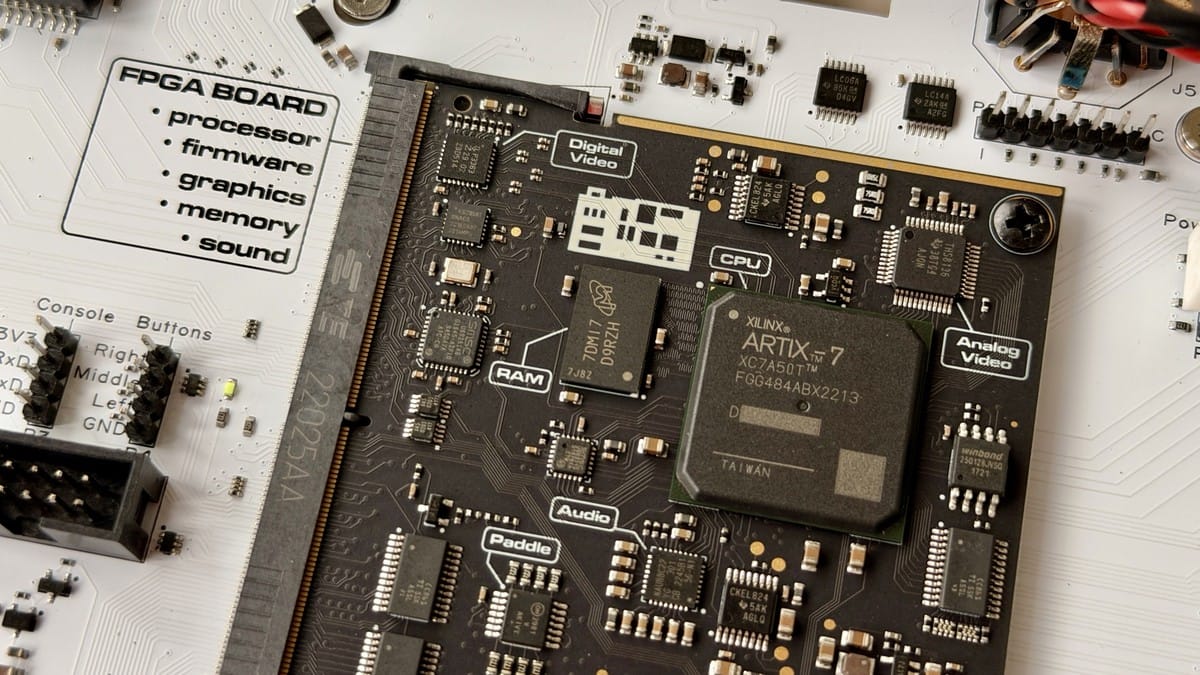
Starting at $299.99, the Commodore 64 Ultimate launched in late 2025 following Christian "Peri Fractic" Simpson's revival of the Commodore brand. Rather than leaning on a software emulator like Retro Games Ltd.'s budget THEC64 line, it builds on hardware engineer Gideon Zweijtzer's long-running Ultimate 64 Elite-II motherboard, using an AMD Xilinx Artix-7 FPGA to recreate the original C64 chipset at the gate level alongside 128MB of DDR2 RAM and a 64x turbo mode.
It's an unusually thorough piece of hardware engineering for a licensed revival. The board includes two physical sockets for original 6581 or 8580 SID chips with automatic voltage detection (plus eight FPGA-emulated SIDs), 1080p HDMI and analog DIN video out, Gateron mechanical switches on a transparent keyboard PCB, and original cartridge, datasette, and IEC disk ports, while the Slimline C64C variant is injection-molded from original 1986 Commodore tooling.
Comments ()