
Virtual Jaguar v3.9.0 adds a standalone desktop app alongside Libretro
The open-source Atari Jaguar and Jaguar CD emulator has reached version 3.9.0, adding a dedicated SDL3 desktop frontend for Windows, macOS, and Linux.
The open-source Virtual Jaguar libretro project has released version 3.9.0, introducing a standalone desktop application for Windows, macOS, and Linux alongside its existing RetroArch emulation core. This update follows the project's broader expansion in August 2026, when maintainer Joseph Mattiello and contributors like Adrien Beudin rolled out version 3.0 with overhauled Jaguar CD and networking support. It's a busy day for emulation news, and Atari's strangest console is getting a sizable upgrade of its own.
Virtual Jaguar has been around in one form or another since 2003. David Raingeard started it under the Potato Emulation banner before Niels Wagenaar, Carwin Jones, and James Hammons (known as Shamus) took over maintenance and built out the older Qt interface. Mattiello now leads the modern libretro fork, which has spent the past several months tackling the lingering accuracy problems that kept parts of the library broken for decades.
Skipping RetroArch with an SDL3 frontend
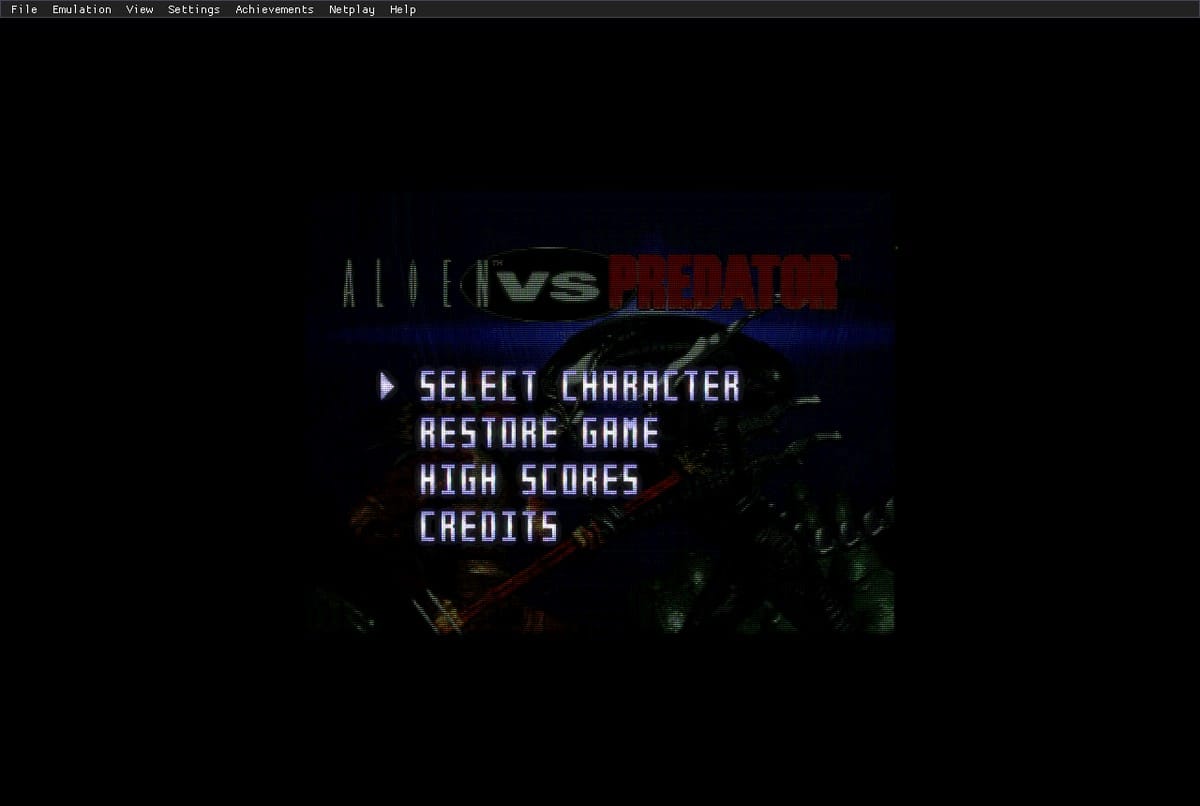
Until v3.9.0, running this fork meant booting into RetroArch or another compatible frontend. The new standalone desktop client runs the exact same emulation core through the standard libretro API, so save states and configuration options carry over directly between the two versions, and it uses SDL3 for windowing, audio, and input alongside a Dear ImGui interface and OpenGL 3.3 presentation.
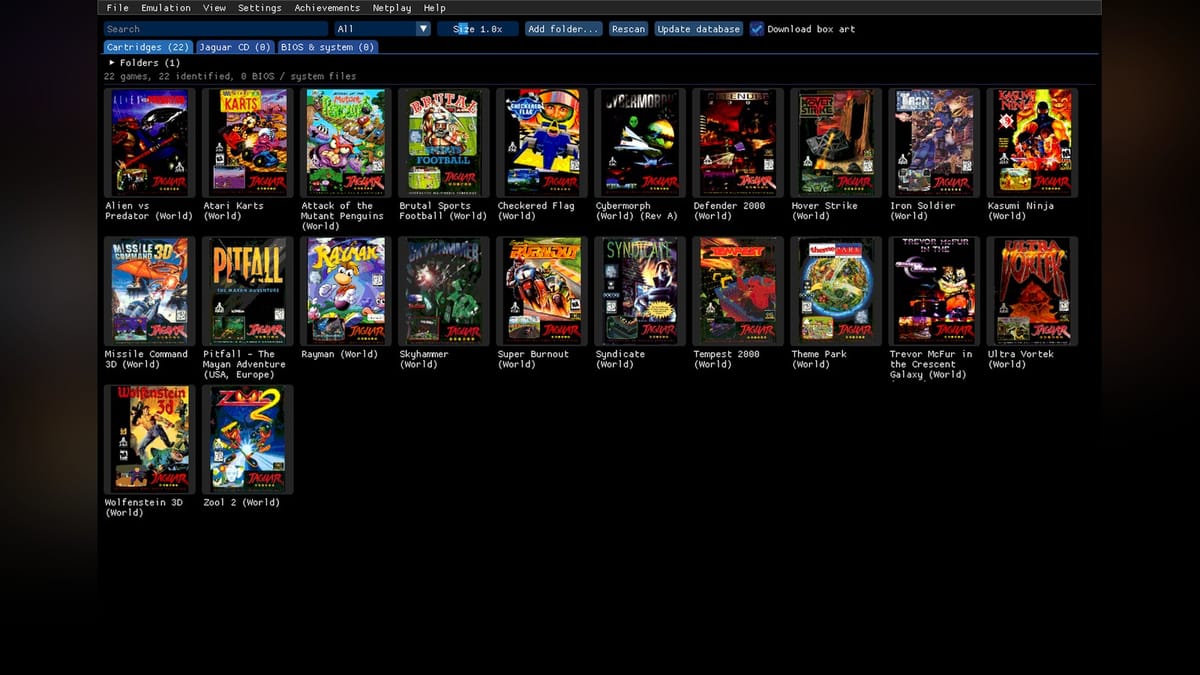
Inside the app, games are sorted into a visual grid across Cartridges, Jaguar CD, and BIOS tabs, with files matched by CRC32 against No-Intro and Redump databases to pull box art automatically. It also hooks into librashader to run RetroArch's .slangp CRT and scanline shader presets without needing the full RetroArch suite installed. (Intel Mac users might be out of luck on shaders for the moment, since the universal macOS package currently bundles an arm64-only copy of librashader.) You also get RetroAchievements support in both softcore and hardcore modes, a bundled cheat database, and local network discovery for link-cable titles like Doom, BattleSphere, AirCars, and Ultra Vortek over the emulated Voice Modem.
If you'd rather stick with the traditional core, the release matrix covers nearly everything with a screen. Official builds target Windows (x64, x86, ARM64), macOS, Linux, Android, iOS, tvOS, WebAssembly, PlayStation Vita, Nintendo Switch, and dedicated CPU-tuned builds for every model of Raspberry Pi from the Pi 1 through the Pi 5.
Two custom chips and a Motorola 68000
When Atari launched the Jaguar in November 1993 for $249.99 under the "Do the Math" slogan, the company pitched it as the world's first 64-bit console. In reality, developers had to wrestle with a multi-chip architecture pairing custom "Tom" (GPU and object processor) and "Jerry" (DSP) silicon with a standard 16/32-bit Motorola 68000 processor that handled too much of the traffic. Hardware silicon bugs and barebones documentation frustrated third-party studios, and Atari pulled the plug on its hardware business in 1996.
Those same architectural quirks made the system notoriously obnoxious to emulate accurately. Virtual Jaguar v3.9.0 emulates the 68000, GPU, DSP, Object Processor, Memory Track save cartridge, Jaguar GameDrive bank switching for modern homebrew, and the notoriously picky BUTCH controller chip inside the Jaguar CD attachment. Because the boot ROMs and CD BIOSes are embedded directly into the software, you don't need to hunt down external BIOS files just to get Jeff Minter's Virtual Light Machine audio visualizer or a cartridge like Tempest 2000 running.
Core options include 2x internal resolution scaling, widescreen hacks, true-color Gouraud shading, and texture dumping for HD packs. An SIMD-accelerated blitter (using SSE2 and NEON) and idle-loop fast-forwarding help keep speeds stable on lower-end hardware.
The project's documentation is remarkably upfront about where compatibility actually stands. Nearly every cartridge and disc image in the test corpus reaches game code now, which is a massive step forward from where open-source Jaguar emulation sat a few years ago, though the developers note that "reaching game code" isn't the same thing as being playable from start to finish. Some titles still freeze or run at the wrong speed, and I'm curious to see how quickly upcoming bug-tracking milestones clean up the remaining edge cases in the CD library.
Comments ()