
Universal's 1981 arcade game Lady Bug is coming to modern consoles tomorrow
Hamster Corporation is reviving the classic maze-chase game with its unique revolving doors, launching on PlayStation, Xbox, and Switch.
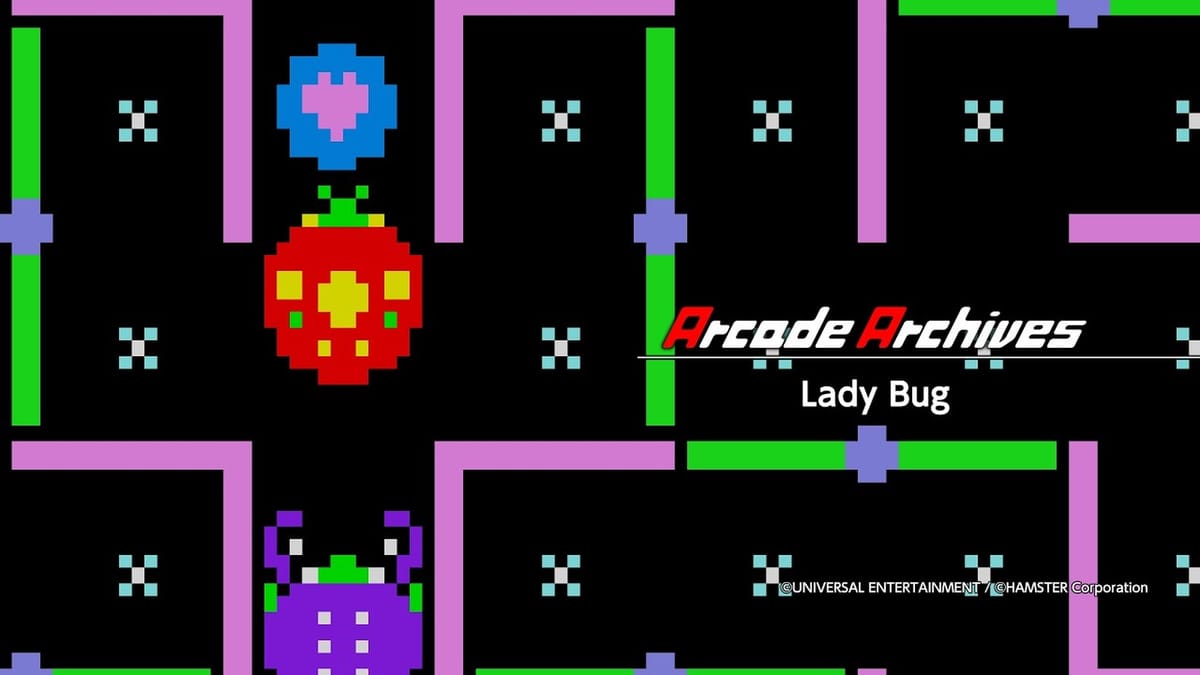
Hamster Corporation is bringing Universal's 1981 maze-chase game Lady Bug to modern consoles tomorrow, July 2. The release joins the long-running Arcade Archives series and will be available across PlayStation, Xbox, and Nintendo Switch platforms.
The launch is split into two different tiers. PlayStation 4 and Nintendo Switch receive the standard Arcade Archives version for $7.99. Meanwhile, PlayStation 5, Xbox Series, and Nintendo Switch 2 are getting an upgraded Arcade Archives 2 edition for $9.99. Anyone who purchases the standard version can upgrade to the newer release later for $2.99.
Revolving doors and deadly skulls
Lady Bug hit arcades right in the middle of the post-Pac-Man gold rush. Universal (the same company behind Mr. Do! and Space Panic) introduced several mechanical twists that force players to think on their feet. Many players actually remember the game best from its popular ColecoVision home port. This new release brings the original arcade ROM back into circulation.
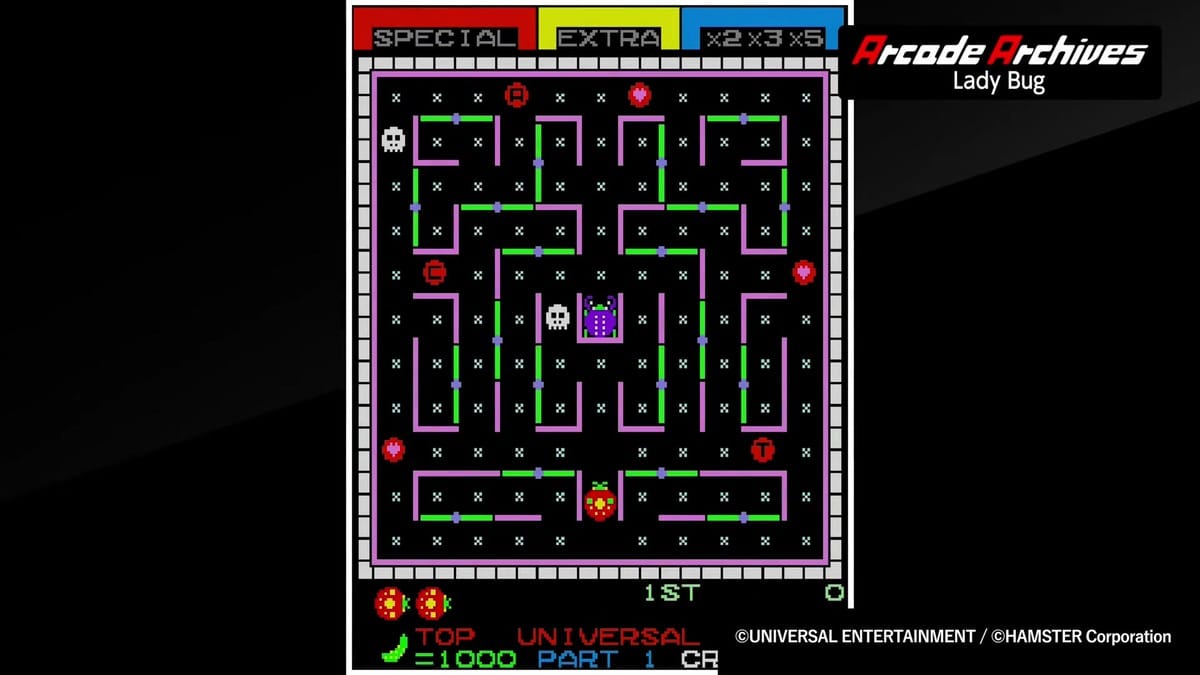
The primary difference is the maze itself. The board is filled with green revolving doors. When your ladybug pushes through one, the door swings on a pivot and alters the layout of the walls. You can use these swinging gates to block the four enemy bugs chasing you. You can also accidentally trap yourself in a dead end with a stationary skull hazard. That is a fantastic way to ruin a high score run.
There are no power pellets here to let you eat the enemies. Your only defense is environmental manipulation and speed. A timer constantly ticks down around the edge of the screen. Every time the timer completes a full cycle, another enemy bug is released from the center box. The pressure ramps up quickly as the maze fills with active threats.
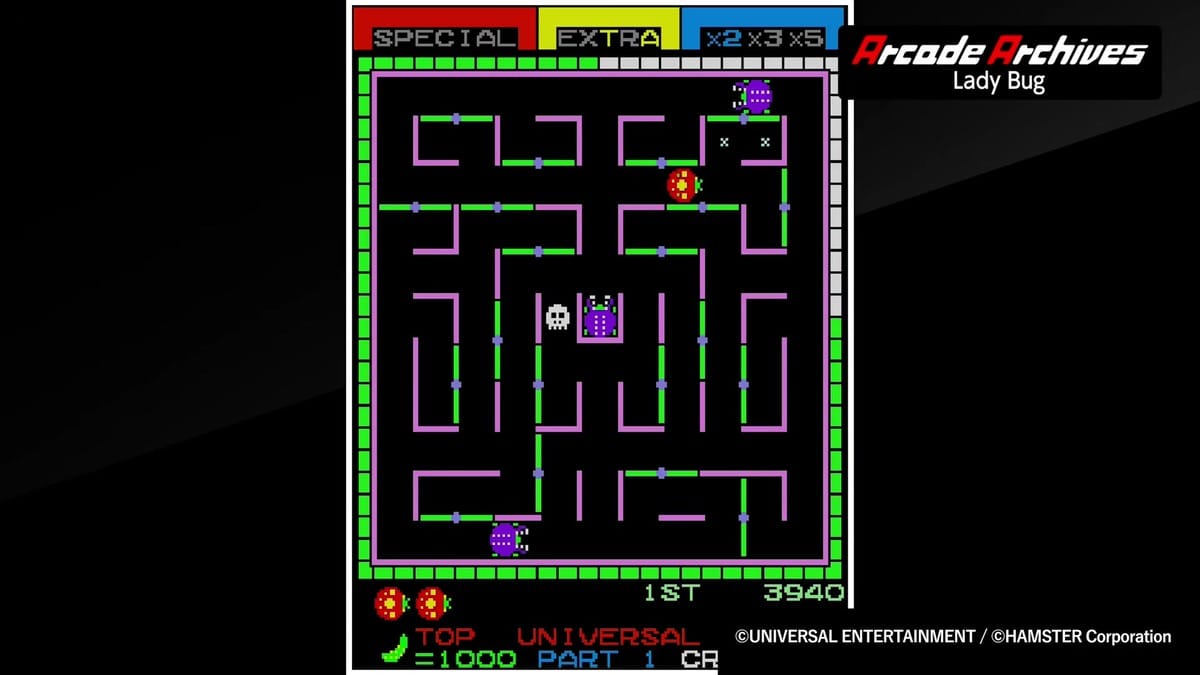
Those stationary skulls add an extra layer of strategy. They are deadly to the player, but they are also lethal to the enemy bugs. You can intentionally lure a pursuer into a skull to eliminate them from the board. The catch is that the skull disappears afterward. You only get a few chances to clear the screen before you are entirely reliant on the doors.
Progression relies on a mix of vegetables and letters scattered around the map. You collect eggplants, carrots, and other produce to clear stages. At the same time, you can pick up color-changing letters. The letters cycle through red, yellow, and blue. Collecting them when they are red spells out the word SPECIAL for a free game. Grabbing them when they are yellow spells EXTRA to earn a bonus life. Blue hearts grant a score multiplier.
The modern arcade treatment
Hamster has packed the standard release with its usual suite of emulation options. Players get online leaderboards, save states, and button remapping. The package also includes display filters designed to mimic the glow and scanlines of old CRT monitors. You can even adjust the internal arcade dip switches to change the difficulty.
The Arcade Archives 2 version adds a few extra technical perks. It introduces a Time Attack mode that ignores your score entirely in favor of speedrunning. The sequel tier also supports Variable Refresh Rate displays. This allows modern televisions to match the original arcade hardware timing more accurately. That prevents stutter and screen tearing on displays that support the feature.
Universal's insect-themed maze often gets overshadowed by the more famous arcade games of the early 1980s. The dynamic maps demand a completely different strategy than memorizing static Pac-Man routes. You have to constantly rebuild the maze around you while keeping an eye on the color-cycling letters. That constant mental juggling makes it a surprisingly tense game to revisit 45 years later.


Comments ()