
Two Black Cats gets its 16-bit engine running on SNES at 60 FPS
After launching MD Engine on Steam last month, Two Black Cats has ported its no-code 16-bit development tool and test game Prisonela MD to the Super Nintendo.
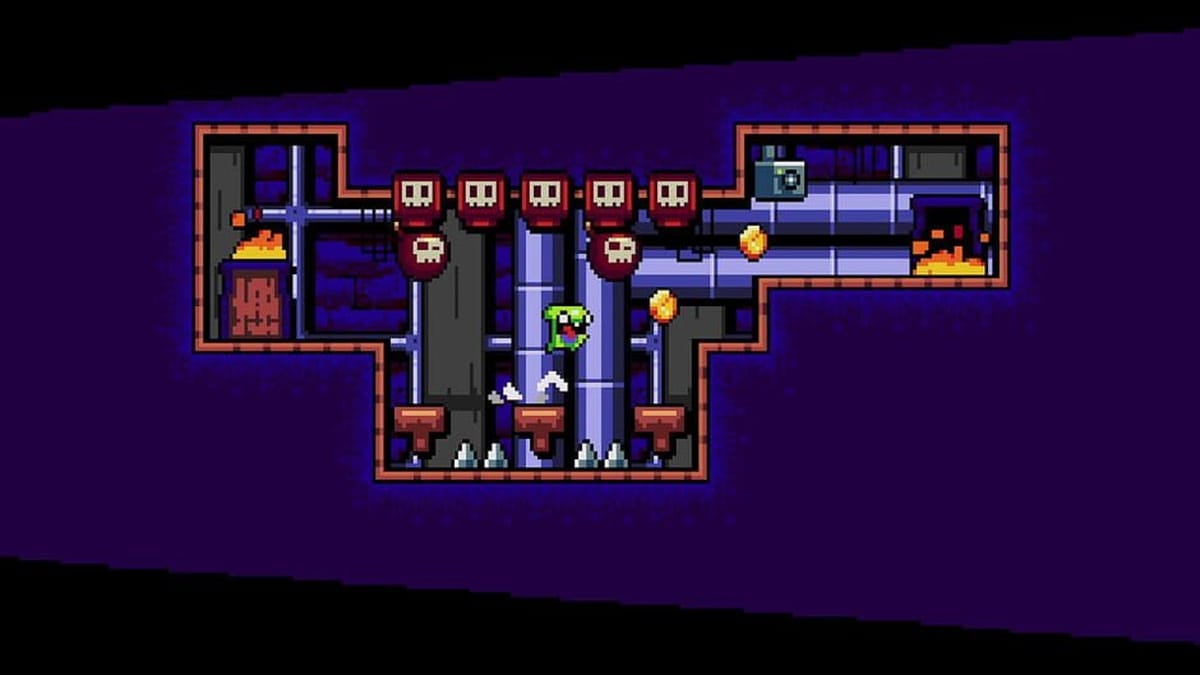
Indie studio Two Black Cats has ported its custom 16-bit game engine to the Super Nintendo Entertainment System, getting its test title Prisonela MD running on the hardware at a locked 60 frames per second. The milestone moves the studio's development toolkit beyond Sega's hardware and into cross-platform 16-bit territory, tagged by the developer under both the #mdengine and #s16engine labels.
Founded in 2024, Two Black Cats built its name in the homebrew scene with MD Engine, a visual, drag-and-drop game creator that lets users compile authentic Sega Genesis and Mega Drive ROMs without writing C or Motorola 68000 Assembly. That tool launched commercially on Steam on September 7, 2026, following projects like Square Brothers and Inkventure. Before the engine even hit Steam, the studio proved what the software could do by releasing Prisonela MD on May 30, 2025, with physical cartridges distributed by The Retro Room Games.
80 rooms and zero assembly code
Prisonela MD is an adaptation of Denis Rogov and Ratalaika Games' minimalist twitch platformer, built around more than 80 tiny, trap-filled challenge rooms. Whenever you die, the game shuffles the order of the stages, forcing you to rely on actual reflexes rather than muscle memory. Because the gameplay depends entirely on tight, immediate movement, frame drops would ruin it. Having that same project serve as the testbed for the SNES branch makes sense, even if keeping the "MD" suffix on a Nintendo console is a funny bit of naming friction.
Getting a game designed for Sega's 16-bit machine to run at full speed on Nintendo's 1990 counterpart is no small engineering problem. The Sega Genesis runs on a Motorola 68000 CPU clocked at 7.6 MHz, a processor famous in the early '90s for handling fast action titles without breaking much of a sweat. Nintendo's console, on the other hand, relies on the Ricoh 5A22 (based on the 65c816 architecture) running at a slower 3.58 MHz clock speed. The SNES had a deeper color palette and hardware scaling tricks like Mode 7, yet early cross-platform ports frequently suffered from heavy slowdown when developers tried to brute-force Genesis logic onto Nintendo's chip.
Crossing the 16-bit divide
For a drag-and-drop engine to spit out a 60 FPS Super Nintendo ROM without hand-tuned assembly optimization from the end user, the underlying compiler and runtime have to do some heavy lifting. What I'm most curious to see is how the engine handles the rest of the hardware translation, especially audio, since converting FM synthesis tracks from the Genesis YM2612 chip into samples that fit inside the tiny 64KB RAM limit of Sony's SPC700 sound chip is usually where cross-platform homebrew hits a wall.
No-code retro tools have exploded over the last few years. GB Studio opened the floodgates for original Game Boy cartridges, and NES Maker did something similar for 8-bit Nintendo boards, while the Super Nintendo has remained notoriously stubborn for beginners. Even seasoned C programmers often bounce off the SNES hardware quirks and return to the Genesis, which is blessed with the mature, well-documented SGDK library.
Two Black Cats hasn't announced a release window or pricing structure for the SNES update yet, nor have they clarified whether it will arrive as an expansion to the existing Steam release of MD Engine or as a standalone S16 Engine package. Still, if a solo artist can build a single project in a visual editor and export working ROMs for both sides of the 1991 console war, the SNES homebrew library is about to get a lot less quiet.

Comments ()