
MD Engine 1.0.9 adds new templates and ups the projectile limit
Two Black Cats has updated its no-code Sega Genesis development tool with new preview modes, bug fixes, and expanded particle limits.
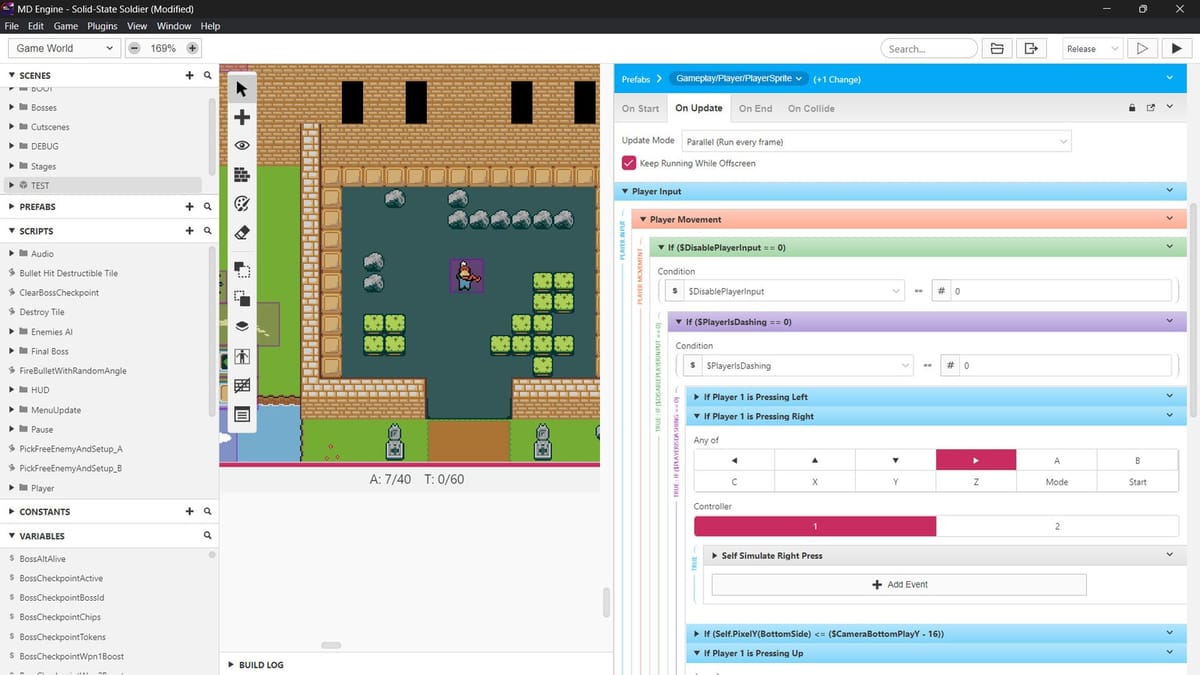
Two Black Cats released version 1.0.9 of MD Engine today, expanding the projectile limits and adding new preview modes to the Sega Genesis development suite. According to the version 1.0.9 patch notes, the update is available now for Windows, macOS, and Linux.
The software is a visual, drag-and-drop game engine designed to build authentic 16-bit Sega Genesis and Mega Drive games without requiring any C or Motorola 68000 Assembly knowledge. It exports functional ROM binaries that work on original Sega hardware, EverDrive flash cartridges, and emulators.
Sixteen projectiles instead of five
The most notable technical bump in version 1.0.9 is the expanded particle limit. The engine previously capped projectiles and particles at five concurrent channels. That limit is now 16. Two Black Cats included an extra scene in the projectiles sample project to demonstrate the new capacity.
The preview window also received some attention. Developers can now swap the preview into fullscreen and toggle a dedicated 4:3 aspect ratio mode. During debug previews, users can now enable an option to show tile collision boxes.
Mini Painter upgrades
MD Engine includes a built-in Mini Painter tool, which received several quality-of-life updates. It now has an animation preview, horizontal and vertical image flipping, and support for non-contiguous bucket fills.
The patch resolves several bugs tied to the engine's editors. Undo logic between the Mini Painter and Sprite Editor is fixed. The Sprite Editor also no longer allows users to input negative sizes for width and height collision boxes. Tile palette and priority paint issues are resolved for instances where several scenes share the same background.
Audio handling got a small tweak. The VGM converter no longer fails when songs include unknown 0xFE Furnace blocks. The audio build process now includes an early sample start option to reduce sample delay as much as possible.
Starting from scratch is overrated
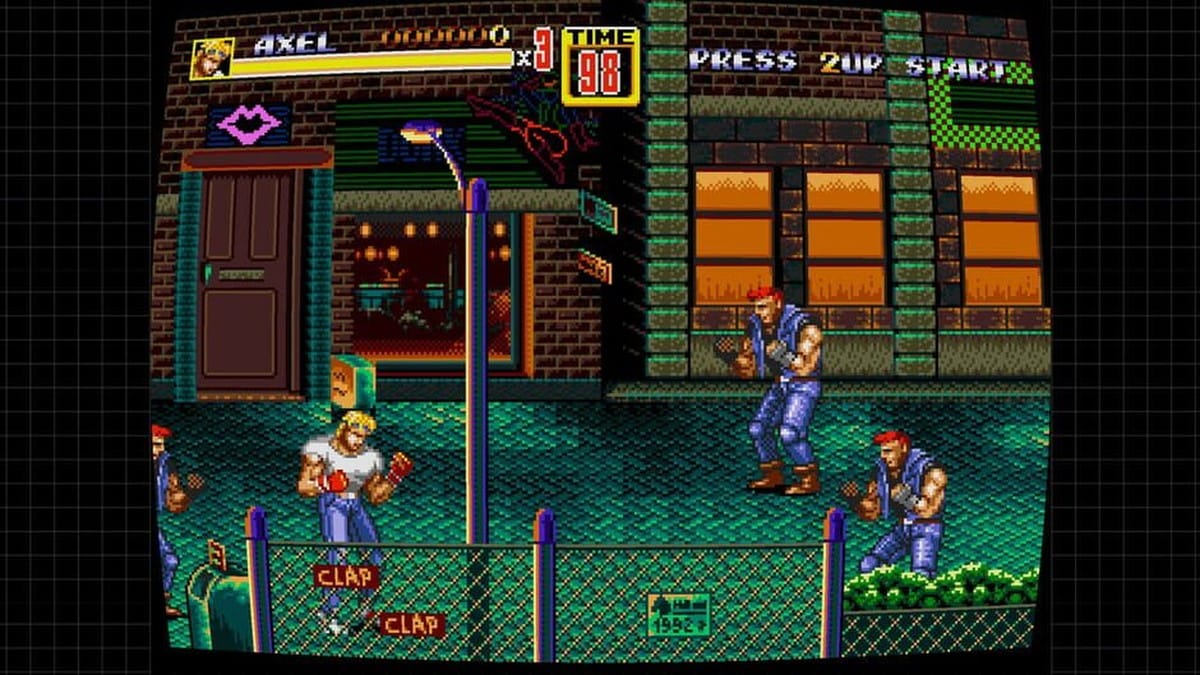
The update adds several new sample projects to help developers figure out the logic for specific genres. The new templates include a co-op example, an endless runner, a point-and-click interface, a top-down shooter, and a wall-kick mechanic.
Event scripting received some adjustments. The scroll plane event now uses the current scroll value instead of zero, which enables manual scrolling. A new tile index event allows developers to grab the specific VRAM tile used by a map position. The engine also now throws a hard failure if a specific event loses its asset reference, instead of generating broken C code.
Project management saw a few edge-case fixes. The engine now properly handles project creation when the name contains only spaces, and it caps project names at 128 characters to prevent long-name errors. Externally made TMX files also parse correctly now, and the engine warns users if a TMX map has an empty layer select for its attached plane.
Two Black Cats also added a VBlank implementation during long scene scrolls. This prevents DMA overload and the visual glitches that usually follow it on real hardware.
MD Engine costs $19.99. It occupies the same space for the Sega Genesis that GB Studio does for the Game Boy, providing an accessible entry point for the modern homebrew scene.


Comments ()