
Blast Grid brings Bomberman-style chaos to AGA Amigas
Marcin Spoczynski has released Blast Grid for the Amiga 1200, a free 256-color Bomberman-inspired game with 30 stages and four-player battle mode.
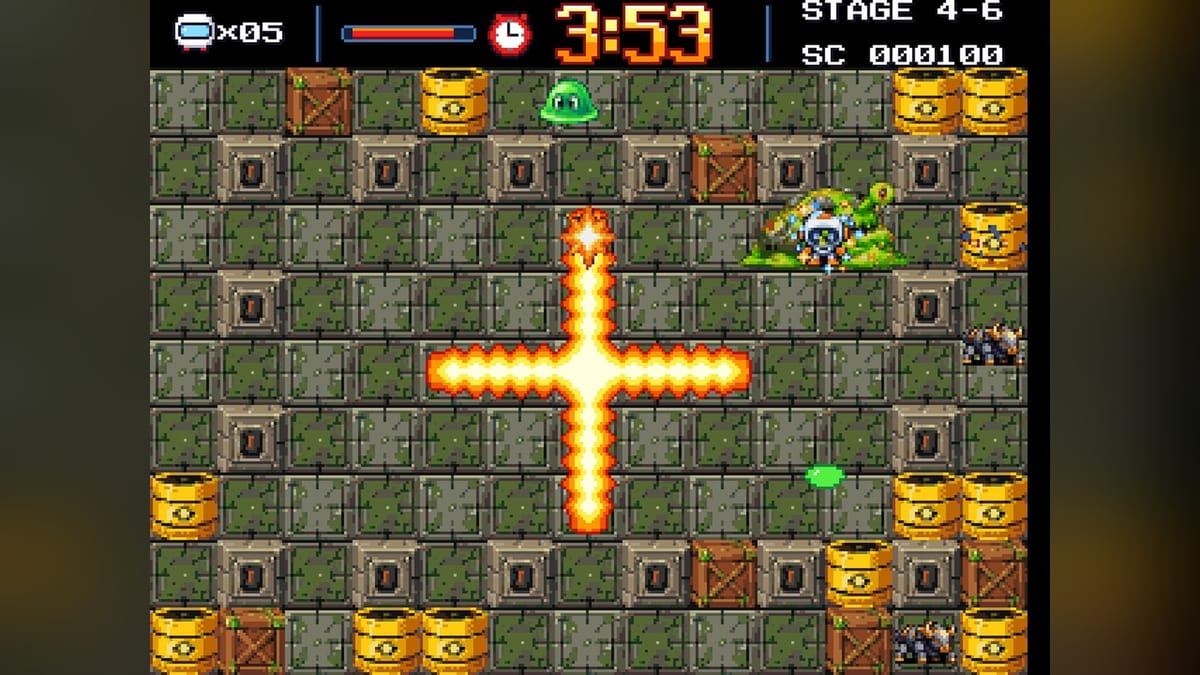
Homebrew developer Marcin Spoczynski, publishing under the handle sandlbn, released Blast Grid for the Amiga 1200 and other AGA Amiga computers on November 15. The free, name-your-own-price action game takes its cues directly from Hudson Soft's Bomberman series, pairing a 30-stage solo campaign with local four-player arena battles in native 256-color AGA graphics.
Single-player puts you in charge of B.O.B. (the Bomb Operations Bot) across five industrial worlds: Factory, Reactor, Data Lab, Waste Processing, and Deep Core. Each world breaks down into six stages populated by its own enemies, power-ups, and hidden secrets before wrapping up with a boss fight built around custom attack patterns. Progress and user options save directly to disk.
Official Amiga 1200 gameplay footage from Marcin Spoczynski.
Battle mode handles two to four players across five arenas with Sudden Death rules, letting you mix human opponents with CPU bots set across three difficulty tiers. It works with standard one-button and two-button joysticks, CD32 pads, the keyboard, and classic four-player parallel-port adapters. I'm curious how briskly those four-player matches run once the screen fills with chain-reaction blasts, since the whole project started out of frustration with existing Amiga options.
A detour through 6502 hardware
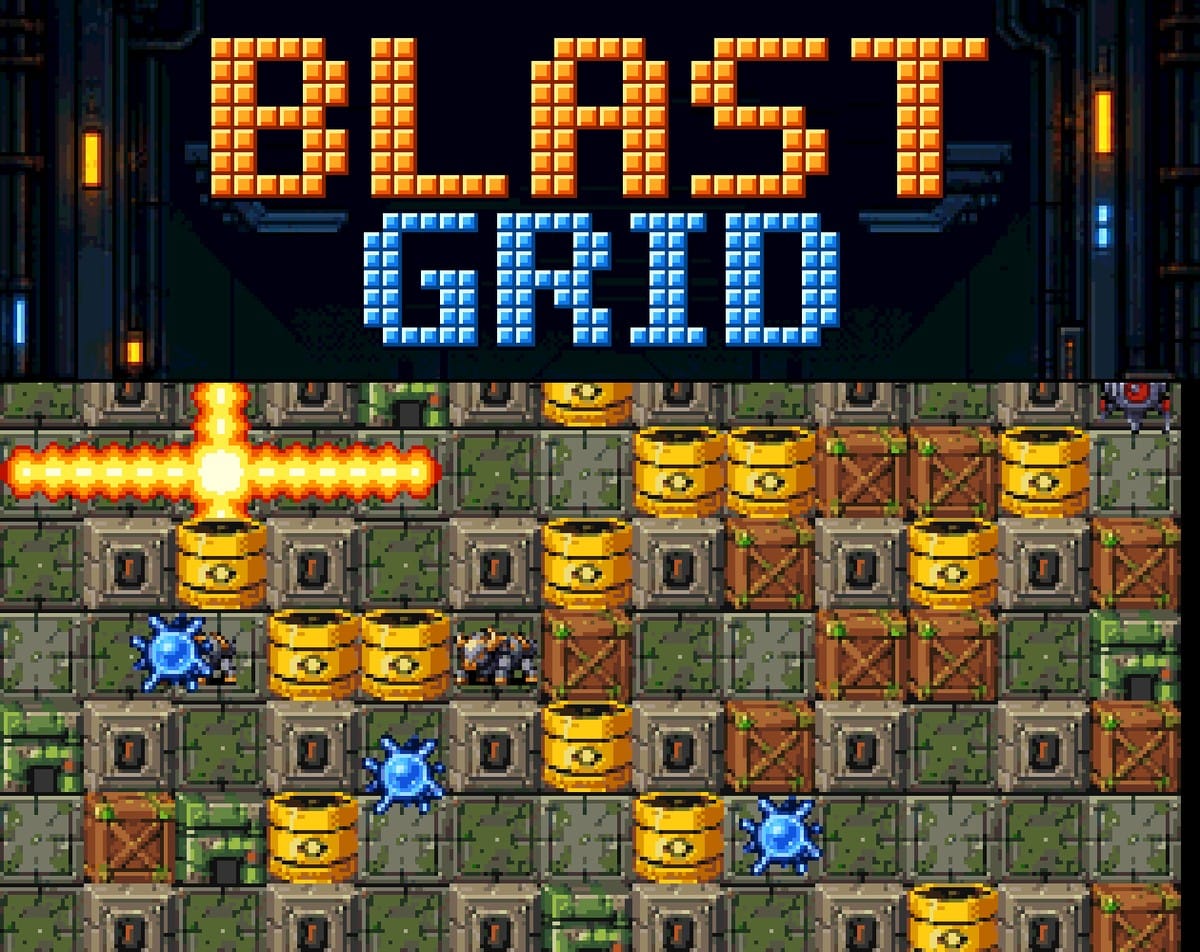
For decades, couch-multiplayer bombing on Commodore's 16-bit and 32-bit machines meant booting up Ubi Soft's 1991 European release of Dynablaster. Spoczynski (also known in the Commodore scene for his Ultimate64 utility u64ctl) began building Blast Grid roughly two years ago because Dynablaster felt sluggish next to contemporary Super Nintendo and PC Engine Bomberman entries. Rather than cloning Hudson Soft's code or leaning on generative AI tools, which aren't used anywhere in the art, Paula audio, or programming, he drew original pixel graphics and wrote a circus-inflected soundtrack from scratch.
Getting the Amiga version right took an unusual route. Early engine bottlenecks stalled the 68000-family build, so Spoczynski pivoted to 8-bit 6502 architectures first. Blast Grid actually debuted on GitHub in September 2026 for the modern Commander X16 retro computer, followed in October by a port for the Commodore 64 (equipped with a VERA video module) and, as Spoczynski noted on Reddit, a later Apple II port before he circled back to finish the Amiga AGA release.
8MB of Fast RAM skips the disk swaps
Running Blast Grid v1.0 requires an Amiga 1200, Amiga 4000, or equivalent 68020-based AGA setup with Kickstart 3.1 and 2 MB of Chip RAM, whether on original hardware or emulators like WinUAE and FS-UAE. It runs at 50 Hz on both PAL and NTSC displays and ships as either an 880 kB bootable ADF floppy image or a hard-drive drawer, accompanied by a separate 586 kB soundtrack archive. Fast RAM isn't mandatory, though having 8 MB installed lets screens switch instantly without reading from the disk.
One odd quirk separates the two install methods: quitting to Workbench works cleanly from a hard drive, whereas picking Quit on the floppy version intentionally blows up the screen and reboots the machine. That's one way to exit a program.
Owners of older stock machines aren't getting left out, though they'll have a short wait. Spoczynski is working on a stripped-down OCS and ECS edition for the Amiga 500, 600, and 2000 later in 2026, targeting a standard 68000 CPU, Kickstart 1.3 or newer, and 1 MB of RAM (or 1.5 MB with music enabled).


Comments ()