
Jotego's Pac-Land Core Leaves Beta, Premier Soccer Kicks Off
The latest update from the JTCPS repository moves Namco's Pac-Land to stable status while Konami's Premier Soccer enters beta testing.
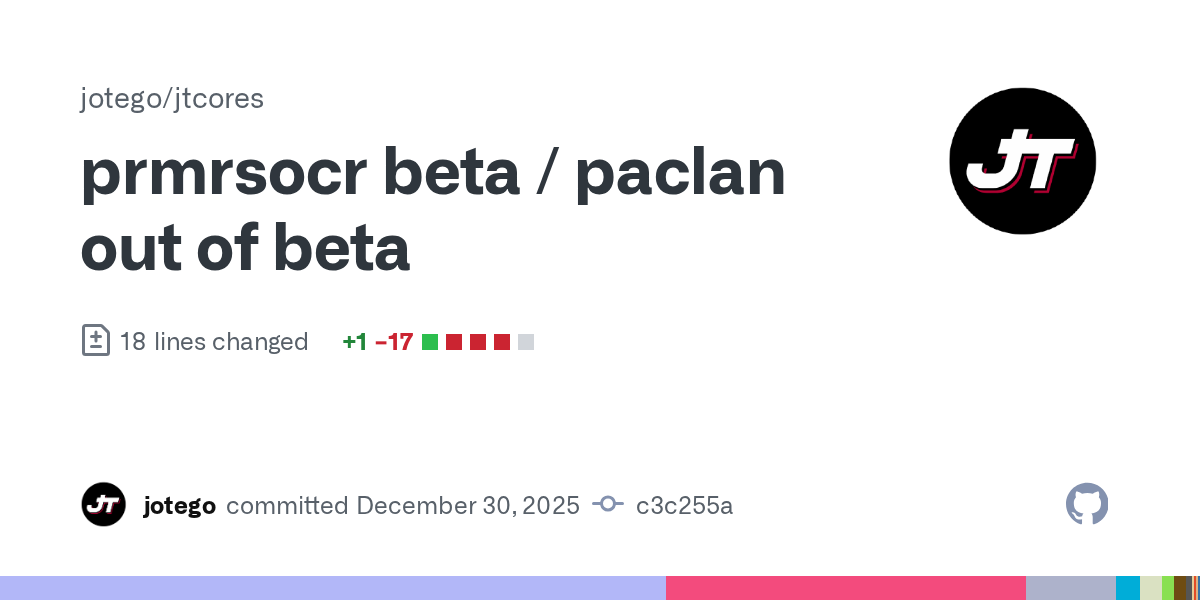
According to a commit on the JTCPS (Jotego CPS Cores) GitHub repository, the FPGA core for Pac-Land (paclan) has officially moved out of beta. In the same update, the developer announced that Premier Soccer (prmrsocr) has entered the beta phase.
Pac-Land Returns Home
The transition of the paclan core out of beta marks a significant step for preservationists and fans of Namco's 1984 platformer. While Pac-Land is often remembered for its jaunty hat and departure from the maze-chase formula, the hardware behind it is specific enough to require dedicated engineering time. Moving out of beta generally indicates that the core has reached a level of stability where major graphical glitches, sound errors, or logic faults have been resolved.
For users of FPGA platforms like the MiSTer or Analogue Pocket, this means the core is now considered reliable enough for general play. It is no longer a test subject. It is a piece of history you can boot up with confidence.
Konami Takes the Field
The update also introduces prmrsocr to the beta lineup. For those who do not speak abbreviated ROM filenames, this refers to Konami’s Premier Soccer, released in 1993. This title runs on Konami’s GX068 hardware, which suggests Jotego is continuing to refine support for that specific architecture.
Entering beta means the core is functional, but likely retains some rough edges. Early adopters should expect the occasional graphical hiccup or audio desync as the developer irons out the remaining issues. It is part of the process. You play the game, you find the bugs, and eventually, the software improves.
This update dated December 30, 2025, continues Jotego's long-running effort to document and recreate arcade hardware through Verilog. While Premier Soccer might not have the same cultural cachet as Street Fighter II, its preservation ensures that the vast library of 90s sports titles remains playable on modern hardware without relying on software emulation layers.
Comments ()