
Hamster just released the Famicom port of Ninja-Kid II worldwide
The 1988 home console version of UPL's arcade platformer is now available on modern systems via the Console Archives label.
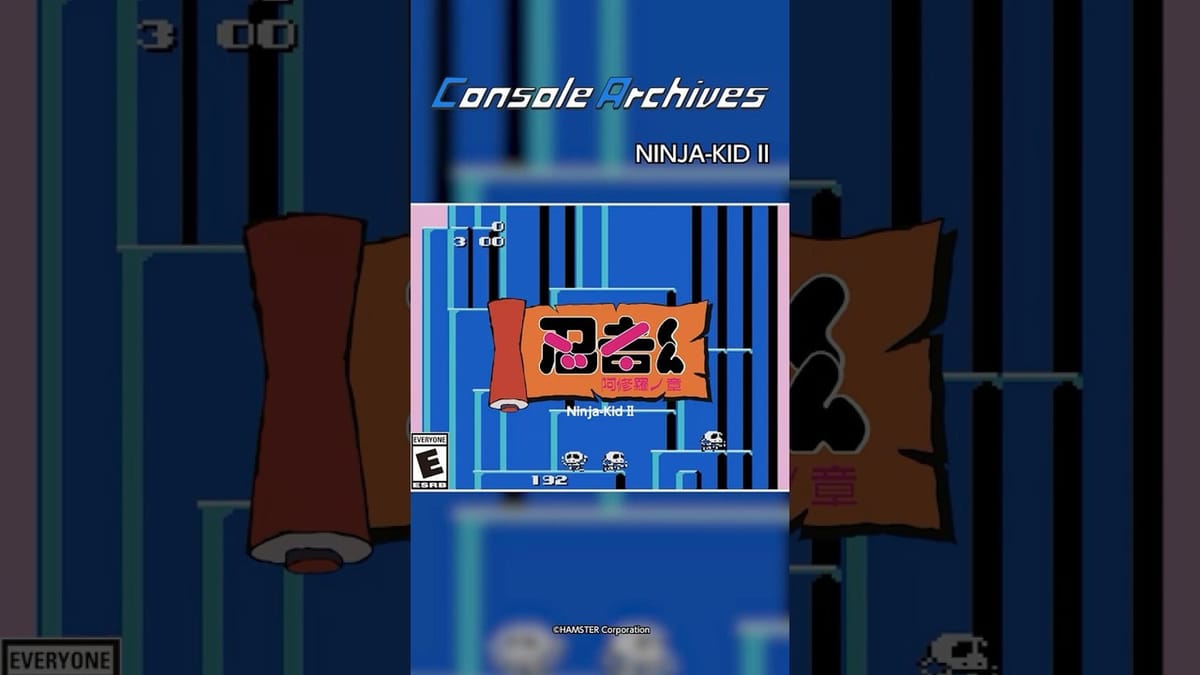
HAMSTER Corporation has released the 8-bit home console port of Ninja-Kid II for PlayStation 5 and Nintendo Switch 2. The game is available now under the publisher's Console Archives label for $7.99. This is the first time this specific 1988 home port has been officially available outside of Japan.
Originally developed by UPL, Ninja-Kid II (known domestically as Ninja-kun: Ashura no Shou) hit arcades in 1987. A Famicom port followed a year later. Western players might recognize the arcade original under its alternate localized titles. It appeared in some arcades as Rad Action and occasionally under the incredibly descriptive name JT-104.
The game relies on the vertical platforming and shuriken combat that defined the original Ninja-Kid. Players navigate mountains, oceans, and caves while fighting off hordes of skeleton enemies. The goal is to defeat a boss named Ashura.
UPL expanded the mechanics heavily for this sequel. The protagonist can move in eight directions and perform wall-jumps to scale vertical shafts. The enemy AI is aggressive. Projectiles come from multiple angles at once. This forces players to constantly reposition and time their jumps. The difficulty curve is notoriously steep.
A downgrade you can buy
Hamster already published the arcade version of Ninja-Kid II back in 2018 through its Arcade Archives line. This raises an obvious question. Why pay eight dollars for a technically inferior 8-bit port of a game you can already buy on the exact same digital storefront?
The Famicom version is a completely different piece of software. Home ports in the late 1980s rarely had the processing power to match arcade boards. Developers had to get creative to make these games run on weaker hardware. They altered level layouts, changed enemy behaviors, and adjusted the overall pacing to fit the memory constraints. The graphics are downgraded and the sprite flickering is authentic to the hardware.
Playing the 1988 console release is not about getting the best-looking or smoothest version of the game. It is a way to experience how people actually played it in their living rooms. The arcade board was designed to extract quarters. The home version was designed to be played on a CRT television over a weekend.
UPL's strange catalog
UPL is a fascinating footnote in arcade history. The studio had a habit of making slightly off-kilter action games with bizarre character designs. They are the same team behind Mutant Night and the mechanical shooter Atomic Robo-Kid. Jaleco eventually ported the first Ninja-Kid to consoles and spun it into the much more successful Ninja JaJaMaru-kun series. UPL handled the Famicom port of Ninja-Kid II internally.
Expanding the archives
Hamster built its reputation by releasing hundreds of arcade perfect ports over the last decade. The Console Archives label is a newer initiative focused entirely on home systems. It makes sense as a business move. The company has already digitized most of the viable arcade catalog. Moving into the 8-bit and 16-bit console libraries opens up decades of new material.
This release includes the standard Hamster emulation wrapper. Players get save states, display options to simulate old televisions, and online leaderboards. The save states alone make the brutal difficulty of the Famicom port much more manageable.
We are reaching a point where the compromised home ports of arcade games are getting their own dedicated re-releases. The arcade board is the original vision, but the Famicom cartridge is what kids actually owned. Having both versions available on the same console just makes the historical record a little more complete.
Comments ()