
Famicom adventure game Maison Ikkoku has an English fan translation
Translator mr_sausage has released a complete English BPS patch for Bothtec's 1988 Famicom adaptation of Rumiko Takahashi's Maison Ikkoku.
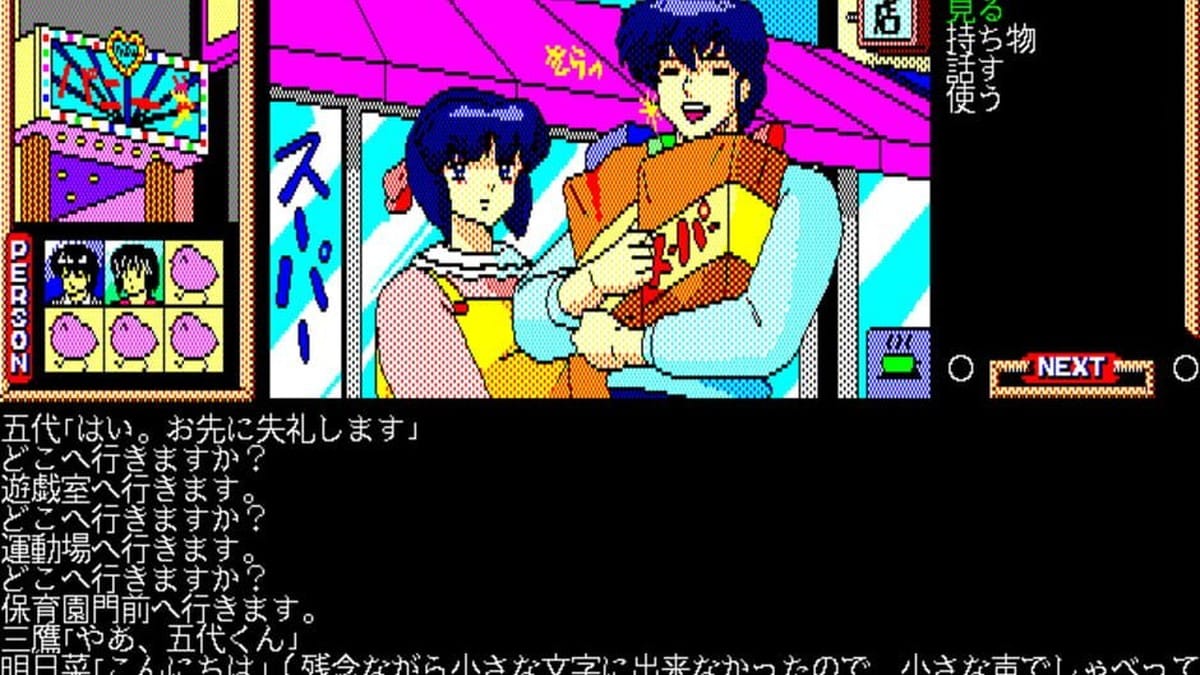
Romhacker and translator mr_sausage has released a complete English fan translation patch for the 1988 Nintendo Famicom version of Maison Ikkoku. Version 1.0 of the project launched on October 15 via ROMhacking.net, making the 8-bit graphical text adventure playable in English for the first time in 38 years.
Based on Rumiko Takahashi's manga and anime series (from the same creator behind Ranma 1/2 and Inuyasha), Maison Ikkoku is a romantic comedy involving a group of eccentric people who live in a boarding house in 1980s Tokyo. Players step into the shoes of Yusaku Godai, a perpetually broke college applicant who's trying to pass his entrance exams while navigating his feelings for Kyoko Otonashi, the young widowed manager of the Ikkoku-kan apartment building. Between studying and trying to confess his love, Godai has to survive the constant interference and pranks of his neighbor Yotsuya and the rest of the building's rowdy tenants.
Scrolling menus and localized train signs
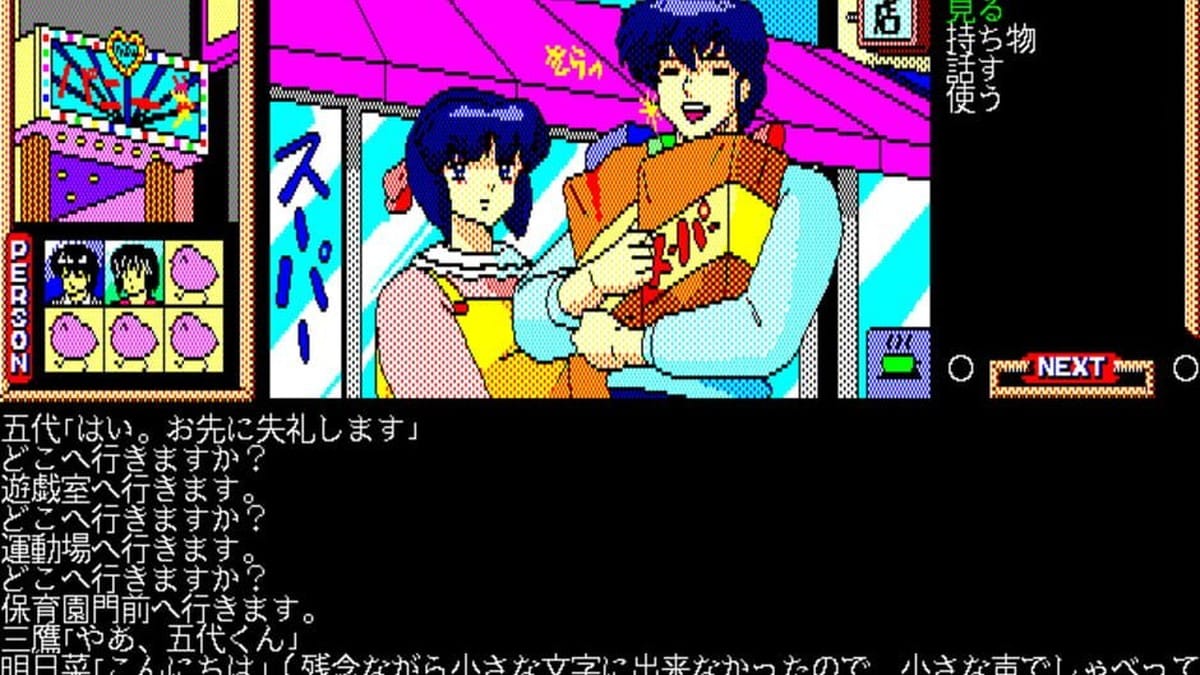
Translating a Japanese text adventure on the Famicom isn't a matter of just swapping character tables. Japanese script packs a lot of meaning into very few characters, while English quickly runs out of screen real estate on an 8-bit display. To make the script fit naturally, mr_sausage added proper English word wrapping, multi-page dialogue support, and scrolling for long menu names that wouldn't otherwise squeeze into the original command boxes.
The patch translates all dialogue, narration, verb commands, item names, and location headers while keeping the original humor and puzzle clues intact. It also swaps in a decorative English title logo and localizes background graphics like the neighborhood train station signage. The release is distributed as a free BPS patch that requires a clean dump of the original Japanese Famicom ROM (CRC32 46F30F2D).
From 1980s Japanese computers to 8-bit consoles
While Bothtec developed and published the Famicom cartridge on July 21, 1988, the game actually originated at Micro Cabin. That studio first built the graphical adventure for Japanese home computers in late 1986, releasing versions across the PC-8801, PC-9801, MSX2, Fujitsu FM-77, and Sharp X1. Bothtec, a Tokyo software house known in the 1980s for computer RPGs like Relics and its adaptation of Legend of the Galactic Heroes, handled the 1988 Famicom port before eventually evolving into D4 Enterprise, the company that now runs the Project EGG retro preservation storefront.
Micro Cabin returned to the property one last time in 1989 with a PC Engine port. None of these versions ever saw an official Western release, which isn't surprising given how niche anime was outside Japan in the late 1980s and how expensive text-heavy adventure games were to localize.
English-speaking fans haven't been completely locked out of the game until now, though. Hackers Dave Shadoff and filler released an English patch for the 1989 PC Engine version back in April 2008, and filler even workshopped portions of the Famicom script on translation forums in 2018. Still, Bothtec's 8-bit adaptation has its own distinct charm and visual layout, and the Famicom release is no longer sitting unplayable in the archives. Players can explore Ikkoku-kan, the Chachamaru bar, and the rest of Tokeizaka on any NES emulator or flashcart that supports standard patched ROMs.
Comments ()