
Falcom's Lord Monarch now has a complete SNES English patch
Translator Gan released a v1.0 English patch for the 1992 Super Famicom version of Nihon Falcom's real-time strategy game, complete with UI bug fixes.
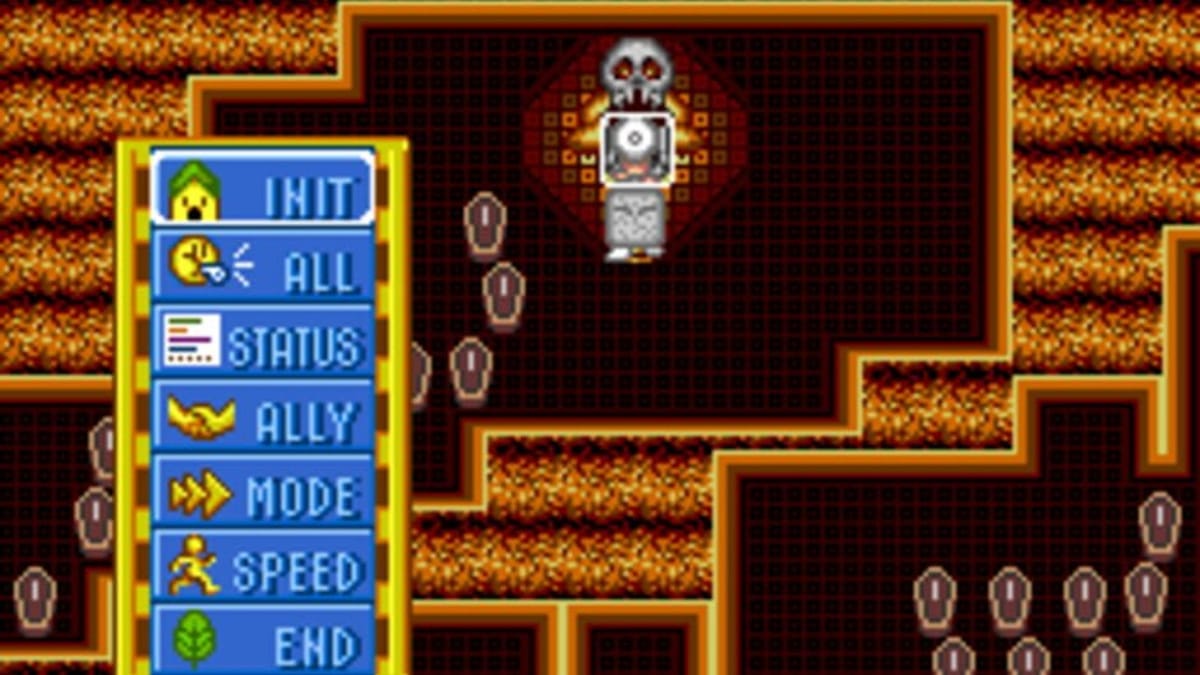
Translator and romhacker Gan released a complete version 1.0 English localization patch for the Super Famicom version of Nihon Falcom's 1991 real-time strategy game Lord Monarch. The patch is available for free on ROMhacking.net and translates all menus, scenario text, and graphics for Epoch's October 9, 1992 Japanese console port.
Gan built the localization by hand between 2024 and 2025 without using generative AI tools. Along with translating the script and taking a few necessary liberties with cramped map names, the patch cleans up a few rough edges left behind by the 1992 programming team. The original game had a confusing menu option labeled "Speed" that only changed cursor movement rather than game pace, and Gan relabeled the interface so players actually know what they're toggling. The release also squashes an original bug where portions of the UI kept the wrong color palette after switching into the game's advanced mode.
It's refreshing to see a translator fix thirty-year-old UI bugs alongside the script, especially in a genre where misreading a single menu label can tank your whole economy.
Taxing peasants at sixty frames
Lord Monarch originally launched on the NEC PC-9801 in 1991 as the seventh mainline entry in Falcom's Dragon Slayer series. Designer Yoshio Kiya treated the Dragon Slayer name as an experimental anthology rather than a single genre, using it to incubate series that later spun off on their own, including Xanadu, Sorcerian, and The Legend of Heroes. Arriving a year before Westwood Studios released Dune II in 1992, Kiya's take on real-time strategy skipped unit-by-unit micromanagement in favor of high-level territorial control across four warring factions.
You don't click individual soldiers to march them across a map. Instead, you set kingdom tax rates, issue broad behavioural orders like building bridges or clearing fences, and let your autonomous troops expand your borders while you try to bankrupt or decapitate the rival kings. Each stage has a hard time limit measured in days, and because your final grade depends on how much land you hold when the enemy king falls, rushing a victory is actually penalized.
Epoch's 1992 Super Famicom adaptation added several console-specific perks that make this patch worth playing even if you've tried other versions. It supports the SNES Mouse peripheral out of the box, which is frankly the only sane way to wrangle a real-time strategy interface from the early nineties. The cartridge also includes a built-in scenario map editor and three visual map themes that swap standard fantasy soldiers for cute mascots or junk food armies.
Three decades of scattered ports
While the Super Famicom release stayed locked in Japan for 34 years, English speakers haven't been completely shut out of the series until now. Falcom actually released a free Windows 95 remake called Lord Monarch Online in 1997 on its own website, fully translated into English. For a hotter 16-bit comparison, the 1994 Sega Mega Drive version, Lord Monarch: Tokoton Sentou Densetsu, received a complete English fan translation from Nebulous Translations back in November 2020 and even showed up on the Japanese Mega Drive Mini.
That Mega Drive version leaned into anime character portraits and an expanded story mode where losing a chapter treated you to comedic game-over scenes, whereas Epoch's Super Famicom release stayed closer to the PC-98 simulation roots. Other spin-offs followed in Japan during the late nineties, including the 1998 PlayStation and Windows release Monarch Monarch and the budget Minna noソフトシリーズ (Everyone's Software Series) map packs. I'm curious how well the Super Famicom map editor holds up with a mouse in hand, because building custom scenarios on 16-bit hardware is the exact kind of feature that usually gets buried by a language barrier.
Comments ()