
Blast Corps gets a native PC port via static recompilation
Blast Corps: Recompiled brings Rare's 1997 N64 demolition classic to Windows, Linux, and macOS with uncapped framerates, ultrawide support, and mods.
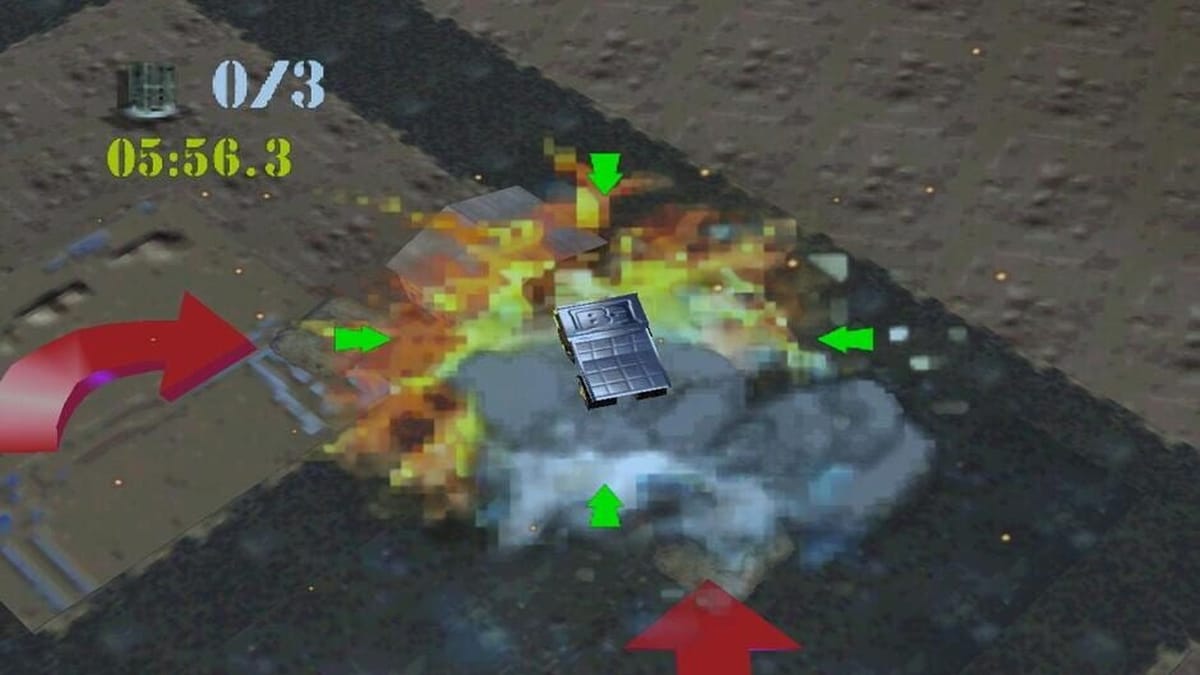
Independent developer SlaveOfIDO has released version 1.0.0 of Blast Corps: Recompiled, an open-source project that converts Rare's 1997 Nintendo 64 action-puzzle game into a native port for Windows, Linux, Steam Deck, and macOS. The software launched on October 23 and is free to download on the Blast Corps: Recompiled GitHub repository, though it does not distribute any proprietary game data. Players have to supply their own legally dumped copy of the North American 1.1 revision of the N64 ROM, which the program loads directly from the main menu without a separate extraction step.
Blast Corps is easily one of the best games on the Nintendo 64, and its premise doesn't waste a second of your time. A pair of leaking nuclear missiles is strapped to an automated carrier with a broken steering mechanism, and that carrier is rolling in a straight line toward the nearest city. You don't stop the truck. Instead, you drive a fleet of bulldozers, dump trucks, missile-equipped dune buggies, and giant somersaulting robots to flatten every barn, apartment block, and bridge standing in its path.
Rare's first original N64 design
Developed at Rare's headquarters in Twycross, Leicestershire, and published by Nintendo in February 1997, Blast Corps was Rare's first original N64 title, but Rare's very first game released for the Nintendo 64 was Killer Instinct Gold in November 1996. Studio co-founder Chris Stamper initially pitched the concept around pure structural demolition before lead designer Martin Wakeley shaped it into a tight, time-critical puzzle game. It sold over a million copies and holds a 90 on Metacritic, yet official ways to play it on modern hardware have been fairly sparse. Microsoft bundled the game into the 2015 Xbox One compilation Rare Replay (following its $375 million acquisition of Rare in 2002), and Nintendo added it to the Switch Online Expansion Pack in February 2024. Neither of those official releases runs natively on a desktop computer.
That is where N64: Recompiled comes in. Created by developer Mr-Wiseguy and inspired by earlier static recompilation tools for the SGI IRIX IDO compiler, the tool translates compiled MIPS assembly instructions from an N64 binary straight into portable C code. Traditional ports like the PC version of Super Mario 64 required years of painstaking manual reverse engineering to produce matching human-readable source code. Static recompilation skips that wait, though SlaveOfIDO still pulled function definitions and headers from the ongoing Blast Corps matching decompilation to hook enhancements into the game.
RT64 rendering and zero generative AI
Because the port uses the RT64 rendering engine alongside N64ModernRuntime, it bypasses the original hardware's bottlenecks entirely. The game defaults to your monitor's native refresh rate, scaling terrain, texture scrolling, and HUD elements to high framerates without speeding up the underlying physics. It also supports 16:9 and ultrawide aspect ratios. The developer even extended game models so widescreen cutscenes don't reveal missing geometry at the edges of the frame, though an option to pillarbox cutscenes to 4:3 is still there if you want the original framing.
Load times are instant, audio processing is intact without popping or stuttering, and the project includes a drag-and-drop mod menu for custom texture packs or code changes. I'm curious to see how quickly modders take advantage of that system to build custom demolition courses, especially since a community C# level editor already exists alongside the decompilation tools. Hardware requirements are modest enough to run on a 2012 Radeon HD 7750, a GeForce GT 630, or an Intel HD 510, provided your GPU supports Direct3D 12, Vulkan 1.2, or Metal Argument Buffers Tier 2 on macOS 13.0 and up.
One line in the documentation stands out right at the top of the page. "No Gen-AI was used in this project," the readme states, adding that no contributions made with generative AI will be accepted. Given how easy it is for hallucinated code to break literal MIPS-to-C translations, keeping automated slop out of the repository is a sensible rule.


Comments ()