
90s survival horror classics Ecstatica and Ecstatica II hit GOG
SNEG has re-released Andrew Spencer's 1990s survival horror games Ecstatica and Ecstatica II on GOG and Steam, complete with ellipsoid graphics and modern PC support.
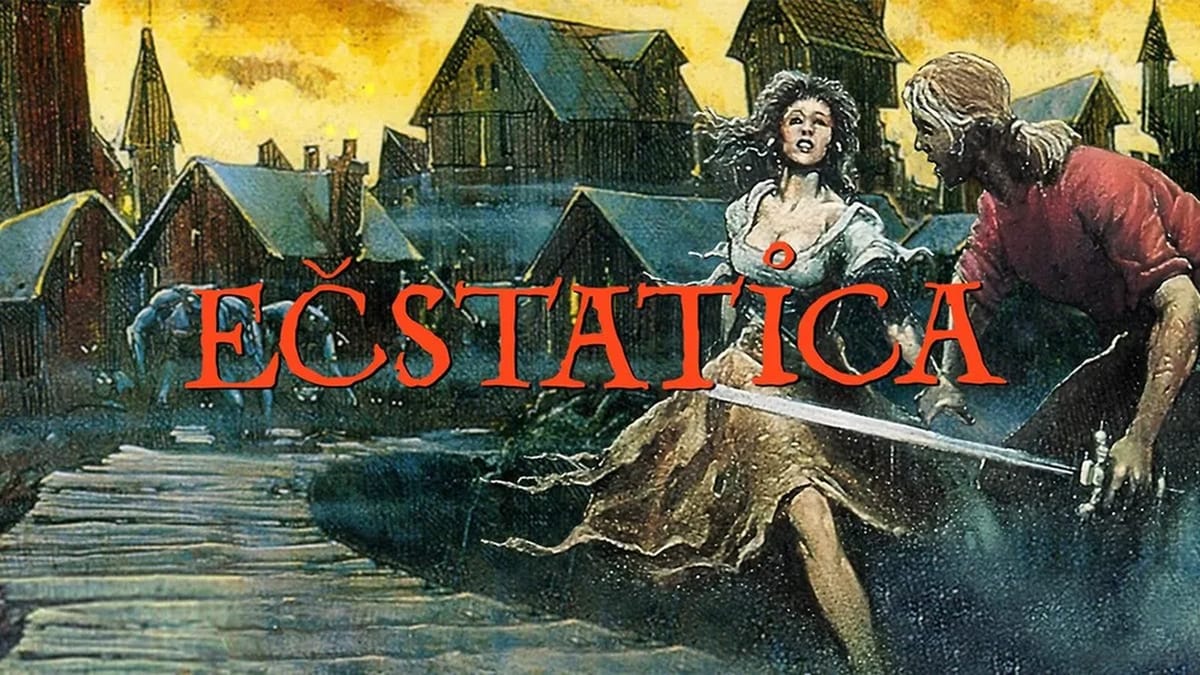
Classic 1990s survival horror games Ecstatica and Ecstatica II are available today on GOG and Steam, following publisher SNEG's initial announcement earlier in 2026. This is the first time either game has ever received an official digital storefront release. Both titles sell individually for $14.99, or together in a two-game bundle for $19.99.
Both games have spent the last three decades trapped on physical media, where getting them to run on a modern PC usually meant wrestling with DOSBox config files and praying your sound card settings wouldn't cause a hard crash. SNEG, the retro preservation publisher behind the recent revivals of Dark Earth and the Gold Box Classics, partnered directly with creator Andrew Spencer to update the games for contemporary operating systems. The new versions add modern controller support, cloud saves, and on-the-fly graphical switching between the classic DOS, Windows 95, and updated high-resolution software rendering modes.
Ellipsoids instead of polygons
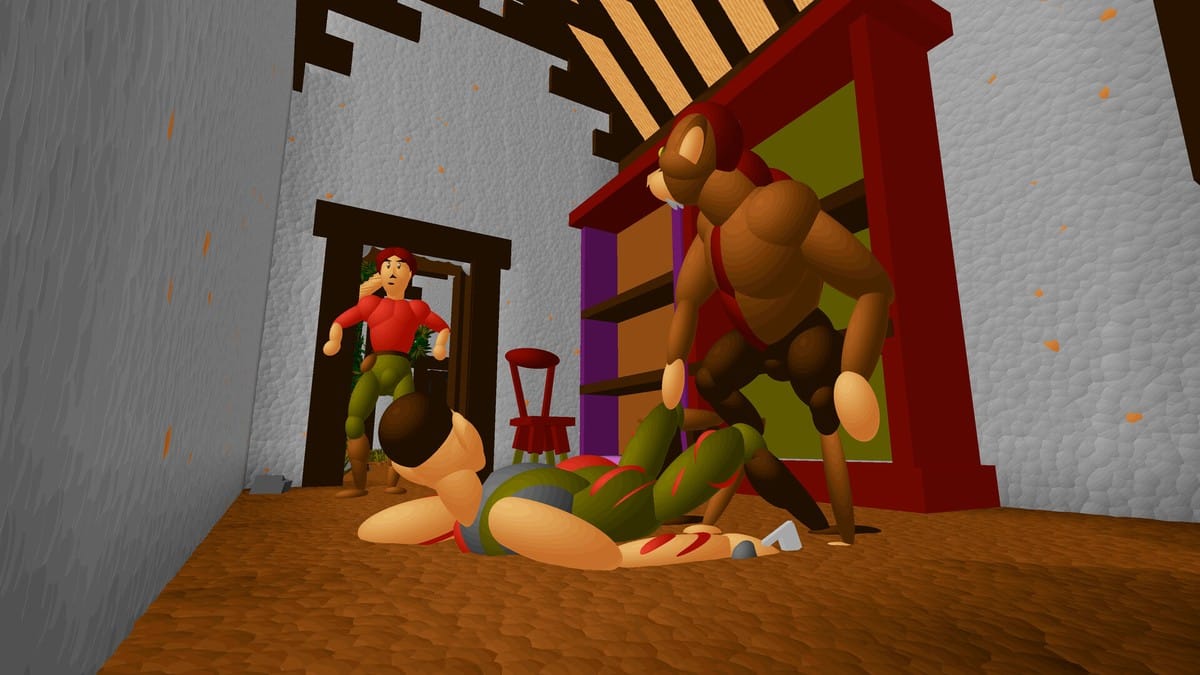
Developed by British studio Andrew Spencer Studios and originally published by Psygnosis in 1994 for MS-DOS, the first Ecstatica arrived two years before Capcom's Resident Evil popularized the survival horror blueprint on consoles. It drops a traveler into the demon-infested medieval village of Tirich, using cinematic fixed camera angles, zero HUD prompts, and an unrelenting werewolf that stalks you through the streets. While Alone in the Dark had already established that template in 1992 with flat-shaded polygons, Spencer went down an entirely different mathematical road.
Instead of building characters out of triangles, Spencer's engine rendered everything using 3D ellipsoids. Every character, monster, and piece of furniture is made of rounded, overlapping tube and sphere shapes, giving the entire game a bizarre, bulbous look that resembles violent claymation. It allowed for surprisingly smooth, organic shapes on 1994 CPU hardware before 3D accelerator cards took over the industry and made standard polygonal meshes the universal rule.
I'm curious how the new high-resolution software renderer handles those ellipsoid seams on a modern 4K monitor, since low-resolution CRT blur did a lot of heavy lifting for early 3D experiments.
More than a thousand camera angles in the sequel
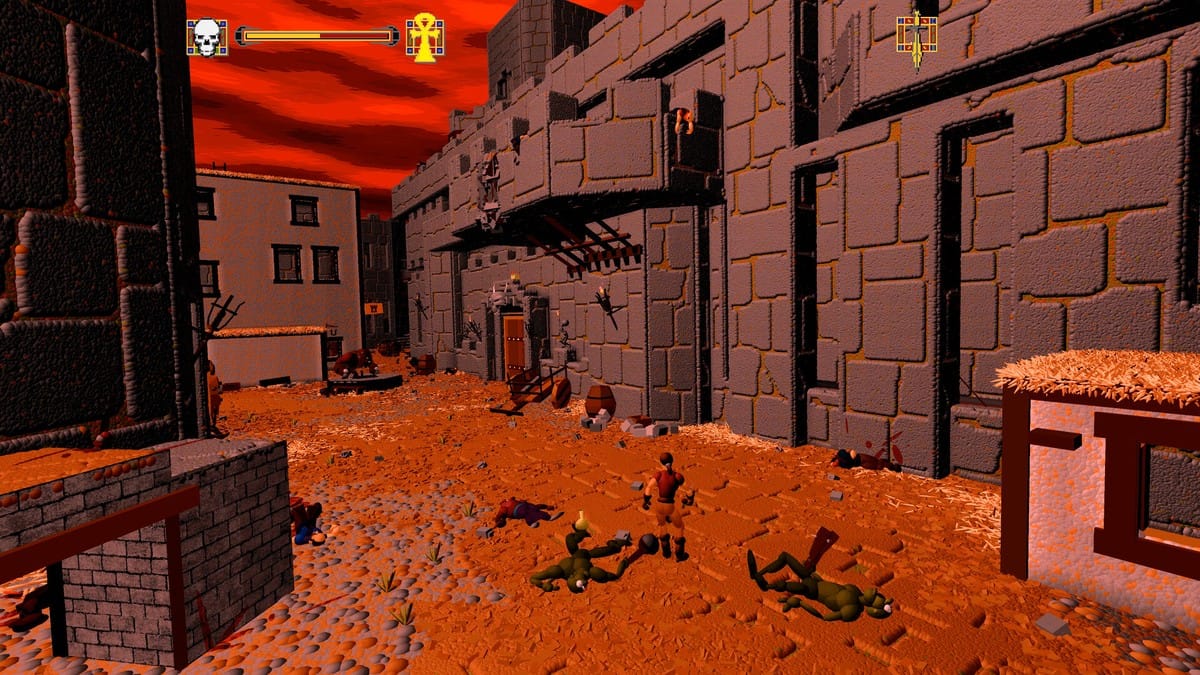
The 1997 sequel, Ecstatica II, kept the ellipsoid rendering engine intact for MS-DOS and Windows 95, but traded the claustrophobic village of Tirich for an open-ended castle exploration structure. Players control a prince fighting to restore the shattered Elder Sign and rescue the sorceress Ecstatica, leaning much harder into hack-and-slash swordplay and magic spells across a massive map built from over a thousand fixed camera perspectives.
Despite its larger scope, the sequel arrived in the same year as Quake II and Final Fantasy VII, right when the PC gaming market was abandoning software-rendered curiosities for hardware-accelerated polygons. Spencer's ellipsoid technology remained a fascinating dead end in 3D graphics history, and neither game was ever ported or re-released after their initial retail runs.
Thirty dollars for the pair when bought separately feels a bit steep for two mid-90s DOS games, though the $19.99 bundle brings the price down to a much more reasonable ten bucks apiece. Having both titles working out of the box with DRM-free installers on GOG and Steam is a welcome win for a weird, forgotten corner of PC horror history, arriving just in time for Halloween.
Comments ()