
Atari is closing the VCS store in 2027 and taking the console offline
Atari will shut down the VCS digital storefront on February 1, 2027, alongside a final OS update that cuts server checks and opens up homebrew.
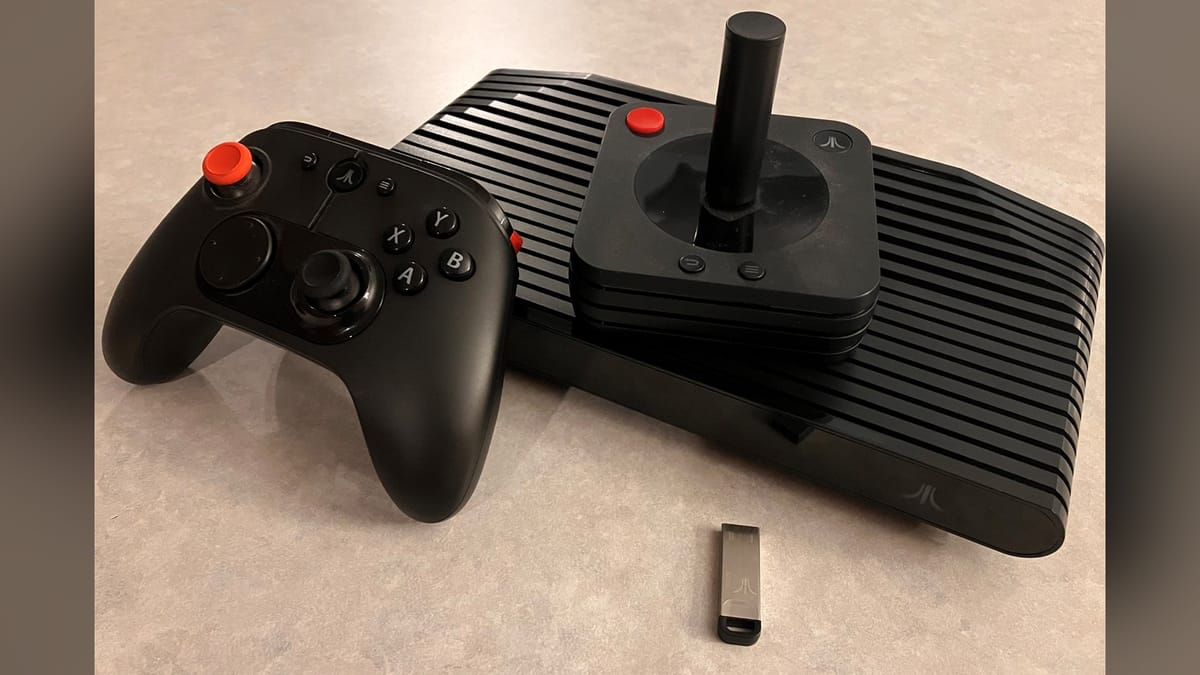
Atari is shutting down the digital storefront for its Linux-based hybrid console on February 1, 2027, bringing an official end to the Atari VCS six years after it first reached customers. New game submissions have already stopped, though owners can still buy and download software through January 31, 2027. Once the shop closes, Atari plans to push a final operating system update that strips out remote server authentication, unlocks offline functionality, and hands everyone an official Homebrew App so the machine doesn't turn into an expensive plastic paperweight under the television.
First teased at E3 2017 under the codename Ataribox, the modern Video Computer System took a messy road to living rooms. The company raised roughly $3 million from 8,471 backers during its May 2018 Indiegogo campaign, promising a ribbed, woodgrain-accented machine inspired by the 1977 Atari 2600. Backer units didn't actually ship until December 14, 2020, and general retail bundles followed on June 15, 2021, for $399.99.
An outdated processor in a 1977 shell
I backed this project during its crowdfunding run. Even with the mid-development processor upgrade, the VCS was still an outdated device by the time it arrived at launch. Atari originally pitched the hardware around a 28nm AMD Bristol Ridge A10 chip with Radeon R7 graphics, before delaying production in 2019 to swap in a 14nm AMD Ryzen Embedded R1606G processor with Radeon Vega 3 graphics. That dual-core, four-thread APU ran at a 2.6GHz base clock (boosting up to 3.5GHz), paired with 32GB of internal eMMC flash storage and either 4GB of DDR4 RAM in the VCS 400 or 8GB in the VCS 800 model.
Launching a $400 dual-core mini-PC a month after the PlayStation 5 and Xbox Series X hit shelves was optimistic, to put it mildly. Still, if I didn't already have so many other consoles hooked up, I could have found plenty of fun on the platform. It actually had games, it had online leaderboards that gave arcade score-chasing a real pulse, and the controllers were nice.
Manufactured in partnership with PowerA, both the Modern Controller and the single-button Classic Joystick felt sturdy. The joystick added an LED-lit ring around the stick that registered twist inputs for paddle games like Breakout and Tempest 4000, which was a genuinely clever bit of hardware design. Between the pre-installed Atari VCS Vault collection of 100 arcade and 2600 ROMs, Jeff Minter's Tempest 4000, Boulder Dash Deluxe, and the early entries in the Atari Recharged series (like Missile Command: Recharged and Centipede: Recharged), there was a solid little arcade machine hiding inside that confused identity.
Why Wade Rosen is pulling the plug
The VCS was always an awkward fit for the modern incarnation of Atari. Current CEO Wade Rosen took over leadership from Frédéric Chesnais in April 2021, inheriting the console two months before its retail launch alongside a pile of bizarre corporate side quests like Atari Token cryptocurrency, online casinos, and branded luxury hotels. Rosen spent the next five years unwinding those speculative ventures and rebuilding Atari around retro publishing, physical cartridges for the Atari 2600+ and 7800+, and acquiring preservation-focused studios like Nightdive Studios and Digital Eclipse, plus historic community hubs like MobyGames and AtariAge.
Rosen has stated in interviews that had he been CEO at the time, he never would have released the VCS. Direct hardware sales were quietly halted in 2025, and ending support for the console now seems like the right decision. There's no sense in burning engineering resources on a custom Debian-based Linux storefront when the company's actual hits, like Atari 50: The Anniversary Celebration, sell far better on Switch, Steam, and PlayStation.
How the offline update saves the hardware
What stands out about this shutdown is how gracefully Atari is handling the exit. Most modern microconsoles and connected devices turn into e-waste the day their parent company gets bored and pulls the plug on the authentication servers. Because the default AtariOS interface required an internet connection and an Atari account login during setup and routine operation, simply turning off the backend in February 2027 would have locked owners out of the console dashboard.
Instead, the final OS patch will migrate account and software checks directly to the local hardware. Every game you've already bought and downloaded before February 1 will keep working offline, and distributing the Atari Homebrew App to all users means community developers can package and sideload software without needing corporate sign-off.
And even without AtariOS, the VCS has a built-in escape hatch that kept tinkerers happy from day one: PC Sandbox Mode. Pop the top cover off, drop in an M.2 SATA SSD, upgrade the dual SODIMM memory slots, and you can boot straight into Windows, Ubuntu, or Batocera from a flash drive.

Comments ()