
The Apple IIGS turns 30, and it's still my favorite computer
A look back at the 16-bit powerhouse that brought incredible sound, vibrant colors, and a glimpse of the future to the Apple II line.
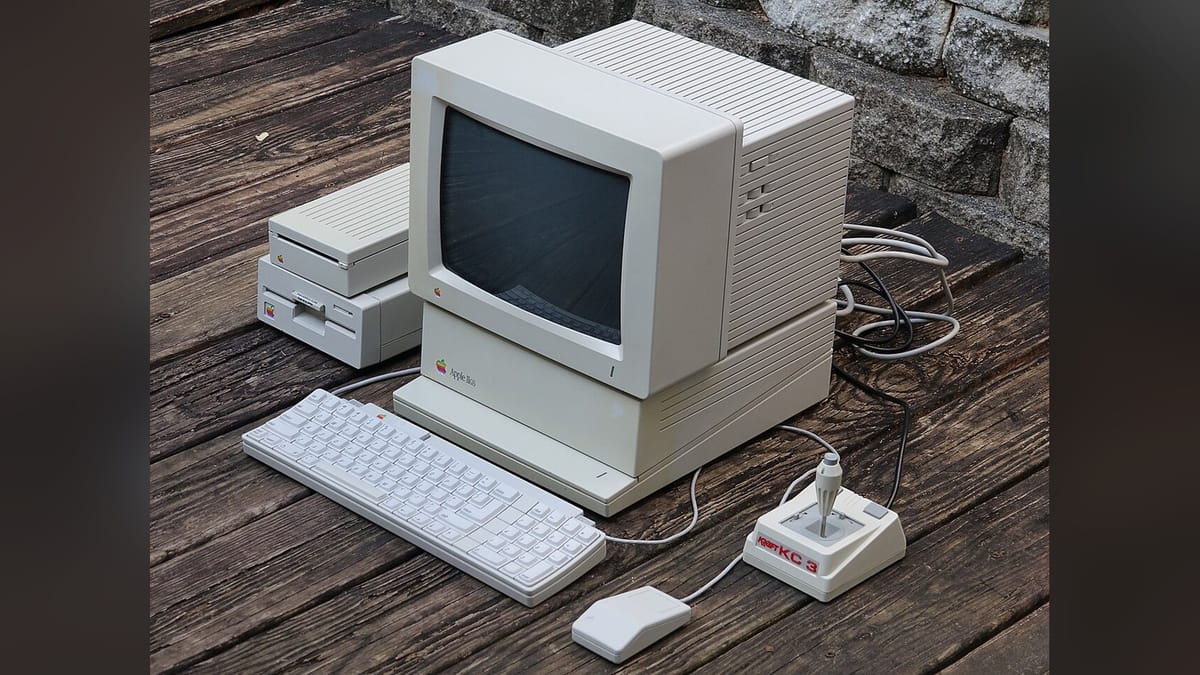
I had an Apple IIGS "Woz edition" in 1986. My family got one for productivity, and it worked! My mom's typing got ultra fast, and she learned the word processor better than most the pros. She got an amazing job because of it.
That was the practical side of the machine in our house, but the hardware itself was a massive leap forward. The Apple IIGS had its own upgraded versions of Sierra On-Line quest games, Marble Madness, Thexder, and more. A lot of people didn't realize how big of a graphical and sound upgrade it was over the standard Apple IIe. It was a 16-bit computer that maintained nearly perfect backward compatibility while introducing features that wouldn't become standard on PCs for years.
The machine launched in September 1986. Thirty years later, the hardware still stands out.
A desktop Super Nintendo
The architecture inside the Apple IIGS shares a lot of DNA with the 16-bit console generation. The Super Nintendo is basically a consolized Apple IIGS. Both systems run on variants of the Western Design Center 65C816 microprocessor. Both rely on sample-based wavetable synthesis for audio.
That audio was handled by the Ensoniq 5503 Digital Oscillator Chip. Bob Yannes, the engineer who created the Commodore 64's SID chip, designed the Ensoniq 5503. It was the exact same chip Ensoniq used in its Mirage and ESQ-1 professional synthesizers. Apple included 64 KB of dedicated RAM on the motherboard just to store the sampled wavetable instruments. It supported 32 independent channels of sound, which Apple's firmware paired up to create 15 stereo voices. The 16th voice was reserved for the operating system's timing interrupts.
My music class had an Apple IIGS where I could drag and drop notes onto music sheets. Hearing actual instrument samples play back in stereo was a glimpse of the future.
The graphics hardware was equally ambitious. The Video Graphics Controller supported a 320x200 resolution mode with 16 colors per scanline, pulled from a palette of 4,096. By swapping palettes on the fly, the machine could display up to 3,200 colors on screen at once. Low End Mac notes that this put it in direct competition with the Amiga 1000, which cost $300 more at the time.
MacOS before the color
The operating system evolved significantly during the computer's lifespan. It originally shipped with ProDOS 16, which was essentially an 8-bit operating system modified to work on the new hardware. By 1988, Apple replaced it with GS/OS, a true 16-bit operating system written entirely in native 65C816 assembly.
GS/OS was MacOS before MacOS was even in color. It featured a graphical Finder, proportional scrollbars, and thermometer progress bars. It also introduced File System Translators, which allowed the computer to natively read Mac HFS disks, MS-DOS FAT volumes, and CD-ROMs. You could plug in a SCSI drive, format it with partitions up to four gigabytes, and manage everything through a clean graphical interface.
Apple even offered an upgrade kit for existing Apple IIe owners. For $500, a dealer would swap your motherboard and the bottom half of your case, turning your 8-bit machine into a 16-bit IIGS. It wasn't exactly plug and play. You still needed to buy an Apple Desktop Bus mouse and keyboard to actually use the graphical interface, which pushed the final price tag much higher.
The 2.8 MHz speed limit
The system was a bit hobbled by its slow processor. The 65C816 ran at just 2.8 MHz. One has to wonder how much more popular it would have been if it had an 8MHz processor.
For decades, a rumor circulated that Apple executives intentionally crippled the clock speed so the $999 IIGS wouldn't cannibalize sales of the more expensive Macintosh Plus. A documentary by Userlandia breaks down why that megahertz myth is entirely false. Steve Jobs had already been stripped of his operational power in May 1985, 16 months before the IIGS hit store shelves.
The real bottleneck was hardware stability and backward compatibility. Early engineering samples of the 65C816 from Western Design Center were buggy and unreliable at higher speeds. Furthermore, the engineering team had to consolidate the legacy Apple II logic into a single custom chip called the Mega II. The system bus had to synchronize with the strict 1 MHz timing requirements of older Apple II expansion cards. Running the CPU at 2.8 MHz was a technical necessity to keep the system stable while maintaining the 99 percent backward compatibility Apple promised.
The Woz signature
Apple produced a limited run of 50,000 units to celebrate the 10th anniversary of the Apple II line. As detailed by Apple II History, these machines featured Steve Wozniak's signature printed on the front right corner of the case. Owners could mail in their registration card to receive a printed certificate of authenticity and a letter from Wozniak himself.
Because the signature was just printed on the plastic lid, the limited edition cases frequently migrated to newer motherboards as parts failed over the years. It is a cosmetic detail, but it reflects how much the machine was positioned as a tribute to the platform's roots.
The Apple IIGS bridged the gap between the command-line era and the modern graphical desktop. It brought high-end wavetable synthesis into classrooms and home offices. This is hands down my all time favourite computer.
Comments ()