
1994 Super Famicom wrestling game Fight da Pon! gets an English patch
Natsume's bizarre 1994 Super Famicom wrestling card-and-board game Zen-Nippon Pro Wrestling: Fight da Pon! is finally playable in English with a v1.0 patch.
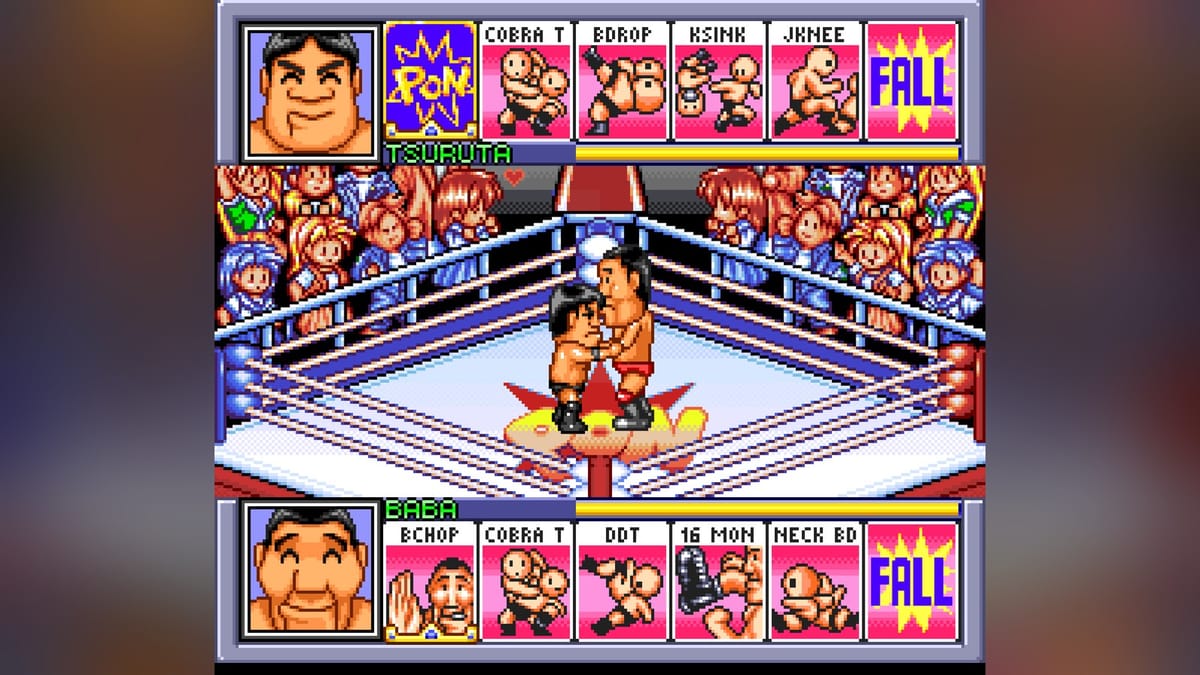
Romhacker kactusken has released a complete English translation patch for Zen-Nippon Pro Wrestling: Fight da Pon!, a 1994 Super Famicom card-and-board game starring the All Japan Pro Wrestling roster.
Released exclusively in Japan on June 25, 1994, the game was developed by Natsume and published by Masaya, the gaming label of Nippon Computer Systems (NCS) behind Langrisser and Cho Aniki. The two companies partnered on several serious 16-bit grapplers like 1993's Zen-Nippon Pro Wrestling and Zen-Nippon Pro Wrestling Dash: Sekai Saikyou Tag, using an engine that Western players eventually got in 1994 with the stripped-down license rebrand Natsume Championship Wrestling on the SNES. Fight da Pon! threw all of that serious simulation work out the window in favor of big-headed cartoon wrestlers walking around a board game.
Version 1.0 of the patch translates all 861 lines of story dialogue across the game's six scenarios and finale, along with all 42 move cards, menus, and the 16-character password screen. (The title logo, copyright text, and staff credits stay in Japanese on purpose, and kactusken notes that AI assisted with the translation.) The patch doubles the original 1,048,576-byte ROM to 16 Mbit to make room for a variable-width English font, and the download zip includes two separate .bps files that can be applied to a clean SHVC-JF ROM image in a browser via Rom Patcher JS or desktop tools like Floating IPS.
Stan Hansen vs. A speeding truck
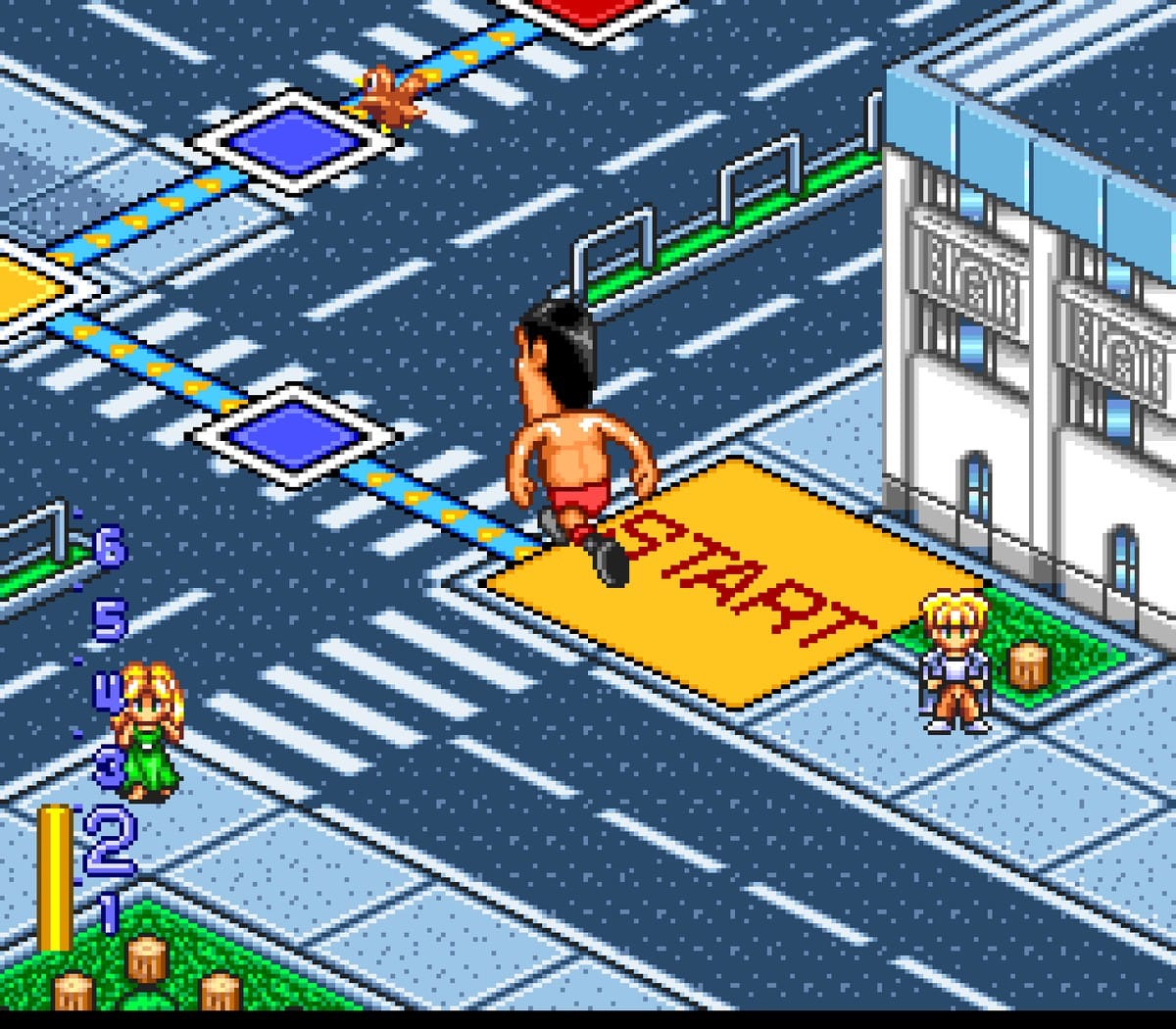
Translating the text matters here because the story mode is completely unhinged. Instead of chasing championship belts through standard tournament brackets, real-life wrestling stars like Giant Baba, Mitsuharu Misawa, Jumbo Tsuruta, and Kenta Kobashi spend six chapters dealing with tokusatsu-style henchmen, kidnapped executives, and a villain named Grand Director Spider Crab. In Chapter 3, Toshiaki Kawada gets hit by a truck days before a match with Stan Hansen, which knocks his signature Stretch Plum submission clean out of his memory. He walks across the board to find the Stretch Hermit, only for Hansen to show up and hit him with a Lariat hard enough to jog his memory right before the bell rings. It is hard to think of a better justification for a boss fight.
Despite looking like a turn-based deck-builder in still screenshots, matches actually run in real time, and kactusken published a thorough online gameplay guide alongside the patch that breaks down the cartridge's internal math. Both wrestlers have five move cards and a "FALL" pin card sitting at the bottom and top of the screen. Whoever presses the button first launches an attack, while the defending player has a couple of seconds to fire off their own ready cards to build up enough Guard points to reverse the move. Used cards flip face down and take several seconds to recharge, though the computer cheats by recharging its hand 64 frames (about 1.1 seconds) faster than a human player.
A stat table that does nothing
The game's code contains a programming error from 1994. Natsume built a full stat table for the 16 main wrestlers, but a coding slip means the game never actually reads it. Every single character on the roster has the exact same base strength, defense, and 255 health points. Even the final boss, Mecha Baba, is statistically identical to the opening chapter's jobber grunts; the only difference between wrestlers is which of the 42 cards they are allowed to put in their five-slot deck and which move is their gold-glowing signature card. And if you forget to put cards into your deck before your first match, you lose immediately at the opening bell, because the game doesn't bother to equip your starting hand for you.
The romhacking work also surfaced a pile of leftover developer secrets inside the cartridge. Flipping a single byte re-enables Natsume's original debug menu, which is included as the second optional patch in the release zip and lets players jump between chapters, view scenes, or test scripts by holding X and pressing Select. The code also hides two title-screen button combinations (one that unlocks all 42 cards and a scene-skip button, and another that opens "The Fight Da Pon! Music Driver Ver1.01B" sound test for all 26 tracks) plus a nearly complete, unselectable fighter named Zebra Mask who has full ring animations and a portrait, but was never hooked up to a match.
Comments ()