
All 4 Super Famicom Doraemon games now have English fan translations
Japanese toy publisher Epoch released four Doraemon action-platformers on the Super Famicom between 1993 and 1995. A new batch of patches on ROMhacking.net translates the entire 16-bit series into English.
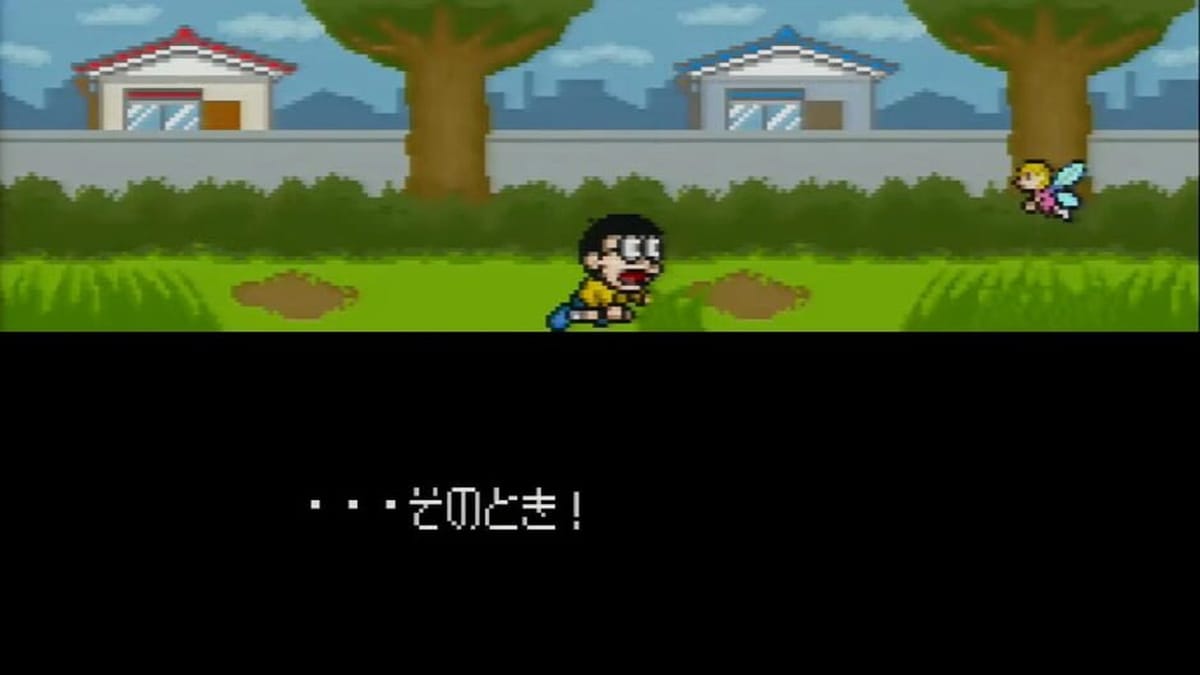
All four of Epoch's 16-bit Doraemon platformers for the Super Famicom are playable in English following a batch of fan translation patches uploaded to ROMhacking.net. The patches, released by translator torvusY (who posts as ProfessionalLove3726), cover the entire run of Super Nintendo games based on Fujiko F. Fujio's robotic cat from the 22nd century, which launched in Japan between 1993 and 1995 and never received official western localizations.
Epoch got its start in 1958 and helped pioneer the Japanese home console market with the Cassette Vision before spending the 1990s as the primary publisher of licensed Doraemon games on Nintendo hardware. While the franchise was massive across Asia, Latin America, and parts of Europe, its limited presence in North America and English-speaking PAL territories kept the 8-bit and 16-bit catalog locked to Japan. For decades, English-speaking players only had fragments, like an abandoned partial patch for the fourth game released by Sgt. Bow Hack on April 25, 1998, followed by an earlier standalone patch for the first entry that surfaced in March 2026. These four free patches were built using AI-assisted translation tools paired with manual start-to-finish playthrough checks by the translator. Having a human actually play through all four titles to verify the text in context makes a massive difference.
1. Doraemon: Nobita to Yousei no Kuni (1993)
Developed by SAS Sakata and published by Epoch on February 19, 1993, the first Super Famicom entry sets the structural blueprint for the rest of the 16-bit tetralogy. Instead of sticking to a straight level-to-level menu, the English patch for Doraemon: Nobita to Yousei no Kuni lets players navigate its top-down RPG-style town and overworld segments without guessing where to go next. Those exploration hubs connect directly to 2D side-scrolling platforming stages where you use Doraemon's 22nd-century secret gadgets to rescue his friends and save the Fairy Land.
The top-down sections require talking to townspeople and poking around Nobita's neighborhood to trigger the next stage, which used to be a brick wall if you couldn't read Japanese. Having the dialogue in English turns a confusing maze of triggers back into the light adventure game SAS Sakata designed.
2. Doraemon 2: Nobita no Toys Land Daibouken (1993)
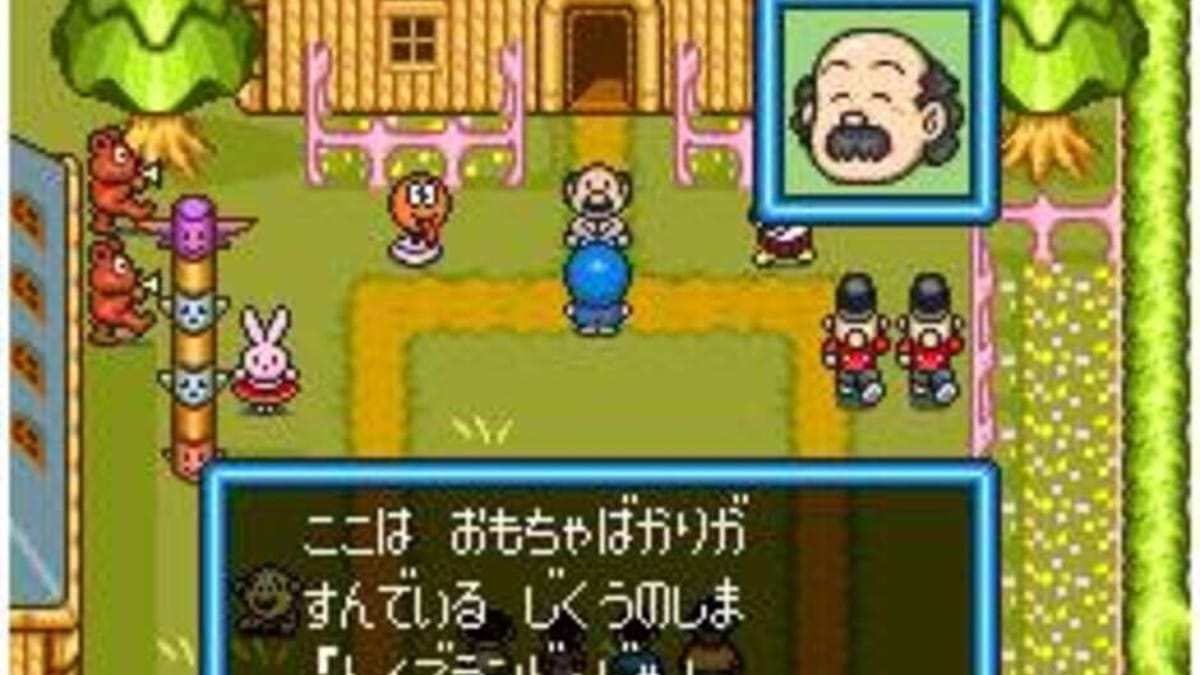
SAS Sakata and Epoch turned around a sequel in just ten months, releasing it in Japan on December 17, 1993. The Doraemon 2: Nobita no Toys Land Daibouken translation brings over a story that sends Doraemon, Nobita, Dorami, Shizuka, Gian, and Suneo into a kingdom of sentient toys. It retains the hybrid structure of top-down adventure segments and side-scrolling action stages, while expanding the playable cast right from the start.
Pushing out two full action-adventure platformers in a single calendar year sounds reckless, yet the expanded roster gives this one a distinct rhythm compared to the February release. I'm curious to see how well the dialogue holds up during the toy kingdom's quirkier town sequences.
3. Doraemon 3: Nobita to Toki no Hougyoku (1994)
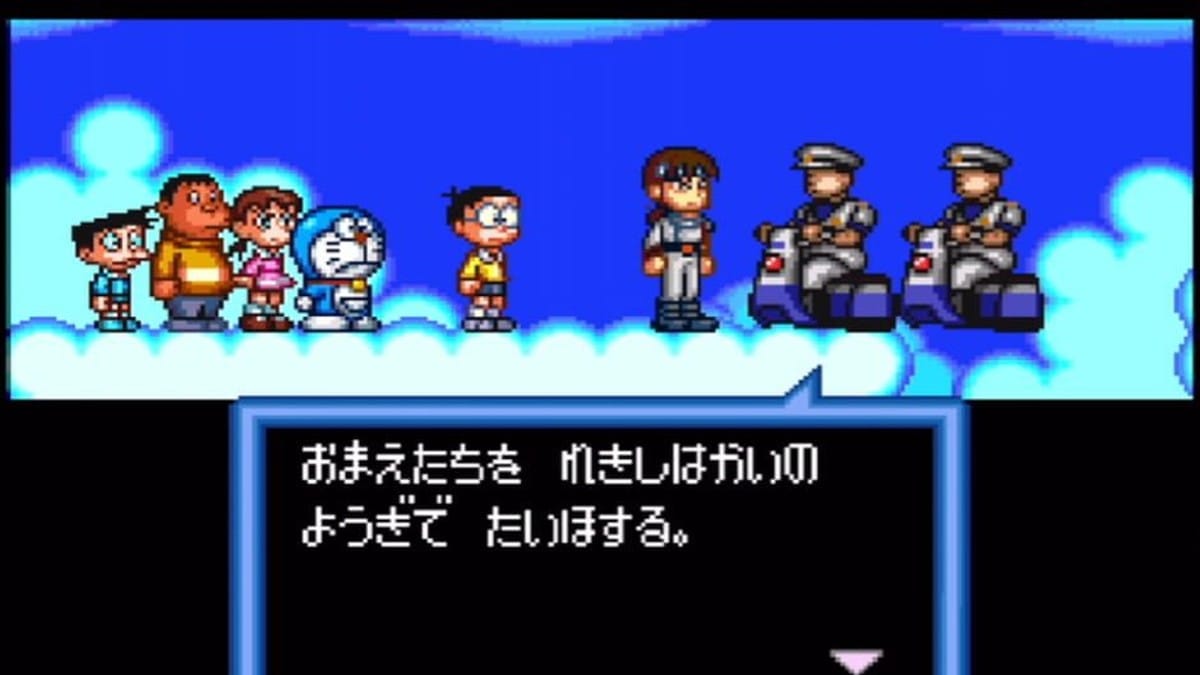
Released on December 16, 1994, the third installment saw development duties shift from SAS Sakata to AIM, giving the sprites and stage layouts a noticeable visual refresh. With the Doraemon 3: Nobita to Toki no Hougyoku patch, English players can follow the time-travel plot as the cast hunts for jewels across prehistoric and historical eras. You can swap between Doraemon, Nobita, Shizuka, Gian, and Suneo, and each character has different jump heights, movement speeds, and special abilities.
Handing the series to a new studio worked in its favor. The character-swapping mechanics and historical time-travel stages make it the most mechanically ambitious game of the four.
4. Doraemon 4: Nobita to Tsuki no Oukoku (1995)
The final 16-bit entry, developed by Agenda and published by Epoch on December 15, 1995, takes the cast to a kingdom on the Moon before the franchise jumped to the Nintendo 64. Grabbing the complete Doraemon 4: Nobita to Tsuki no Oukoku translation finally retires Sgt. Bow Hack's unfinished 1998 effort after 28 years. Late-era Super Famicom platformers from 1995 usually look great, and Agenda sent the series off with crisp, colorful sprite work and six playable characters.
Waiting nearly three decades between an abandoned early patch and a finished script is a long time even by ROM hacking standards.

Comments ()