
Ziggurat just brought the 1992 sci-fi RPG Planet's Edge back to PC
New World Computing's ambitious space exploration game returns to modern PC storefronts, complete with original clunky interfaces and cloning mechanics.
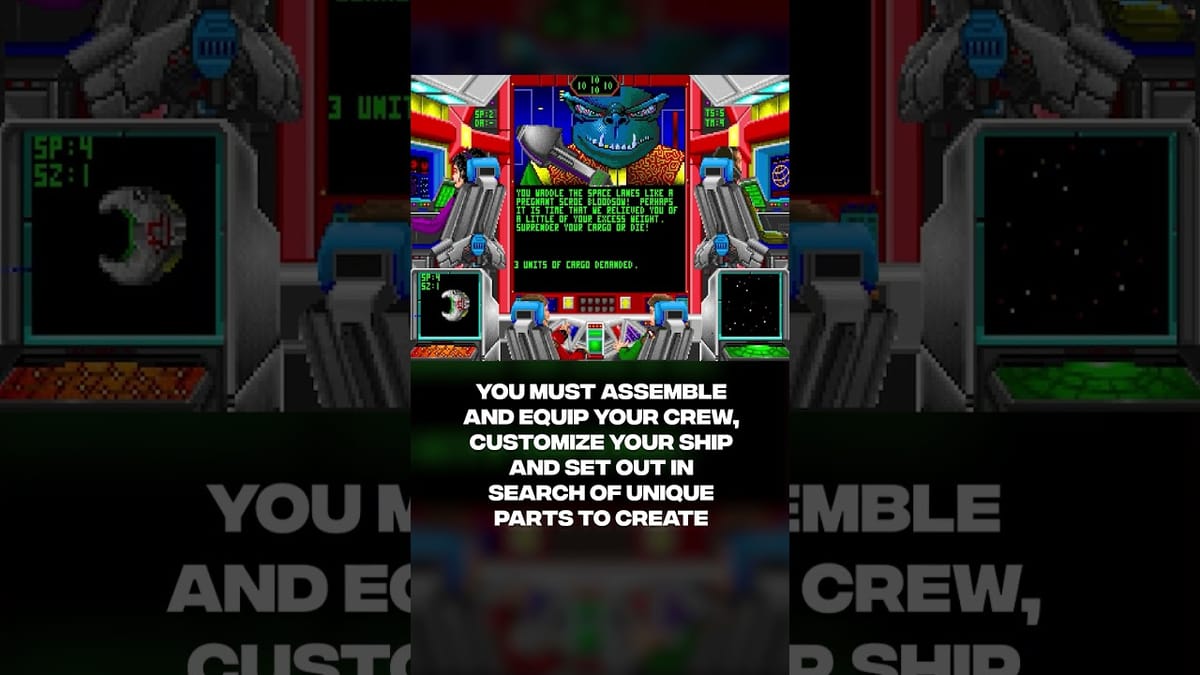
Ziggurat Interactive has re-released the 1992 sci-fi RPG Planet's Edge on modern PC storefronts like Steam and GOG. The game originally came from New World Computing, the studio best known for the fantasy series Might and Magic.
This is a massive, weird hybrid of a game. It attempts to smash together the open-ended space exploration of Starflight with traditional turn-based role-playing mechanics. New World Computing wanted to take the deep stats and party management of their fantasy games and put them into a hard sci-fi setting. Neal Hallford, who later worked on Betrayal at Krondor, wrote the story and dialogue. The result is a game that feels like a tabletop RPG campaign translated directly into MS-DOS.
A missing planet
The setup is aggressively 1990s science fiction. An alien ship enters our solar system. Earth's military panics and fires on it. The resulting electromagnetic blast sucks the entire planet into a wormhole. Only the moon is left behind.
You control a team of four specialists stationed at a lunar base. Your job is to fly out into the galaxy, explore dozens of star systems, and gather the parts needed to build a Centauri Drive. The scientists back on the moon hope this device will reverse the wormhole and bring Earth back.
The narrative takes a surprisingly dark tone for the era. Your crew consists of the only humans left in the known universe. Every alien species you encounter holds a piece of the puzzle, but diplomacy is difficult when you are flying a ship built from scrap metal.
Two games in one
Planet's Edge splits its gameplay into two distinct layers. The space layer handles navigation, resource harvesting, and real-time ship combat. You can upgrade your vessel using a modular building interface to improve its stats and survivability. You slot in different engines, weapons, and scanners based on what you can afford. The ship combat requires you to manage power levels and shield facings while trying to outmaneuver enemy vessels. It is a dense system that asks you to think like an engineer before you ever fire a weapon.
When you find an interesting planet, you beam your four-person crew down to the surface. The game then switches to an isometric perspective for exploration and turn-based tactical combat. You move your pilot, engineer, weapons officer, and medic across grid-based maps. Your crew members do not gain experience points in the traditional sense. Instead, progression relies entirely on finding better weapons and armor. You have to scavenge alien technology just to survive the later planetary encounters.
The death mechanics are particularly forgiving. If a crew member dies during a ground mission, you can just clone a replacement back at the moonbase. You can even clone them repeatedly to roll for better starting attributes. The game actively encourages you to treat your crew as expendable assets rather than precious heroes.
The DOS PC experience
This re-release runs through DOSBox and preserves the original game exactly as it was. That means you get all the ambition of a sprawling space opera, along with the clunky interface quirks of early DOS gaming. You will wrestle with menus, read text descriptions, and manage your inventory through keyboard shortcuts. Ziggurat did not remaster the graphics or add modern quality-of-life features. It is a straight port of the 1992 release.
The modern PC market has plenty of polished space sims. Playing the original Planet's Edge today is a reminder of how developers tried to build these massive universes when the underlying technology was still catching up to their ideas. The interface is archaic, but the sheer scale of the galaxy map still holds up.

Comments ()