
When Miyamoto and Tajiri sat down to talk polygons in 1993
A newly translated archival interview captures the creators of Mario and Pokémon discussing Star Fox, 3D shooters, and the limits of 16-bit hardware.

In April 1993, the Super Nintendo was dominating living rooms, and the industry was arguing about the future of 3D graphics. A newly translated archival interview captures that exact moment, and I strongly suggest you go read the whole thing at Shmuplations, who deserve full credit for digging this up and localizing it. The conversation features two of the most important figures in video game history sitting down just as the medium was shifting under their feet.
On one side of the table is Shigeru Miyamoto. By 1993, he had already revolutionized the arcade with Donkey Kong and defined the home console market with Super Mario Bros. And The Legend of Zelda. He had just released Star Fox, a rail shooter that used the Super FX coprocessor to push real-time 3D polygons on 16-bit hardware.
On the other side is Satoshi Tajiri. Today, we know him as the founder of Game Freak and the creator of Pokémon. In 1993, he was still a few years away from releasing Pokémon Red and Blue. He was juggling his transition from video game journalist to full-time developer, having already shipped Mendel Palace and Jerry Boy.
The coolest things we learn
The interview is packed with fascinating details about how Nintendo approached early 3D hardware. The absolute coolest part is Miyamoto's philosophy on visual abstraction. He argues that the Famicom was essentially built on parodies of other things. He viewed video games as a medium of symbols. You treat symbol A as a human, and you treat symbol B as a monster.
When the 16-bit era arrived, Miyamoto was skeptical that simply drawing more detailed graphics and boosting the resolution would make games better. He compares hyper-detailed 2D graphics to a novel getting a bad movie adaptation. The more detail you draw, the less it feels like Mario. Instead of pushing for digitized realism, he wanted to explore spatial mechanics. Polygons allowed players to look up at towering objects or deal with multi-layered spaces.
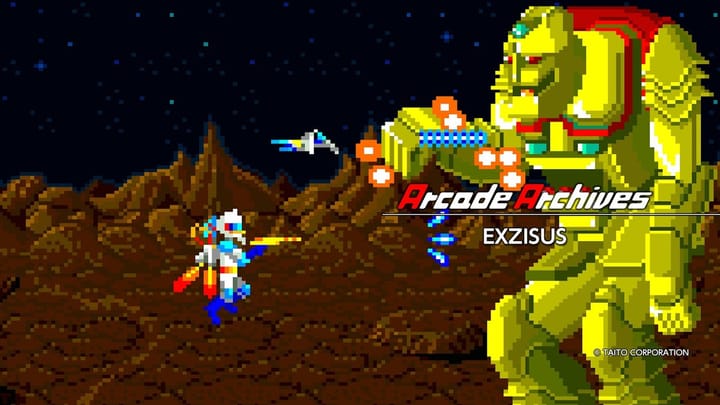
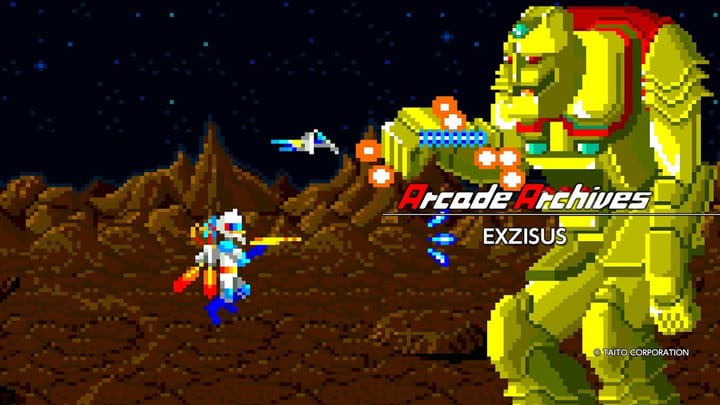
He actually namedropped Cho Aniki
Miyamoto also gets surprisingly specific about shoot 'em ups. Tajiri points out that Nintendo usually stayed away from the genre. Miyamoto clarifies that he always wanted to make a 3D shooter, but the technology wasn't there yet. He draws a hard line between Star Fox and traditional 2D shooters like Gradius or Xevious.
In a 2D shooter, you dodge and shoot on a flat plane. He jokes that if you replaced the spaceship with a haniwa clay figure, it would just be Hani in the Sky. He even mentions Cho Aniki, which is a surreal reference to see in a 1993 Nintendo interview. A 3D shooter gives you depth, letting you dodge and chase in three dimensions. The gameplay fundamentally changes when objects obscure what's behind them.
A Japanese commercial for Star Fox on the Super Famicom.
The Argonaut partnership
We also get a timeline on the Super FX chip. Miyamoto reveals that Nintendo was talking about polygons long before the Super Famicom even launched in 1990. They partnered with British developer Argonaut Games after hearing about their polygon technology. Argonaut had made a name for itself with Starglider, and their collaboration with Nintendo resulted in the custom coprocessor that made Star Fox possible.
From that initial partnership to the release of the game, development took two and a half years. Tajiri admits that when he first saw Star Fox in magazine screenshots, the flat polygon patterns looked like a huge risk. Miyamoto agrees, noting that the game was built on the premise that it only looks good once you actually sit down and play it in motion.
Skepticism of the CD-ROM future
The end of the conversation shifts to CD-ROMs. In 1993, add-ons like the Mega-CD and PC Engine CD-ROM² were pushing full-motion video and animated cutscenes. Both men are highly skeptical of the trend. Miyamoto notes that everyone was just making RPGs with animated cutscenes, and he questions who's actually going to build these massive games.
Tajiri jokes about people getting hyped for a future that never materializes. Miyamoto drops a surprisingly modern observation about the industry, noting that some people no longer build software themselves, but dedicate their lives solely to constructing development environments.
The interview is a rare look at two developers figuring out the rules of 3D game design before those rules were written down. Tajiri was still figuring out Super Famicom development, and Miyamoto was betting that abstract polygons were more fun than digitized sprites. They both knew exactly what they were doing.

Comments ()