
Arcade Archives EXZISUS gets a gameplay trailer for November 5
Taito's 1987 transforming shmup hits Switch, Switch 2, PlayStation, and Xbox on November 5, bringing its rare dual-screen cabinet setup home for the first time.
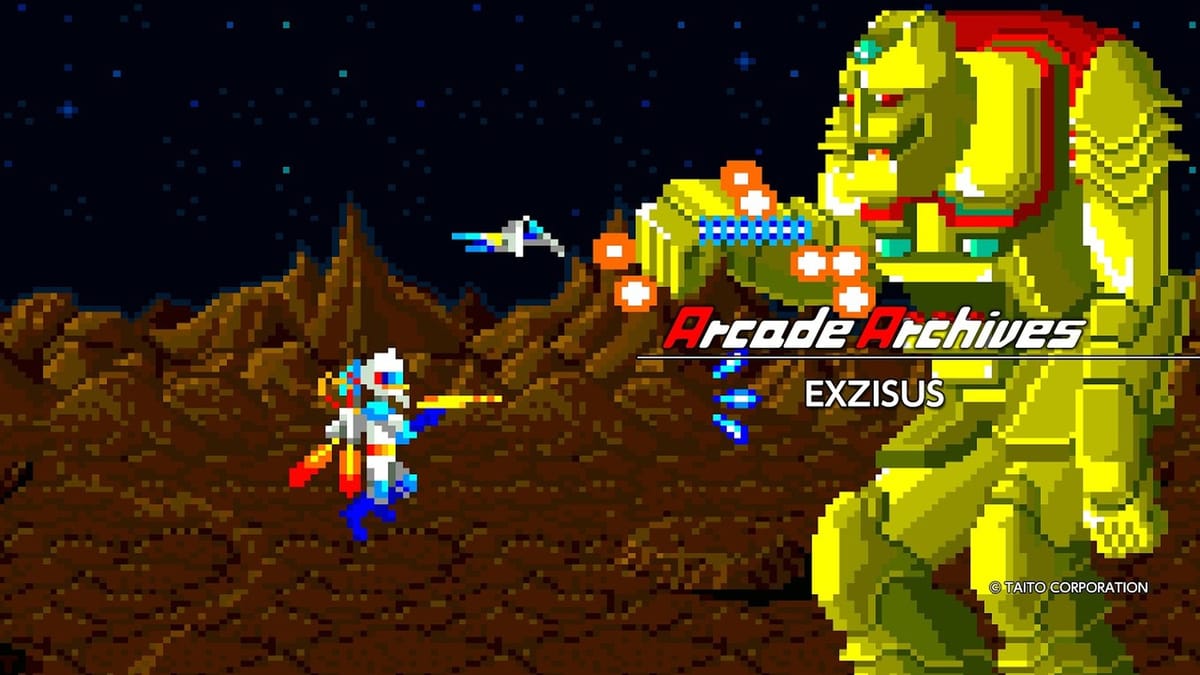
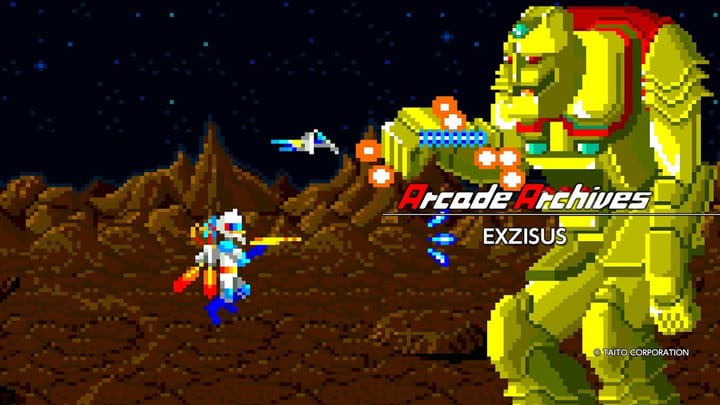
Taito's 1987 horizontal shoot 'em up EXZISUS launches on November 5 across Nintendo Switch, Switch 2, PlayStation 4, PlayStation 5, and Xbox Series X|S, with fresh gameplay footage showing off its transforming mech combat, the Meteorita Zone, and the Gold Moai boss fight. Originally announced in early October, the port arrives through Hamster Corporation's standard Arcade Archives lineup on Switch and PS4 for $7.99, while the Arcade Archives 2 edition hits Switch 2, PS5, and Xbox Series X|S for $9.99.
Players control Cosmo Fighter Robin, a jetpack-wearing space warrior sent to clear a mysterious army out of the 4th Galaxy. You start on foot (well, hovering in space) armed with a forward blaster and downward missiles, which makes Robin a surprisingly large target for incoming fire. Collecting item tokens upgrades your arsenal and summons mechanical bird and dog companions to fly alongside you and block projectiles.
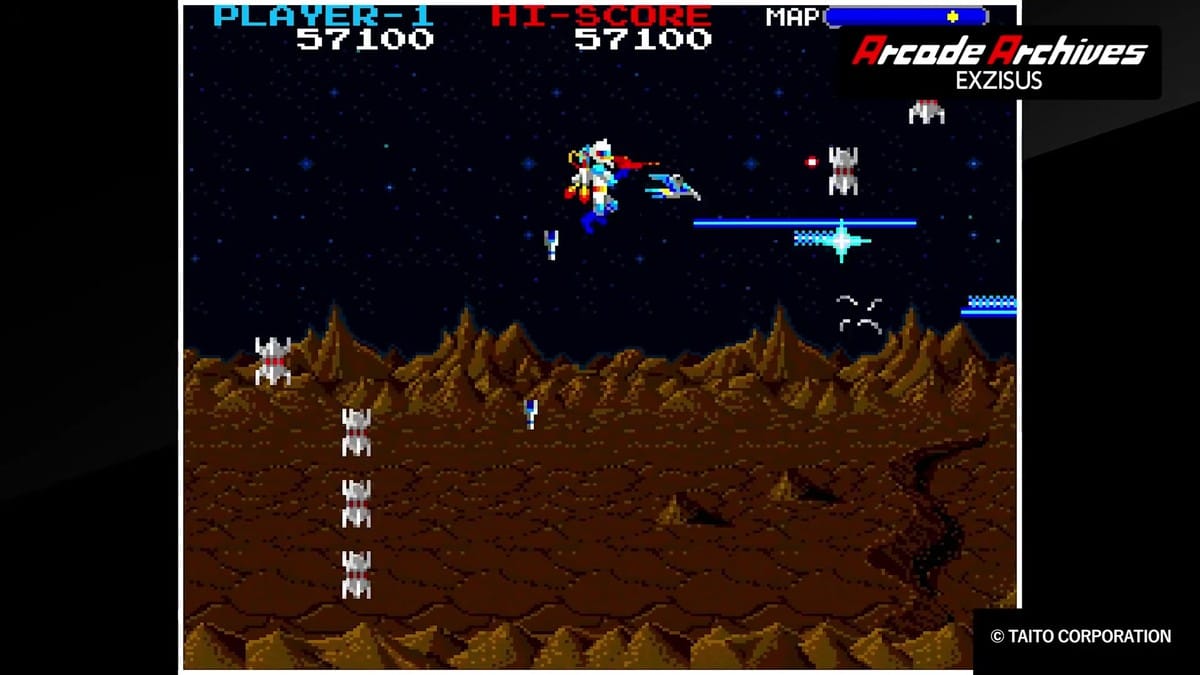
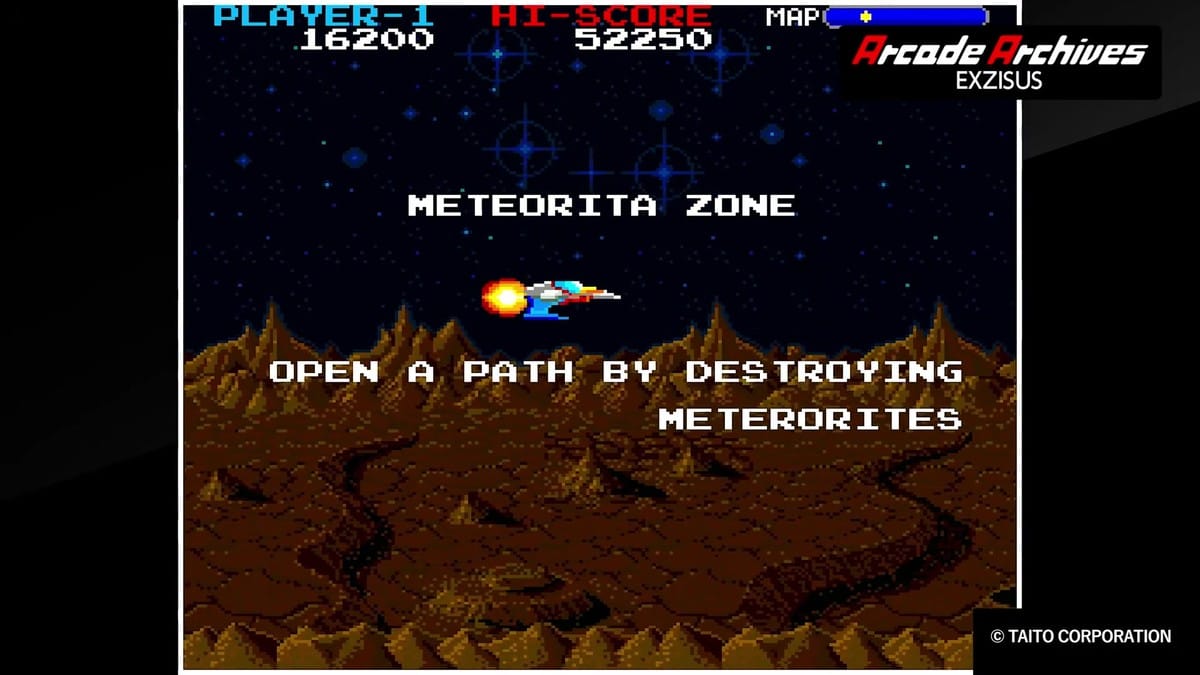
Grabbing enough power-ups transforms Robin into Turbo Jet mode, shifting the character from an armored humanoid into a sleek spacecraft. This transformation regularly triggers right as the stage shifts into the "Meteorita Zone," a high-speed hazard section that instructs players to "open a path by destroying meteorites" before they crush the ship. Taking a hit without a barrier shield strips the fighter form away, dropping you right back into the slower humanoid suit at the worst possible moment.
Four Z80s and a giant golden head
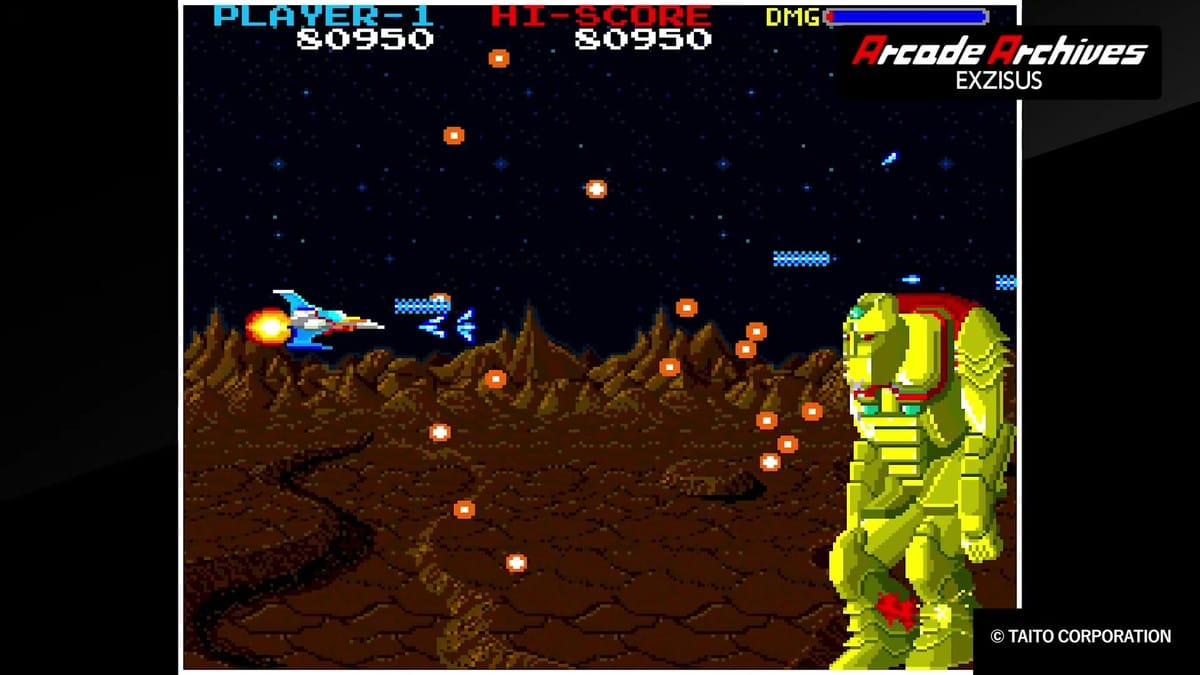
Taito built the original 1987 arcade hardware around four Zilog Z80 processors paired with a Yamaha YM2151 sound chip, using that muscle to push multi-layered parallax scrolling and massive end-of-stage bosses across four looping levels. Each stage concludes with a giant robotic boss where you have to target weak points while dodging dense bullet spreads. One of these encounters pits Robin against Gold Moai, a towering golden statue that fires rings of projectiles from its torso while robotic serpents guard its flank. Between Konami's Gradius and Taito's own catalog, 1980s arcade developers clearly had an unspoken quota for putting Easter Island heads in outer space, though painting this one gold and giving it a glowing red visor is a nice touch.
While the standard single-screen version of EXZISUS previously appeared on the PlayStation 2, Xbox, and PC via the 2005 Taito Legends compilation (and Taito Memories Gekan in Japan), it hasn't had a standalone modern port until now. More importantly, this release includes both the single-screen version and the rare dual-screen arcade version, bringing the two-monitor setup home for the very first time.
Unlike Taito's Darius, which placed multiple monitors side by side to create an ultrawide playfield, the dedicated EXZISUS cabinet used a half-mirror setup to overlap two screens for a layered depth effect. I'm curious how well that overlapping depth illusion translates to a single flat television panel, since half-mirror cabinet tricks usually lose some punch without physical glass between the layers.
Two tiers of emulation
Like last week's release of Swimmer, EXZISUS splits its feature set across two pricing tiers depending on your console generation. Both the $7.99 and $9.99 versions include Original Mode, Hi Score Mode, Caravan Mode, multiple save states, a rewind function, rapid-fire toggles, and CRT display filters. Stepping up to the $9.99 Arcade Archives 2 version on Switch 2, PS5, or Xbox Series X|S adds a speedrun-focused Time Attack Mode and Variable Refresh Rate (VRR) support to match the original 60Hz arcade board's timing more closely. Paying an extra two dollars just to get VRR and a timer feels a bit steep, especially when the core emulation and the newly preserved dual-screen ROM are identical across both editions.

Comments ()