
The Vectrex mini physical games revealed
The team behind the upcoming Vectrex Mini just emailed backers about a new lineup of homebrew cartridges from developer AR Vectrex.
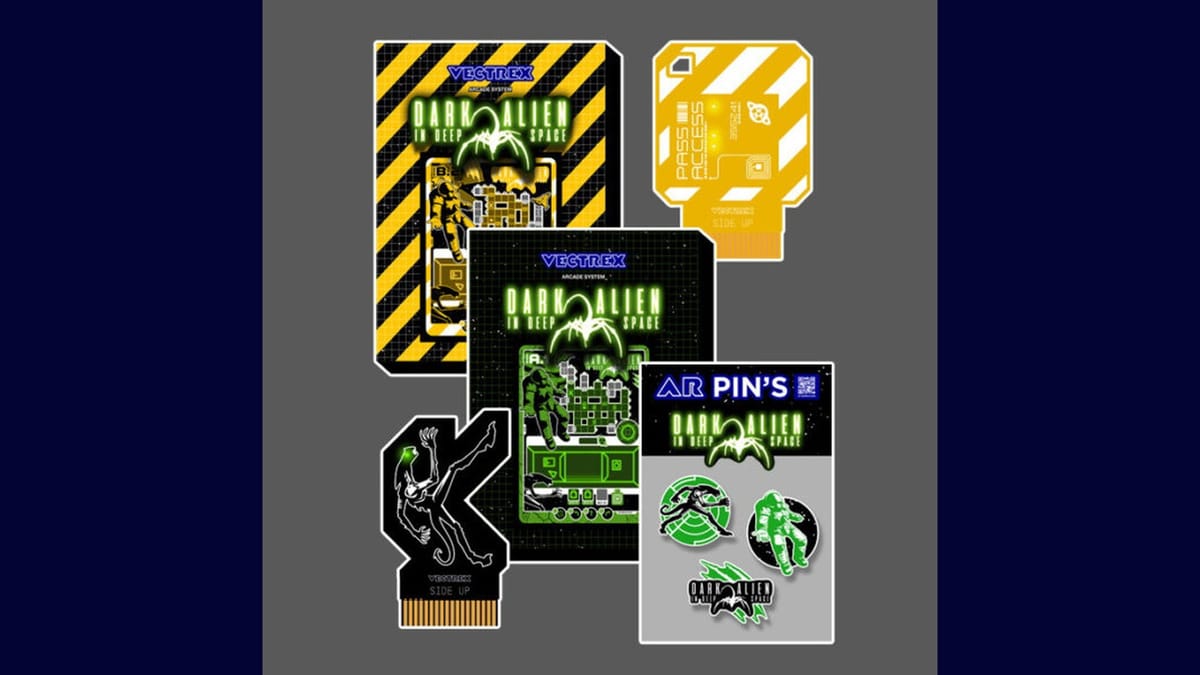
The team behind the upcoming Vectrex Mini just sent an update email to its Kickstarter backers (a group that includes me) to highlight a new lineup of physical games from AR Vectrex. The developer has a fresh batch of cartridge releases ready for the system.
Brand new vectors
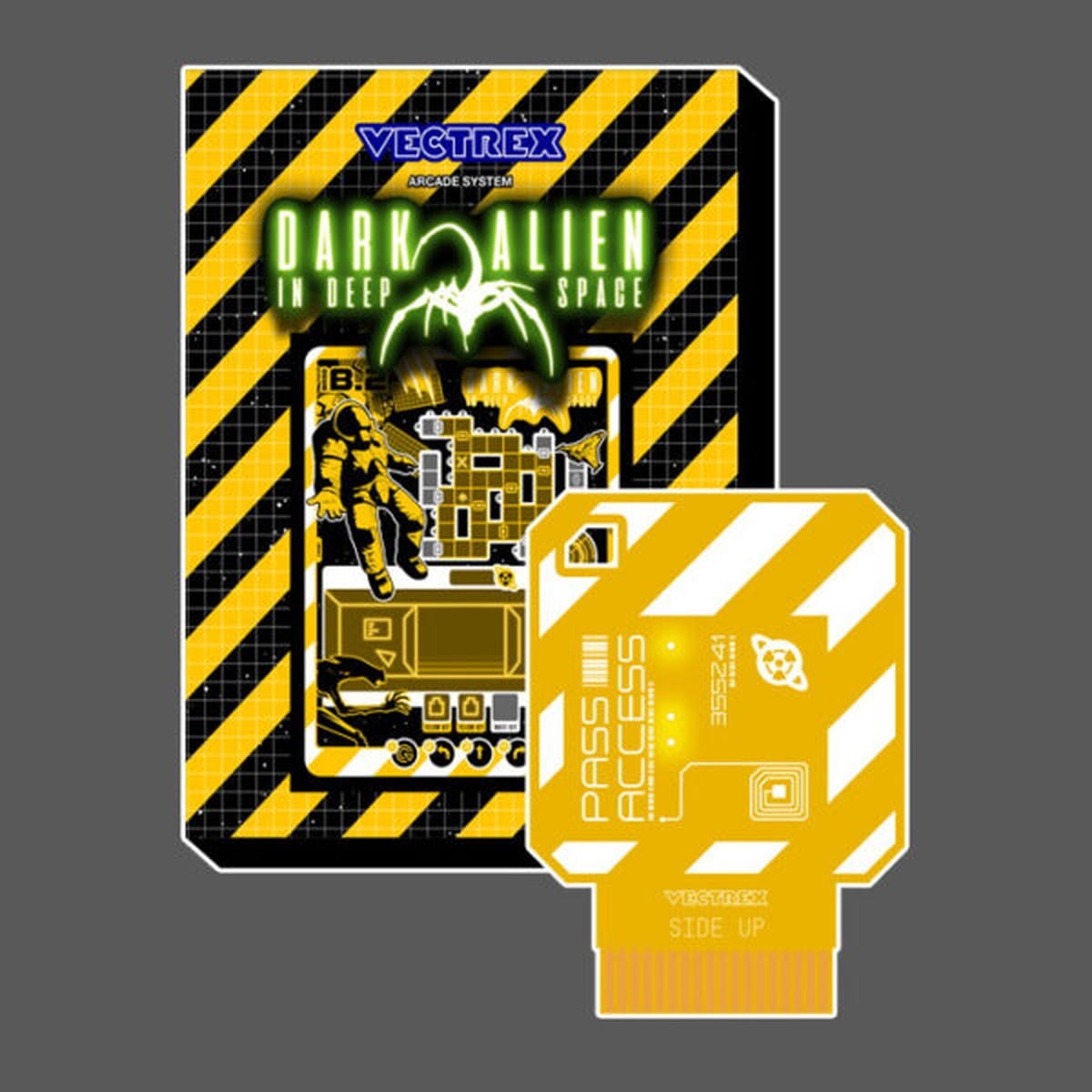
These are not vintage titles from the original console's lifespan. They are brand-new homebrew games programmed for the hardware. The lineup includes Dark Alien in Deep Space, which comes in two variants called Solaris and Teria. The Solaris version uses a black PCB with green LEDs. The Teria version uses a yellow PCB with yellow LEDs. The other major release is Zombie Apocalypse, available in a Japan edition as well as USA versions with either red or black printed circuit boards.
Like the original 1982 releases, these new games rely on physical screen overlays to provide color and static background art. The cartridges themselves are built with custom transparent shells and internal LEDs that light up the circuit boards during gameplay.
Each individual game costs 79 €. AR Vectrex is also selling 19 € collector pin sets for each title. If you want absolutely everything, purchasing all the game variants and pins individually would total 431 €. That price is ambitious, but the boutique homebrew market has always operated on small production runs and premium packaging.
The 1982 original
To understand why new physical cartridges are still being made, you have to look at the original hardware. General Consumer Electronics released the Vectrex in 1982. It was a massive anomaly in the console market because it did not need to be plugged into a television. The system had its own built-in vector monitor. The console launched with Mine Storm built directly into the hardware. This meant buyers had something to play right out of the box.
Instead of drawing graphics with a grid of pixels, the monitor manipulated an electron beam to draw crisp, continuous lines. This gave games a distinct, glowing arcade look that standard raster televisions could not replicate. The console also used plastic screen overlays to simulate color, since the monitor itself was strictly black and white.
The original Vectrex controller was also unusual for its time. It had a self-centering analog joystick and four action buttons lined up in a row. This made it feel closer to an arcade control panel than a standard home console joystick.
The Vectrex had a very short retail life. The video game crash of 1983 wiped out much of the industry, and the console was discontinued by 1984. Despite the brief run, the unique hardware cultivated a dedicated homebrew community that has spent decades programming new vector games.
Shrinking the CRT
That enduring interest led to the Vectrex Mini. The project launched on Kickstarter in late 2025 to create a modernized, scaled-down version of the console. The campaign was highly successful. It proved there is still an audience for vector graphics.
The Mini does not actually use a CRT. Manufacturing new vector monitors for consumer electronics is no longer viable. Instead, the hardware uses a 5-inch AMOLED screen with custom display filters to simulate the glowing lines of the original system. It also adds modern conveniences like HDMI output, a rechargeable battery option via USB-C, and a Bluetooth controller that mimics the layout of the 1982 original. There is also a MicroSD card slot for loading digital files.
The recent backer email is a reminder that the software ecosystem is still active while we wait for the hardware to ship.



Comments ()