
Third Strike hits MiSTer FPGA in Jotego's latest CPS3 update
The final game for the JTCPS3 core is here, bringing Capcom's 1999 fighting game to MiSTer alongside a brand new cycle-accurate MCU.
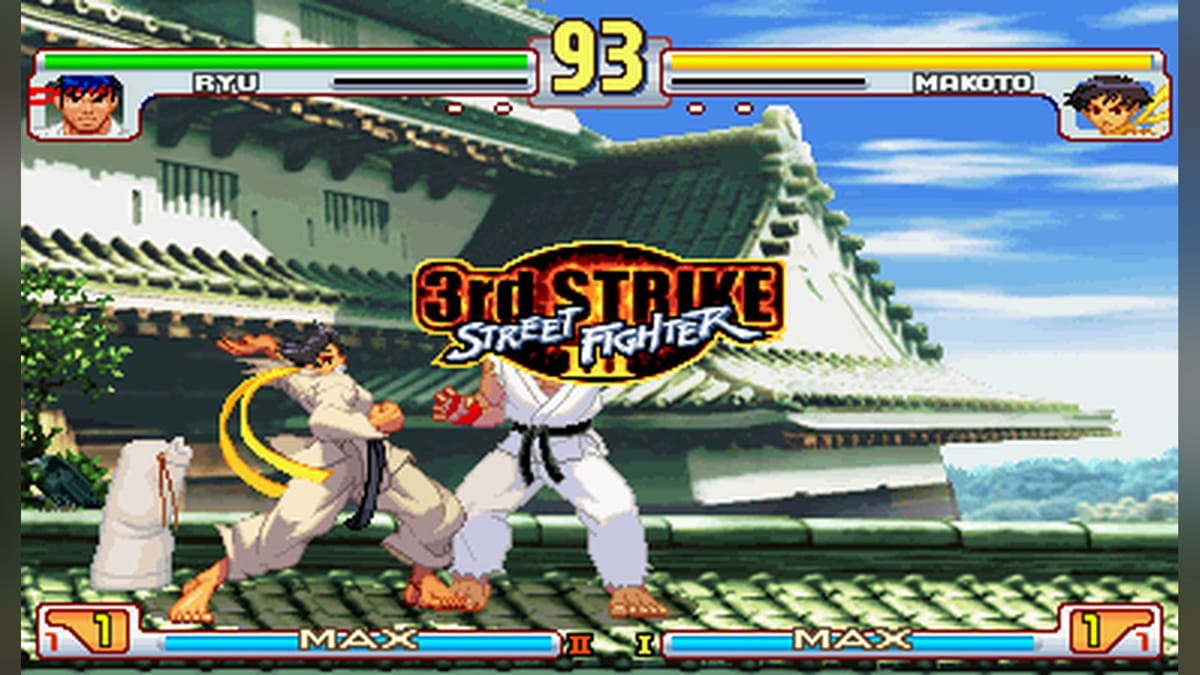
FPGA developer Jose Tejada, better known as Jotego, has released the final game update for his JTCPS3 core, bringing Capcom's 1999 fighting game Street Fighter III: 3rd Strike - Fight for the Future to MiSTer hardware. The update is currently available via Jotego's Patreon, marking the completion of the Capcom Play System III catalog on the platform.
The JTCPS3 core first entered beta in June 2026. Getting the hardware's complex CD-to-SIMM streaming architecture and suicide battery security system running on an FPGA has been a massive undertaking. With this release, the core now supports all six commercial games produced for the board before Capcom shifted its focus to 3D arcade platforms.
That is a lot of kilobytes
Third Strike is the largest game supported by any of the cores in the Jotego GitHub repository. The stream file from the SD card to the FPGA is 82,432 KiB. Before the CPS3 core came along, the size record belonged to Vampire Savior at 45,320 KiB.
To put that in perspective, the smallest game in the JT catalog is Konami's Ping-Pong at just 48 KiB. Third Strike is roughly 2,000 times larger. Even well-known classics like Circus Charlie (144 KiB) and Ghosts'n Goblins (352 KiB) are a fraction of the size.
Despite the massive footprint, the game operates on traditional arcade principles. It relies on tile maps for backgrounds, hardware sprites, and a DMA mechanism similar to the one used in Ghosts'n Goblins. The sheer size of the ROM is what allows the game to play all of its music using digitized sounds (PCM) without relying on pulse or FM sound synthesizers. That enormous ROM is also responsible for the incredibly fluid, hand-drawn sprite animations. It is fascinating to see how Capcom pushed 2D graphics to their absolute breaking point here, making a 1:1 home console port mathematically impossible on 1999 hardware like the Dreamcast.
Running at 59.64Hz
There is one technical caveat with the current release. The video timing uses the CPS1 and CPS2 standard of 59.64Hz rather than the native CPS3 timing. As a result, the game runs slightly faster than it should.
Jotego made this adjustment a while back to improve compatibility with consumer CRT televisions. Jotego noted that he plans to find a better arrangement in the future that preserves the original arcade speed while still playing nicely with older displays.
The Space Harrier problem
The Third Strike release also includes a major under-the-hood change for the wider JT ecosystem. Many arcade systems used an Intel 8751 microcontroller unit to handle small side tasks, often related to copy protection. Previously, Jotego used the Oregano 8751 MCU core, but it lacked cycle accuracy.
For most games, an inaccurate MCU is not a critical issue. However, some systems require exact timing to function at all. Space Harrier is one of those games. To make Space Harrier possible, Jotego replaced the Oregano MCU with his own custom, cycle-accurate JT8051 MCU.
While there are no brand new game cores taking advantage of this today, a large number of older cores have been updated to use the new JT8051. It is a quiet fix, but it paves the way for more accurate Sega hardware emulation down the line.
Comments ()