
The original Tomb Raider is getting an Unreal Engine 5 remake
Crystal Dynamics and Flying Wild Hog are rebuilding the 1996 classic from the ground up. Tomb Raider: Legacy of Atlantis launches in February 2027.
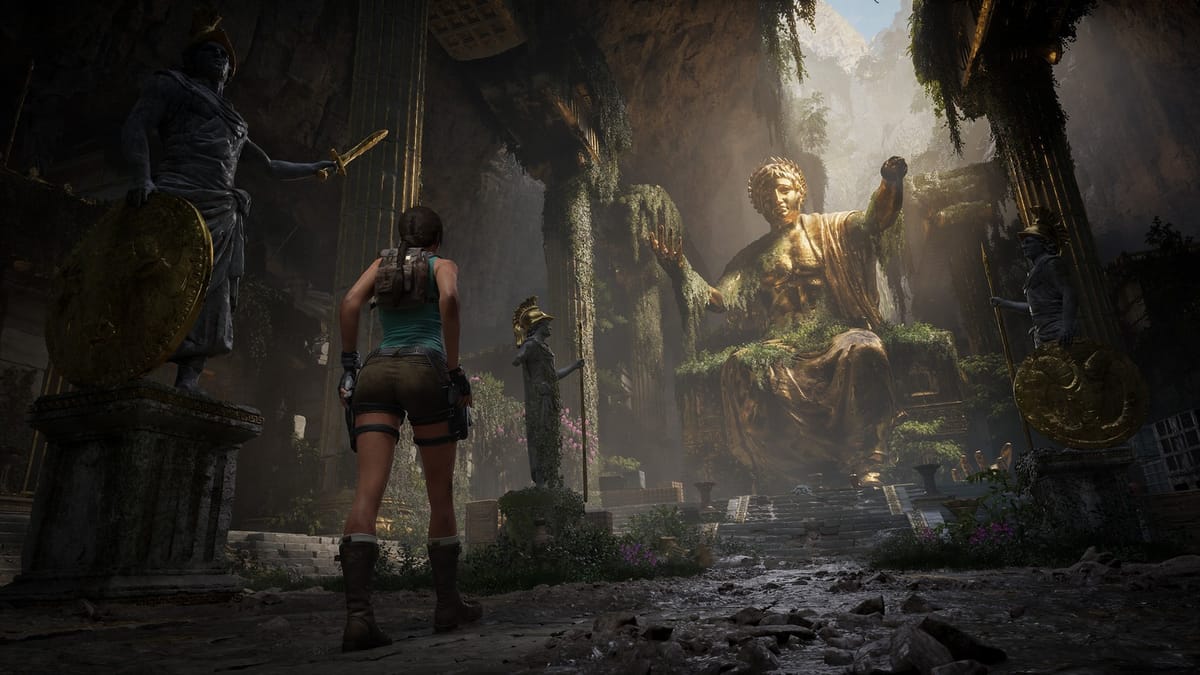
Crystal Dynamics and Flying Wild Hog are rebuilding the 1996 classic Tomb Raider from the ground up in Unreal Engine 5. The new version is titled Tomb Raider: Legacy of Atlantis and launches on PlayStation 5 on February 12, 2027.
The announcement arrived via the PlayStation Blog alongside a new gameplay trailer.
Tomb Raider: Legacy of Atlantis gameplay trailer.
This is a complete reimagining of Lara Croft's first adventure. The original 1996 game defined 3D action-adventure on the Sega Saturn, MS-DOS, and PlayStation. Now the developers are expanding the original environments with modernized gameplay, updated combat, and a massive visual overhaul.
Opening up the Lost Valley
The level design is getting a major structural shift. In the 1996 original, locations like Peru's Lost Valley were built as a series of self-contained rooms. Legacy of Atlantis opens those areas into semi-connected environments. Players can traverse the landscape and approach puzzles from different angles.
The goal is to make the spaces feel like real places rather than abstract obstacle courses. The environments are packed with secrets, collectibles, and resources. Classic set pieces are returning but with a modern twist. The classic cog puzzle in Peru is back, but it is now integrated more naturally into the surrounding world.

Crystal Dynamics knows this territory
Core Design created the original Tomb Raider and handled the franchise through the late nineties and early two-thousands. Crystal Dynamics took over the main development of the Tomb Raider franchise in 2003, releasing their first game in the series, Tomb Raider: Legend, in 2006.
They actually already remade the 1996 game once. Tomb Raider: Anniversary launched in 2007 to celebrate the franchise's first decade. That game rebuilt the original adventure using the Legend engine. Returning to the same well twenty years later in Unreal Engine 5 shows just how much 3D game development has changed. The blocky, grid-based platforming of the original is long gone.
After Anniversary, Crystal Dynamics eventually rebooted the entire property with the Survivor trilogy starting in 2013. Those games pushed Lara into a gritty, cinematic survival setting. Legacy of Atlantis seems to bridge the gap, bringing the high-fidelity presentation of the modern games back to the isolated tomb-raiding focus of the 1996 original.
Flying Wild Hog brings action chops
The addition of Flying Wild Hog as a co-developer is the most interesting part of this announcement. The Polish studio is best known for fast-paced, aggressive action games like the Shadow Warrior reboots, Trek to Yomi, and Evil West.
The 1996 Tomb Raider was methodical. You had to line up jumps, manage tank controls, and carefully calculate your momentum. Combat was mostly about locking onto bats and wolves while flipping out of the way. Bringing in a studio known for fluid, visceral combat suggests the modernized gameplay will lean heavily into modern action mechanics. I am very curious to see how they balance the slow, deliberate isolation of the original game with modern combat expectations.
Waiting on other platforms
The February 2027 release date was announced through PlayStation's official channels. Sony is heavily promoting the PS5 version. However, co-developer Flying Wild Hog has already stated that 'The game is being developed for PC and consoles,' indicating that PC and other console versions are planned.
The original game was a massive multiplatform hit, and the modern reboots have all enjoyed wide releases across PC and Xbox ecosystems. This multiplatform approach continues, as the game is not locked to a single platform. We are still over eight months away from launch, and the developers promise more details about the crumbling ruins of Greece and other classic locations later this year.



Comments ()