
The original 1994 Tekken arcade game is coming to current consoles
Hamster Corporation is bringing Namco's very first 3D fighting game to the Switch 2, PlayStation 5, and Xbox Series X|S via the Arcade Archives 2 series.
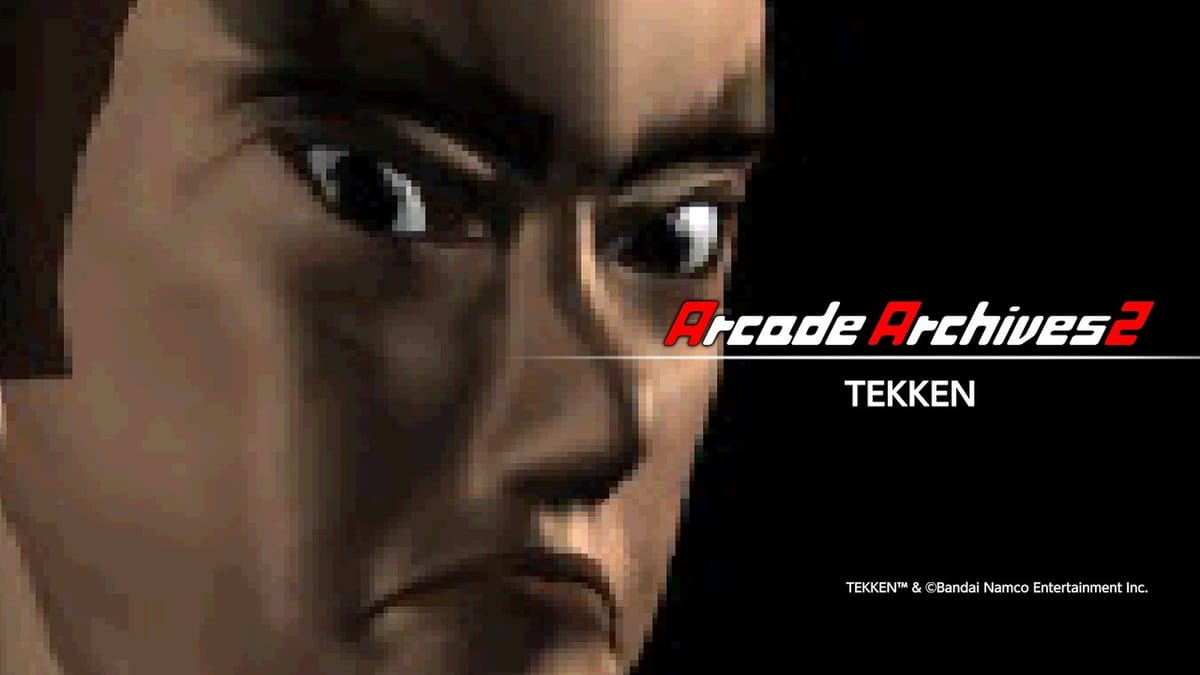
Hamster Corporation is bringing the original 1994 arcade version of Tekken to modern consoles as part of its Arcade Archives 2 series. The re-release will make Namco's first 3D fighting game available on the Nintendo Switch 2, PlayStation 5, and Xbox Series X|S.
In 1994, Sega's Virtua Fighter was dominating arcades with its smooth 3D animation. Namco needed a response. The company hired several developers who had worked on the Virtua Fighter project to build Tekken. The result was a game that used texture mapping on its character models. This gave fighters a level of visual detail that flat-shaded polygons could not match.
The original arcade game ran on Namco's System 11 hardware. That board was heavily based on the architecture of the unreleased PlayStation console, which gave Namco a massive head start when it came time to port the game home. This new release focuses entirely on the arcade original. It brings back the pure 1994 King of Iron Fist Tournament exactly as it existed in cabinets, long before the home console version added extra modes and expanded the roster.
The 1994 starting lineup
The starting roster includes the eight original fighters. Players can pick Kazuya Mishima, Paul Phoenix, Michelle Chang, Nina Williams, King, Marshall Law, Jack, and Yoshimitsu in their earliest polygonal forms. Each character has a specific sub-boss they face late in the arcade ladder. The run ends with a final fight against Heihachi Mishima.
The stages are exactly as they were in the arcades over thirty years ago.
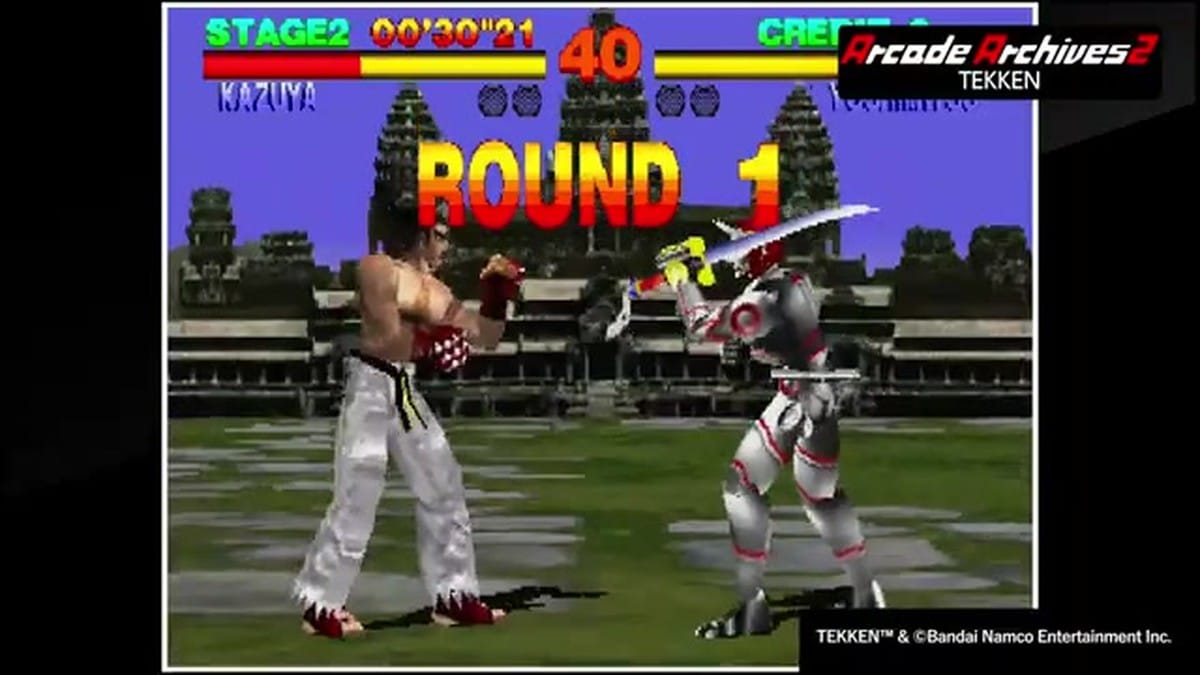
Matches take place in early 3D environments like the Angkor Wat ruins and a desert canyon. You can also fight the massive robot Jack in a baseball stadium.
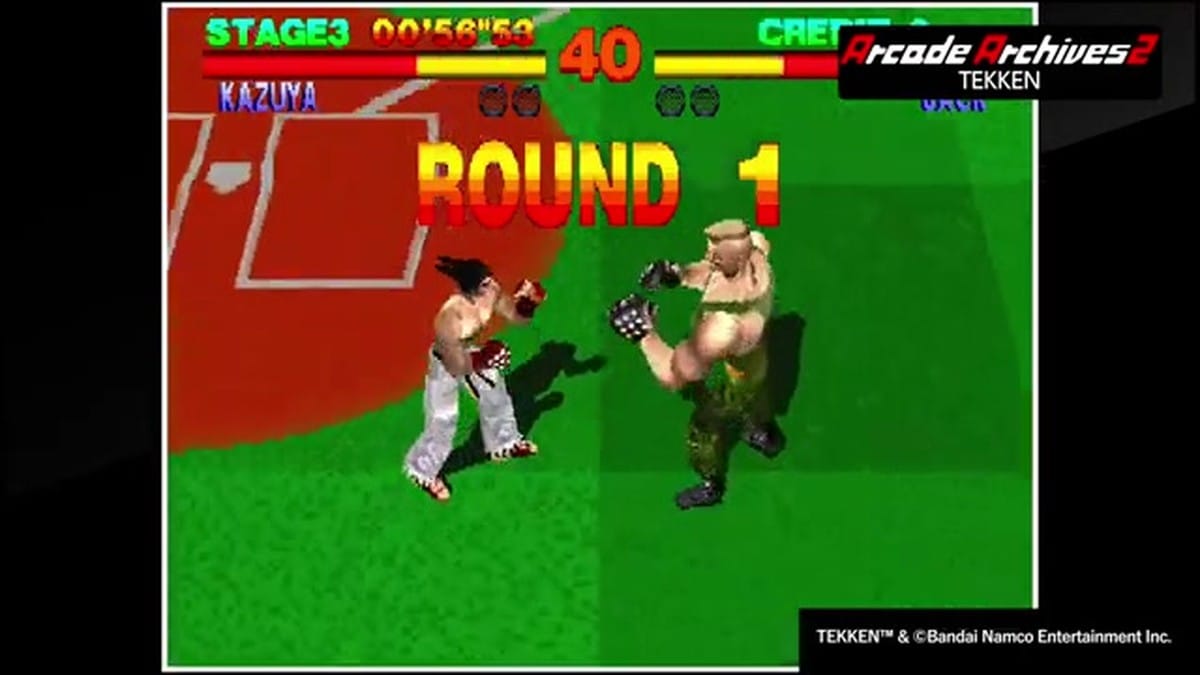
Unlike later games in the series, these arenas are infinite planes with no walls or stage transitions. The background is just a flat 2D image scrolling behind the 3D floor.
The combat system introduced the four-button layout that maps one button to each of the fighter's limbs. It is a control scheme Bandai Namco still uses today. The 1994 execution is much stiffer than modern fighting game players might expect. Movement is entirely 2D. You cannot sidestep into the background to dodge attacks, a mechanic that did not become standard until much later in the franchise.
The 3D arcade push
Hamster launched the Arcade Archives 2 label to handle more complex 3D arcade hardware from the 1990s. The publisher started the line alongside the Switch 2 launch with racing games like Ridge Racer and Rave Racer. Adding a heavy hitter like Tekken opens the door for other mid-90s fighting games to get straightforward, arcade-accurate ports.
Because this is an Arcade Archives 2 release, it includes a few specific modern features. The emulator supports variable refresh rates to smooth out the frame pacing. It also includes standard additions like save states, display filters, and online leaderboards. Hamster's recent releases have also included a Time Attack mode that challenges players to clear the arcade ladder as fast as possible.
This is strictly the arcade version. It does not include the arranged CD soundtrack. It lacks the CGI ending cutscenes that were a major selling point for the 1995 PlayStation home console release. You are getting the raw coin-op code.
Playing the first game in 2026 is mostly a history lesson. The movement is heavy and the gravity feels strange compared to modern fighters. The massive airborne juggle combos the series is known for do not really exist yet. It is fascinating to see the exact moment Namco figured out how to build a 3D fighter to compete with Sega's Virtua Fighter. The foundation is all there, even if it took a few sequels to polish the edges.

Comments ()