
Terra Cresta's 8-bit port is coming to PS5 and Switch 2
Hamster's Console Archives series is bringing the 1986 Famicom version of the Nichibutsu shooter to modern platforms with new emulation tools.
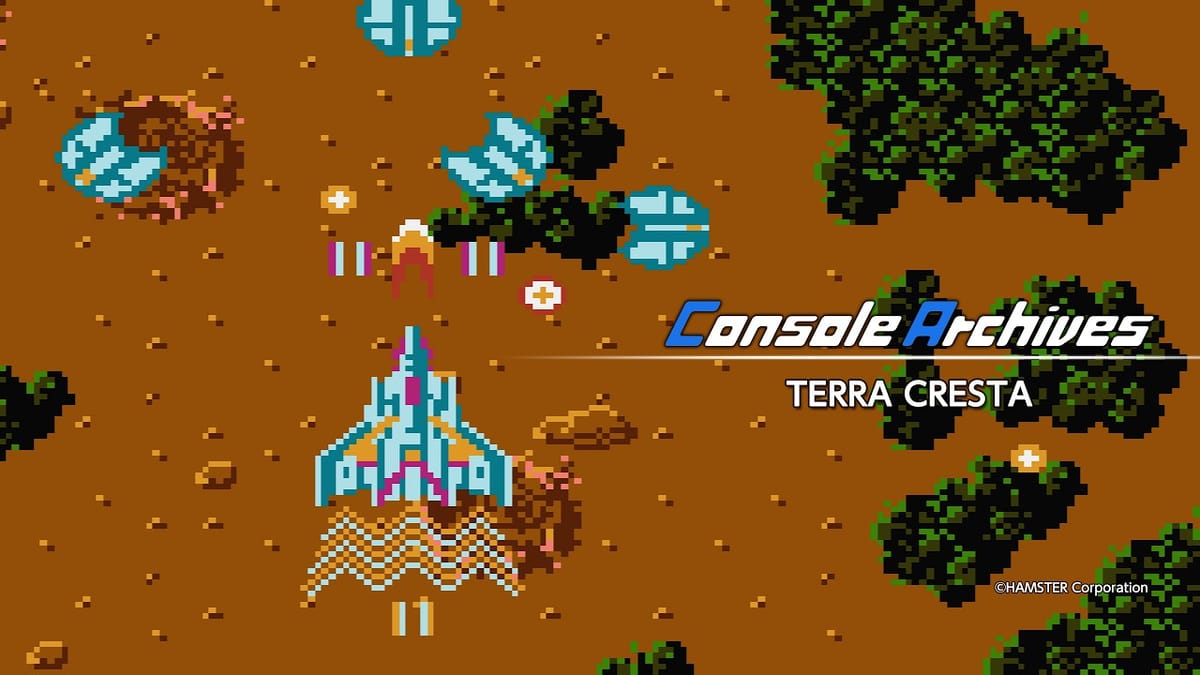
Hamster has announced that the 1986 home console port of Terra Cresta will launch on PlayStation 5 and Nintendo Switch 2 on March 26. The vertical shooter will cost $7.99 and joins the publisher's growing Console Archives lineup.
Originally developed by Nichibutsu for arcades in 1985, Terra Cresta made its way to the Famicom the following year. It operates as a direct sequel to the 1980 fixed-screen shooter Moon Cresta. While the arcade original is already available through Hamster's Arcade Archives series, this new release specifically preserves the 8-bit home conversion.
Building a better spaceship
The plot follows humanity's attempt to reclaim Earth from the Mandora military dictatorship. You start the campaign with a basic fighter craft called the Wing Galiber and collect numbered parts from ground stations. Each piece snaps onto your ship to increase its overall size and firepower.
The game's primary hook is its modular power-up system. The number of parts you collect directly changes how your ship behaves. Two parts result in a dual formation that fires a wave arch. Three parts generate a triangle that increases your firing coverage. A four-ship formation adds orbs that move forward in a circular motion. If you manage to collect all five parts without taking a hit, the ship turns into an invincible flaming phoenix for a brief period.
Once you collect enough parts, you can split the ship apart to perform wide formation attacks. This home version manages to keep the formation system intact despite the hardware limitations of the time. It even includes a custom formation editor that lets you program the exact flight patterns your separated ship parts will take during special attacks.
The Nichibutsu formula
Nichibutsu relied heavily on this docking mechanic throughout the 1980s. The studio used similar modular ship systems in other arcade games like Mag Max and UFO Robo Dangar. Terra Cresta eventually received its own direct sequels, including Terra Force in arcades and Terra Cresta II on the PC Engine. The 1986 Famicom port remains one of the most widely played versions of the franchise.
Adapting to the living room
Porting arcade games in the mid-1980s always required compromises. The original arcade cabinet used a vertically oriented monitor, which gave players a tall, narrow view of the battlefield. The Famicom version had to squeeze that action into a standard 4:3 television aspect ratio. This changed the pacing and enemy spawn patterns slightly. The home version plays very differently than the coin-op release.
The bosses also reflect the transition to home hardware. You fight massive geometric mechas that fire slow-moving fists and overlapping bullet patterns. If a boss fight drags on for too long, the enemy will simply time out and leave the screen. This allows you to continue the stage.
Modern adjustments
Like other entries in the Console Archives series, Terra Cresta includes a wrapper of modern emulation tools. Hamster has added rapid-fire settings, custom button mapping, and save states to make the game more approachable. You can also use a rewind function to undo mistakes during particularly difficult sections.
The release has screen layout adjustments and CRT filters for players who want to simulate the look of an old television. Hamster has spent years building a massive library of arcade ports. The Console Archives series is a newer initiative that runs parallel to that project. It focuses on the Famicom and other home platforms. Seeing the company dig into individual home console conversions of those same arcade games provides a good excuse to revisit how developers used to squeeze complex coin-op mechanics into 8-bit cartridges.
Comments ()