
Taito's Cameltry spins onto modern consoles tomorrow
Hamster Corporation is bringing the 1990 arcade puzzle-action game to PlayStation, Xbox, and Switch as part of the Arcade Archives lineup.
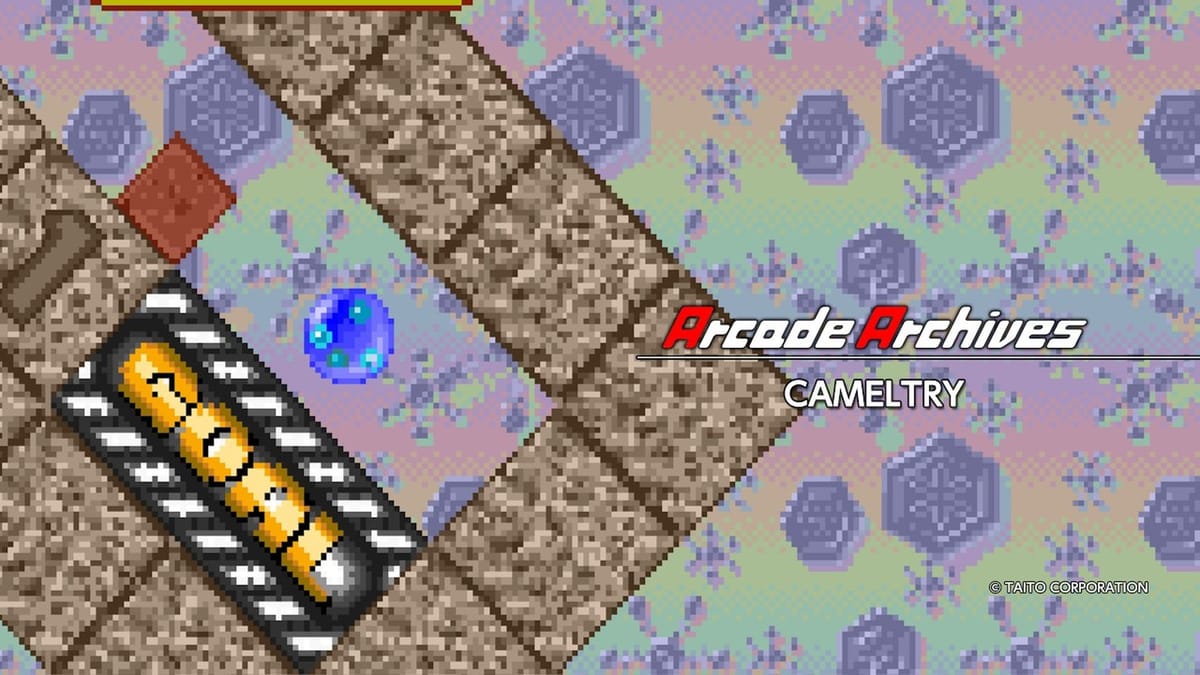
Hamster Corporation is releasing Taito's 1990 arcade game Cameltry on PlayStation, Xbox, and Nintendo Switch platforms tomorrow, June 4. The puzzle-action game joins the long-running Arcade Archives series, which reproduces classic coin-op titles for current hardware.
In Cameltry, you do not actually control the ball. You rotate the entire maze around it. Gravity then pulls the ball toward the goal. The objective is to navigate through the winding corridors and reach the end before the timer runs out.
Hitting the walls too hard or touching certain obstacles reduces your remaining time. The stages are filled with bumpers that bounce the ball away, breakable blocks, and various traps designed to ruin your momentum. You can gain extra time by hitting specific bonus blocks. This creates a constant risk-reward calculation. Do you take a detour for a few extra seconds, or do you rush straight for the exit?
Spinning the wheel
Taito originally built the arcade cabinet around an optical rotary dial. This was the exact same spinner hardware used for Arkanoid. Players would furiously spin the dial to whip the maze around. This setup allowed for incredibly fast, precise movements that a standard joystick could not match.
Playing the game today with a standard analog stick or d-pad changes the feel slightly, but the core physics puzzle remains intact. Nintendo fans might recognize the game from its 1992 Super Nintendo port, which was renamed On the Ball in North America and Europe. That version specifically supported the Super NES Mouse to replicate the arcade dial's smooth rotation. Taito also ported it to the FM Towns and X68000 computers in Japan.
Hamster is splitting this release across console generations. The standard Arcade Archives version is launching on PlayStation 4 and the original Nintendo Switch. Meanwhile, an Arcade Archives 2 version is dropping simultaneously for PlayStation 5, Xbox Series consoles, and the Switch 2. The current-generation version costs $9.99, while the older platforms get it for $7.99. Both versions include Hamster's usual emulation features, like save states, display filters, and online leaderboards for high score tracking.
Escalating weirdness
The game's visual themes escalate quickly. It starts normal enough with the "Morning Forest" stage. By World 2, you are navigating the "Aqua Palace." Here, you have to dodge fish and underwater hazards.
Things get stranger in the back half of the game. World 4, "Menthol Moon," introduces flying enemies and much tighter, more complex maze structures. World 5, "Space Walker," drops the ball into a cosmic environment with gravity-defying layouts and neon aesthetics. The difficulty ramps up alongside the visual changes. The later mazes require aggressive, rapid rotations to avoid getting stuck in dead ends.
Arcade puzzle games from this era often relied on a single strong mechanical hook. Cameltry built its entire identity around rotation, and that single idea carries the whole experience. Squeezing a ball through a narrow gap right as the timer hits zero is just as stressful now as it was thirty-six years ago. The online leaderboards should give modern players a good reason to memorize the optimal path through the Menthol Moon.



Comments ()