
The spruceOS v4.4.0 update hits Anbernic handhelds and adds a new DS emulator
The custom firmware project expands its hardware support to the Anbernic H700 lineup and introduces a ground-up Nintendo DS emulator.

The team behind spruceOS released version 4.4.0 today, bringing stable support to Anbernic's H700 handheld lineup and introducing a brand new Nintendo DS emulator.
If you are unfamiliar with the project, spruceOS is an open-source custom firmware and user interface frontend for retro handhelds. It originally launched to optimize performance and strip out the stock operating system bloat on budget devices like the Miyoo A30. Over the last year, it has evolved into a comprehensive multi-device platform.
Two cards are better than one
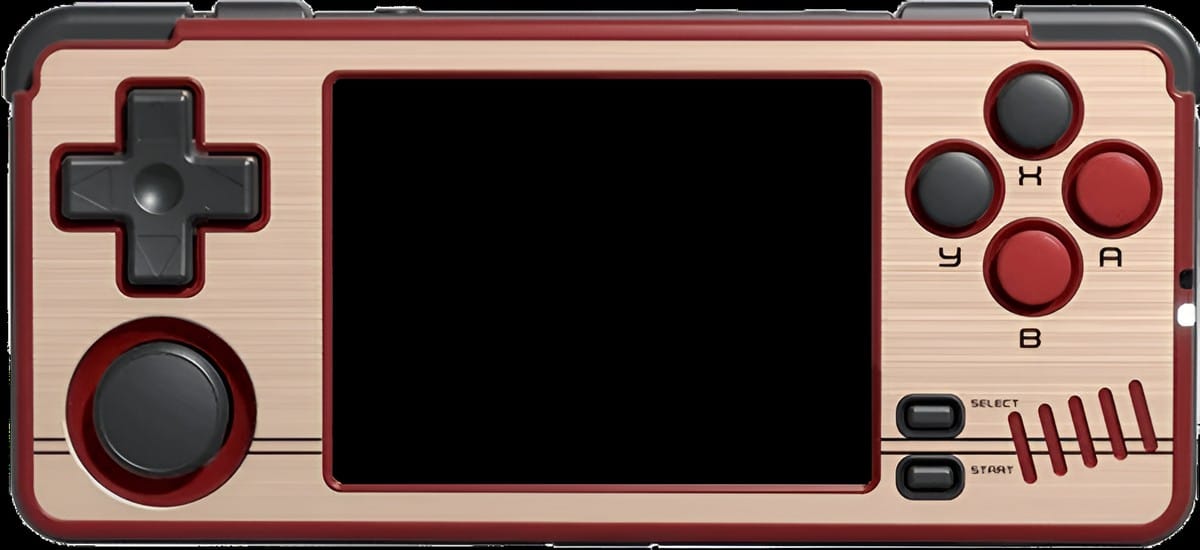
The headline feature of this update is stable support for the Anbernic RGXX+ family. This covers handhelds powered by the Allwinner H700 chip, including the RG35XX Plus, RG35XX H, RG40XX, the clamshell RG SP, and the RG28XX.
To make this work across different hardware architectures, the developers are using a dual-card setup. Users install a minimal boot system called BaseOS on their first microSD card (TF1), while the actual spruceOS installation lives on the second card (TF2). This keeps the primary operating system and ROM library completely swappable between supported devices. You can pull your TF2 card out of a Miyoo A30 and slot it directly into an Anbernic RG SP without losing your save states or configurations.
The version 4.4.0 update also adds early, in-development support for the Powkiddy RGB30 and the MiniLoong Pocket 1. The RGB30 requires a different minimal base called dArkMoss on its TF1 slot to handle its Rockchip RK3566 processor.
A new way to play DS
Version 4.4.0 ships with DSperate, a new Nintendo DS emulator created by developer Noxwell. Instead of hacking or reskinning the ubiquitous DraStic emulator, Noxwell built DSperate from the ground up. It includes auto-resume functionality, integer scaling, and native RetroAchievements support via libcurl.
The emulator also features per-device control schemes tailored to whether a handheld has two analog sticks, one stick, or no sticks at all. I am curious to see how DSperate handles the dual-screen layout on the RGB30 in particular, given that the device's 1:1 square display is usually reserved for Pico-8 and Game Boy emulation.
Smaller updates and PortMaster fixes
The developers completely overhauled the over-the-air (OTA) update pipeline. Handhelds will now download incremental diff packages instead of pulling a full 1.5GB archive for every minor patch. This new system makes nightly updates significantly faster.
The update brings native 64-bit and 32-bit RetroArch builds for the H700 devices, utilizing a mali-fbdev SDL2 stack since BaseOS lacks standard display managers. Standalone emulators like PPSSPP and mupen64plus received dedicated builds with pre-mapped controls. For Sega Dreamcast fans, the Flycast libretro core was replaced with a newer build from upstream version 2.6, which enables the Vulkan renderer and fixes frame pacing issues.
PortMaster support also received a major cleanup. The update bundles the latest upstream PortMaster release and automatically migrates the old "Roms/PORTS" directory to "Roms/ports" to match what the software actually expects.
Other system-level fixes include automatic timezone configuration via IP geolocation, proper lid sleep functionality for the Anbernic XX line, and new emulator cores for the Atari Jaguar and Tandy Color Computer.

Comments ()