
Sony patents magnetic controller buttons you can swap without tools
A new patent application from Sony Interactive Entertainment details a controller button system that replaces mechanical springs with magnetic attraction.
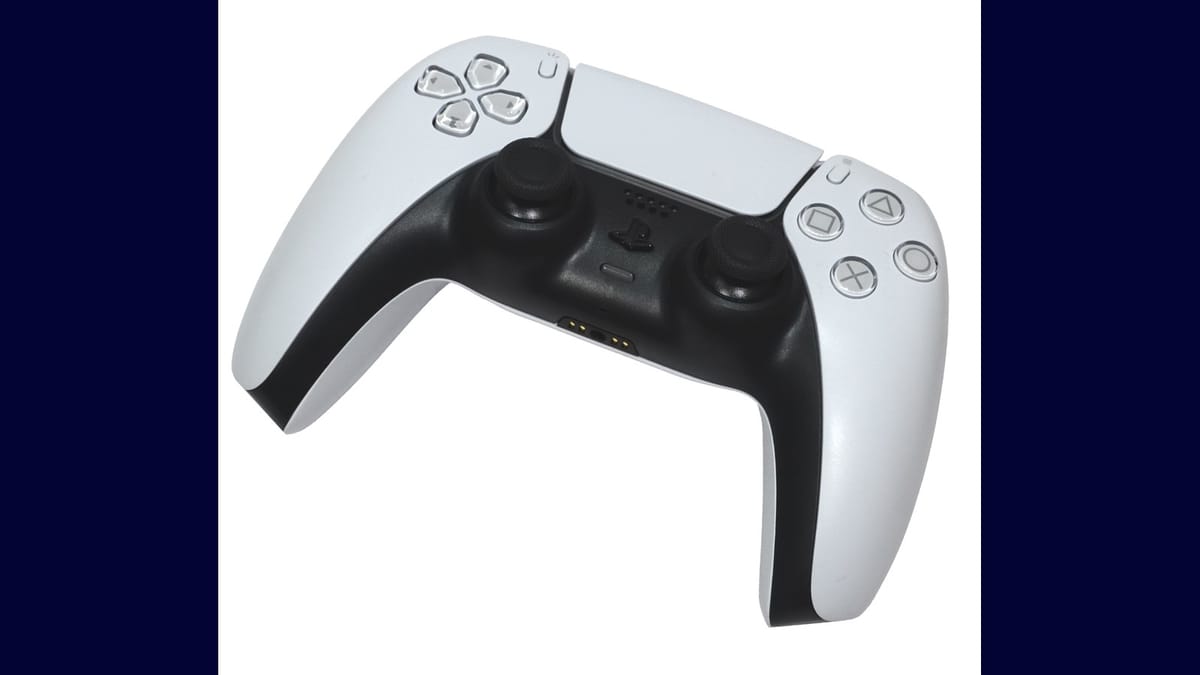
Sony Interactive Entertainment has a new patent application for controller buttons that use magnetic attraction instead of physical springs for their return force. The United States Patent and Trademark Office published the application on July 30, detailing a system where face buttons can be pulled straight out of the controller housing without tools.
To be clear upfront, this is a patent application, not a product announcement. The document is a continuation of an international filing from September 2024, with inventors Tatsuya Minami, Masaho Morita, Kazuyuki Suzuki, and Yoshihiro Aoyanagi credited on the design. It isn't currently shipping in any version of the DualSense, and you can't buy it today.
Two magnets instead of a spring
The mechanics are straightforward. Every standard controller button relies on a small internal spring or a rubber membrane to push the plastic back up after a press. Sony's filing replaces that physical tension with a pair of magnets.
One magnetic component sits inside the button itself. A second magnetic member remains fixed inside the controller housing. When you press the button down, the gap between the two magnets changes. The fixed magnet pulls the moving one back to its starting position the moment you let go. The return force comes entirely from magnetic attraction. Patentlyze covered the technical drawings this week, noting that the magnetic return system theoretically allows engineers to tune the button's resistance by adjusting the magnet strength.
Pulling buttons from the outside
Because the button is held in place by a magnetic field rather than mechanical clips, it's completely detachable from the outside. You can just grab the button and pull it out.
Springs wear out and fatigue over time, changing how a button feels after a few hundred hours of play. A magnetic system has no moving parts grinding against each other. It also opens the door to swapping button shapes or heights on the fly. We already have the DualSense Edge, but that controller only allows you to swap the analog stick modules. If a face button on the Edge gets sticky, you still have to take the whole shell apart. This application applies the modular concept directly to the operated members on the face of the pad.
Keeping the filings straight
Sony files a lot of hardware concepts, and it's easy to mix them up. This specific document is separate from the magneto-viscoelastic elastomer patent (WO2026/110304) that circulated in May and June. That older filing detailed buttons that dynamically change their physical hardness.
It's also completely unrelated to the modular magnetic grid and touchscreen controller patent (US 20260199776) that popped up in mid-July. Those are different ideas entirely. This one, detailed in US 2026/0219739 A1, is just about replacing a mechanical spring with a magnetic pull.
Hardware manufacturers patent internal mechanisms constantly to protect their research and development. Whether this mechanism ever makes it into a retail PlayStation controller is an open question, but it provides a detailed look at how Sony engineers are trying to solve mechanical wear.



Comments ()