
Sonic the Hedgehog just turned 35
Sega's 1991 platformer didn't just give the Genesis a mascot. It permanently changed the volume of the console wars.
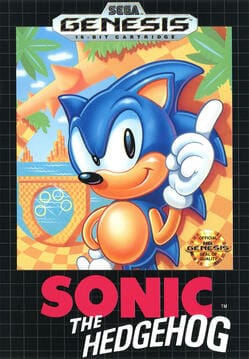
Sonic the Hedgehog turns 35 this week. The original Sega Genesis game launched in PAL regions on June 21, 1991, followed by a North American release on June 23 and a Japanese release on July 26. Sega's blue blur is officially old enough to run for president of the United States.
I didn't play it on launch day. I was all TurboGrafx-16. But that's another story. My childhood friend Craig got his Super Nintendo a bit later, and he let me borrow his Sega Genesis along with copies of Sonic 1 and Madden '92(I think?). Sitting on the floor of my bedroom, I remember being completely mesmerized by the colors and the sheer speed of the thing. It felt like it made me cooler. Sega's marketing was working...
Sega actually ordered the creation of a mascot platformer in 1990 to compete directly with Nintendo's Mario. After an internal character design contest, developer Naoto Ohshima won with his sketch of a blue hedgehog. The core team of Ohshima, programmer Yuji Naka, and designer Hirokazu Yasuhara formed Sonic Team. They built the game around two specific goals: extreme speed and a control scheme that only required a single button for jumping and attacking.

One button and a physics engine
To make that speed work, Naka programmed a novel technique that allowed Sonic's sprite to roll smoothly along curved scenery. The collision detection and physics engine could handle vertical loops and steep inclines without breaking the game's momentum. It was a massive technical flex for the Motorola 68000 processor inside the Genesis. Blah blah blast processing...
The original Green Hill Zone is still a triumph of visual design. (Video: LongplayArchive)
Sega of America knew exactly what they had. CEO Tom Kalinske and global head of marketing Al Nilsen playtested the game across the United States. As Kalinske detailed in a Sega-16 interview, the American branch's tactics were ruthless. They put Sonic up against Mario in blind tests, and 80 percent of players preferred the hedgehog. Sega brought the game to the Summer Consumer Electronics Show in 1991 and positioned it as the ultimate anti-Nintendo weapon.
Nintendo built its empire on family-friendly entertainment. Sega decided to target older teens and college students. Sonic had an attitude, a smirk on the box art, and an aggressive marketing campaign behind him. In late 1991, Kalinske made the bold call to replace Altered Beast as the pack-in game for the Genesis. Bundling Sonic with the console skyrocketed hardware adoption and cemented Sega's foothold in the 16-bit market.
A rare A+ from Entertainment Weekly
The press loved it immediately. Computer and Video Games gave the game a 94 percent score. Mean Machines awarded it a 92 percent. Entertainment Weekly handed it a rare A+ grade. It even swept the year-end awards, taking home Game of the Year from Electronic Gaming Monthly and winning Overall Game of the Year at the Golden Joystick Awards.
You actually have to use the brakes
It is common today to hear retro enthusiasts claim that the original Sonic the Hedgehog looked better than it played. The modern critique usually points out that the game encourages you to run fast but constantly punishes you with blind jumps and spike traps. People argue the level design actively fights the core mechanic. There are probably the same people that will complain about something in a retro game that they would have easily learned about or avoided had the read the manual.
I completely disagree. The original game feels fantastic if you actually slow down. The physics engine gives Sonic a tangible sense of weight and momentum. You have to earn your speed by navigating slopes and timing your jumps correctly. The platforming in Marble Zone and Star Light Zone requires precision, and the controls are tight enough to handle it. It is a momentum-based platformer, not a pure racing game.
Super Mario World is a brilliant puzzle box of level design and secrets. Sonic the Hedgehog is a triumph of audiovisual feedback. When you hit a monitor and grab ten rings, the sound effect is pure dopamine. The soundtrack by Dreams Come True bassist Masato Nakamura remains one of the best in the medium.
We will definitely publish more articles about the broader Sonic series and its many sequels later this year. For now, I just want to appreciate the 1991 original. It proved that Nintendo could bleed, and it gave the 1990s the exact mascot the decade deserved.

Comments ()