
SNES Audio Ripper 1.0.0 extracts music and SFX from ROMs
Developer Samsqwamch released SNES Audio Ripper 1.0.0, a free PC utility designed to pull music and sound effects straight from Super Nintendo ROMs.
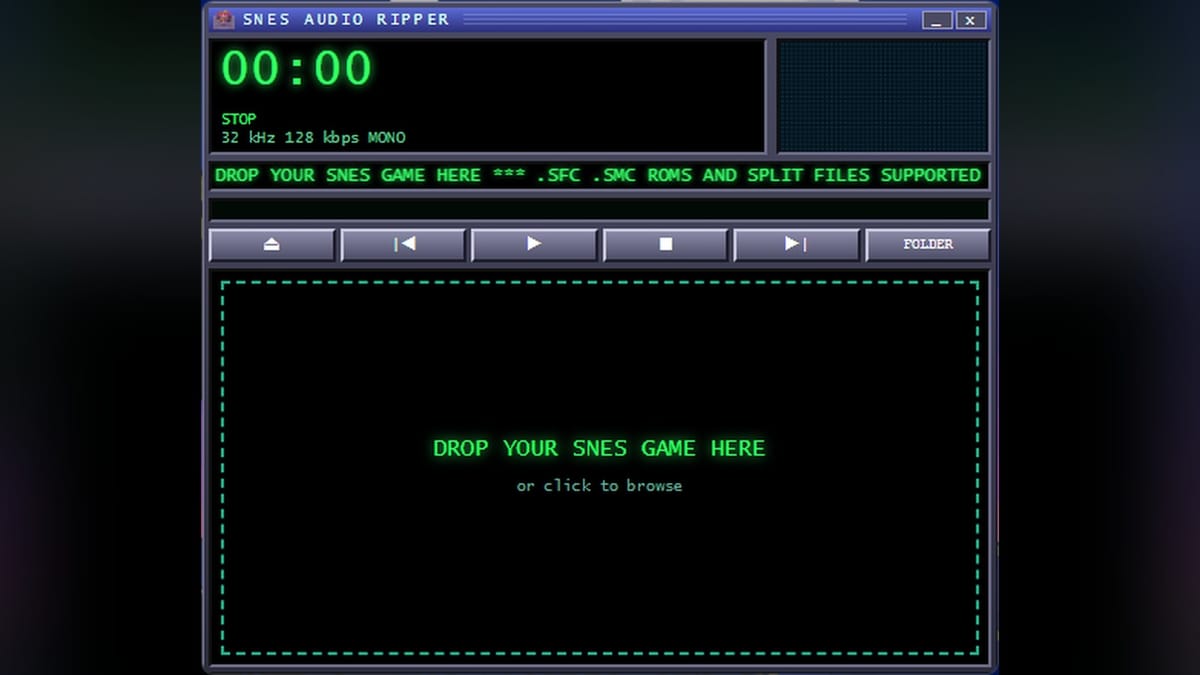
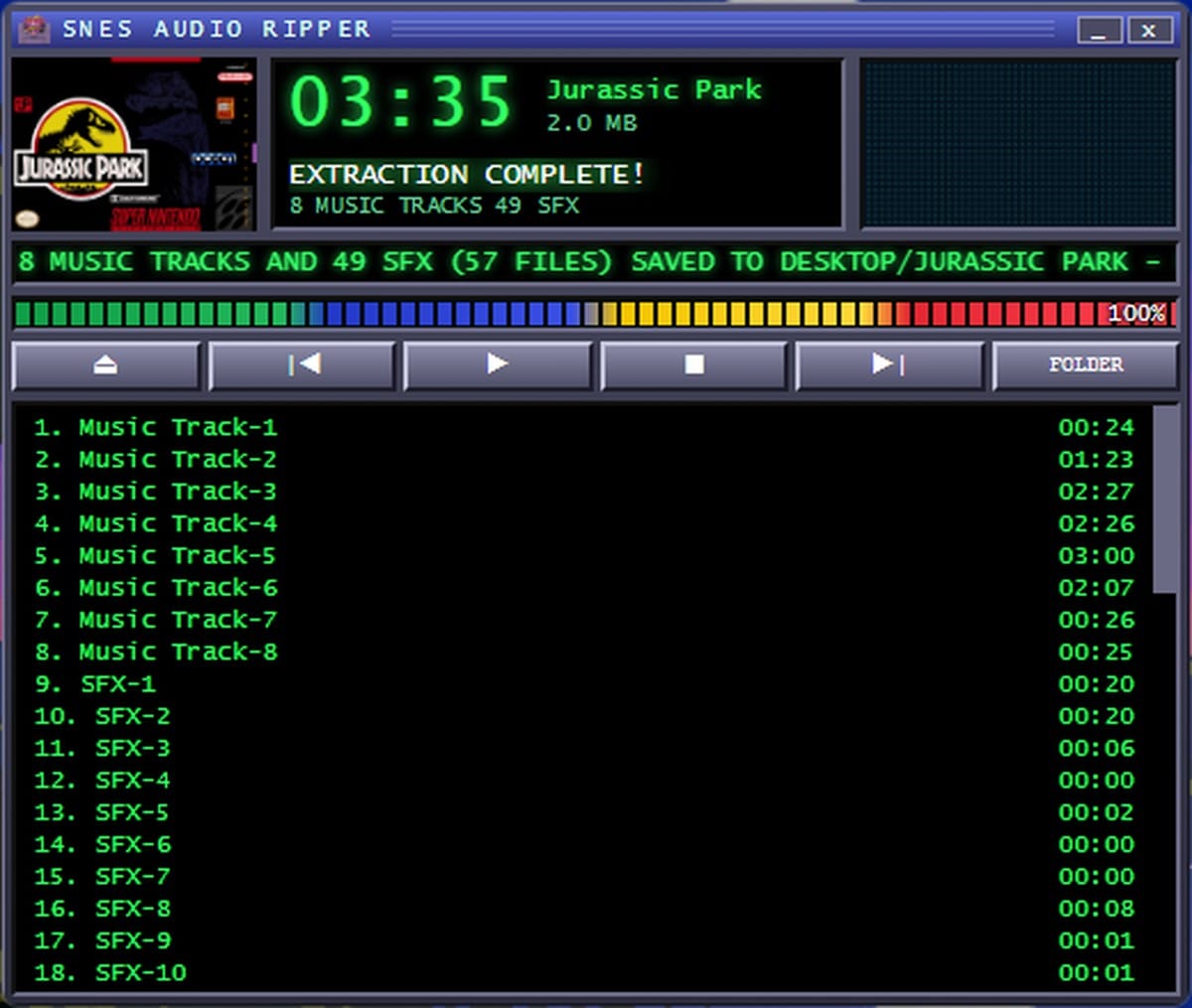
Developer Samsqwamch released SNES Audio Ripper version 1.0.0 on November 3, 2026, introducing a free PC utility built to pull music and sound effects straight from Super Nintendo ROM files. It's a brand-new debut for the tool, which targets unheadered .sfc files through a simple drag-and-drop interface. Instead of forcing hobbyists to dig through memory addresses in a hex editor, the software promises to handle the extraction automatically once you drop a game into the window.
Pulling clean audio out of Nintendo's 16-bit library has always been a headache for modders and preservationists. When the Super Famicom launched in Japan in November 1990 (followed by the North American Super Nintendo in August 1991), its audio hardware was far ahead of its peers. Sony engineer Ken Kutaragi, who later spearheaded the original PlayStation, designed the console's custom 8-bit SPC700 sound coprocessor and paired it with a 16-bit digital signal processor.
Why 64 kilobytes made ripping so tedious
The catch with Kutaragi's hardware design was its strict memory ceiling. The SPC700 ran at 1.024 MHz and had to share a tiny 64 KB pool of SRAM for everything audio-related. Every instrument sample had to be squeezed down using Bit Rate Reduction (BRR) compression and crammed into that 64 KB space right alongside the sequence data and the sound driver itself. Because the audio subsystem was almost completely isolated from the rest of the console once data loaded in, games didn't store neat, standard audio files on the cartridge.
Studios wrote their own proprietary sound engines to juggle that memory on the fly. Nintendo had its standard N-SPC driver for games like Super Mario World, while Square built custom sequence engines for Final Fantasy VI and Chrono Trigger. For decades, the standard workaround for getting music out of a game was opening an emulator like Snes9x or ZSNES, waiting for a track to start playing, and dumping a snapshot of the audio RAM into an .spc file. That works fine for background music, though isolating individual sword swings or menu chimes is a remarkably slow chore.
A drag-and-drop extractor that separates both music and discrete sound effects straight from a static .sfc file skips the emulator middleman entirely. That's a compelling pitch on paper. Still, given how differently third-party publishers structured their audio banks across the console's lifespan, I'm curious to see which non-standard sound drivers the tool actually parses cleanly without spitting out garbled static.
A closed-source release on GitHub
Samsqwamch previously created Midnight Aqua, a custom skin for the Kodi media center tested on the Nvidia Shield, making this utility a pivot into retro ROM tooling. In posts sharing the release on Reddit's ROM hacking and emulation boards, the developer noted that the app was built to help out with the surge of indie game development and modding projects looking for 16-bit sounds.
There is one major caveat for the cautious crowd: despite being hosted on GitHub under commit c56c7ea, SNES Audio Ripper 1.0.0 isn't actually open source. The repository's source code archive only contains a basic readme file alongside the pre-compiled PC release, and Samsqwamch mentioned on Reddit that they weren't ready to make the underlying code public yet.
Running an unverified executable from a brand-new repository without being able to inspect the code is a tough sell for the ROM hacking community, where open-source transparency is usually the baseline expectation. It also doesn't help that the release page leaves out documentation on whether the app outputs raw BRR samples, converted WAV files, or standard SPC dumps, or whether it chokes on older .smc ROMs that still carry a 512-byte copier header. You can grab the version 1.0.0 executable from the project's GitHub page if you don't mind testing it in a sandbox first.


Comments ()