
sd2snes+ Link is bringing Wi-Fi and cloud saves to SNES flash carts
Luan Freitas's custom firmware project is turning a $10 ESP32-S3 board into a Wi-Fi dongle for SD2SNES and FXPAK PRO cartridges, with cloud saves and online play.
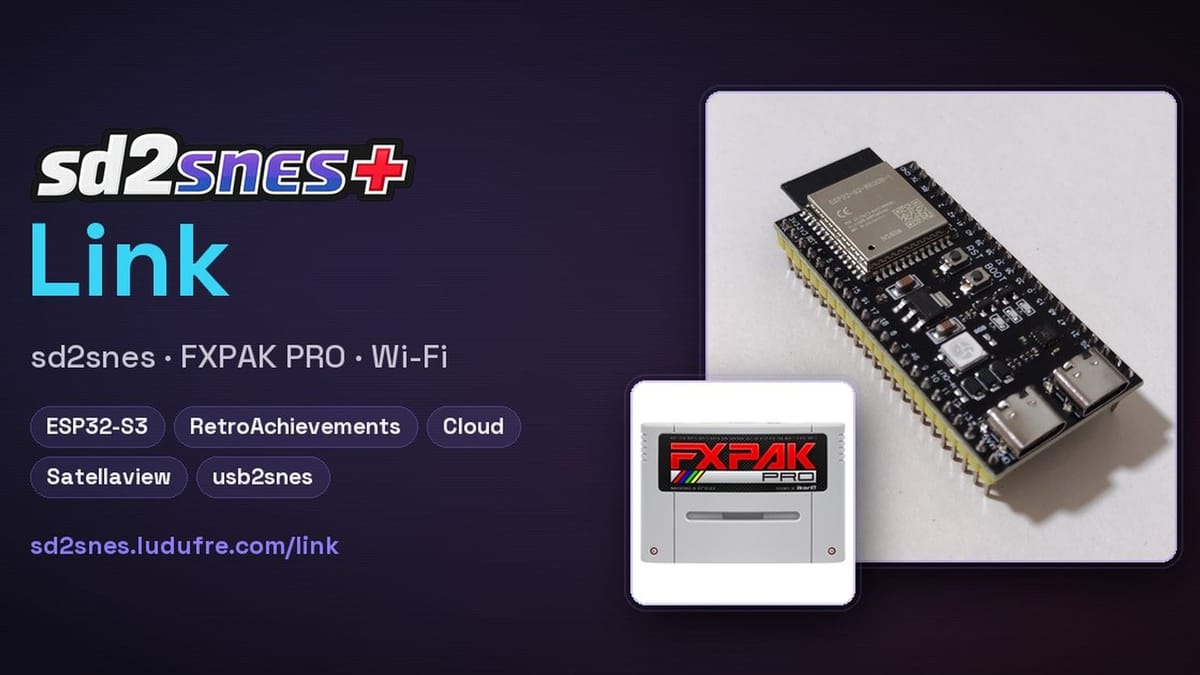
For roughly $10 to $13, an off-the-shelf ESP32-S3 development board plugged into the top of an SD2SNES or FXPAK PRO cartridge is about to put a stock Super Nintendo on Wi-Fi. Brazilian systems consultant and open-source developer Luan Freitas, who releases work under the handle ludufre, is currently developing sd2snes+ Link, an upcoming companion firmware that adds cloud save backups, RetroAchievements, Satellaview broadcasts, and online multiplayer to real 16-bit hardware without a PC tethered to the console.
To be clear about what you can and can't buy right now: Link isn't a proprietary piece of hardware being manufactured for pre-order, and the software isn't out yet. Both the Link dongle firmware and the accompanying sd2snes+ 3.0 cartridge update are still in testing with no public release date. When they do launch as free, open-source downloads under the GPL-2.0 license, you'll supply your own hardware.
That shopping list has two parts. First, you need the flash cartridge itself, originally designed by Maximilian Rehkopf (ikari_01) and manufactured by Ukrainian hardware maker Krikzz. Because of a trademark dispute over the SD card name a few years back, the current Mk.III revision is sold as the FXPAK PRO for $229 directly through Krikzz's store, while authorized distributor Stone Age Gamer sells the FXPAK Pro Base starting at $269.99 (with themed and custom variants priced at $274.99 to $284.99), though older SD2SNES Mk.II boards and compatible clones also work. Second, you need a standard ESP32-S3 N16R8 board (the DevKitC-1 style with dual USB-C ports, widely sold on Amazon, AliExpress, and electronics shops for around $10), a 5V USB wall adapter to power it, and a USB cable running into the cartridge's external port. You don't have to crack open the cartridge shell or touch a soldering iron.
Two USB cables sticking out of a 1990 console
Having a bare microcontroller dangling off your Super Nintendo with a phone charger feeding it power isn't the cleanest living room setup, even if beating a soldering job makes the cable mess easy to forgive. Once you flash the board once from a browser, everything else happens on your television using the SNES controller.
Cloud backups are the most practical addition on the list. Every time a game writes a save, Link automatically uploads the changed data to the sd2snes+ cloud alongside savestates, cheats, patches, and your config.yml settings file. ROMs are never uploaded. The service keeps up to three previous versions of each file so you can roll back a corrupted save from the console menu or browser-based Web Manager, and pairing happens via an on-screen QR code tied to your sd2snes+ GamesDB account, the project's community metadata and cover art database. Freitas is capping cloud storage at 800 users initially, with 500 MB per account shared across multiple consoles. That 800-seat ceiling feels tight given how many FXPAK PRO carts are out in the wild, and I'm curious how quickly those slots vanish once version 3.0 drops.
The rest of the feature set leans into the weirder corners of SNES history. RetroAchievements run directly on the console in softcore mode (hardcore mode is awaiting approval), polling memory every frame and flashing the ESP32 board's LED when an achievement unlocks. If you keep the Japanese BS-X BIOS on your SD card, Link also revives Nintendo's 1995 Satellaview add-on by pulling scheduled broadcasts over Wi-Fi from GamesDB or Satellaview+ and syncing the cartridge clock so the virtual town matches the real time of day.
Two beta multiplayer modes are also in testing. One recreates the 1990s XBand modem approach by swapping controller inputs frame-by-frame over the internet using per-game network patches. The other bridges two Super Game Boy setups online, acting as a virtual Game Boy link cable for trading in Pokémon Yellow or playing Tetris DX across different houses. Local network support for usb2snes tools and an internet radio player in the menu round out the 3.0 roadmap.
Meanwhile, v2.19 already brought the Atari 2600 to older carts
You don't have to wait for version 3.0 to see what Freitas's fork has been doing with the cartridge's programmable FPGA. Official upstream firmware from Rehkopf reached v1.11.2 on May 18, 2026, and sd2snes+ builds directly on top of that foundation with a 10-language interface, game info cards, and extra console cores.
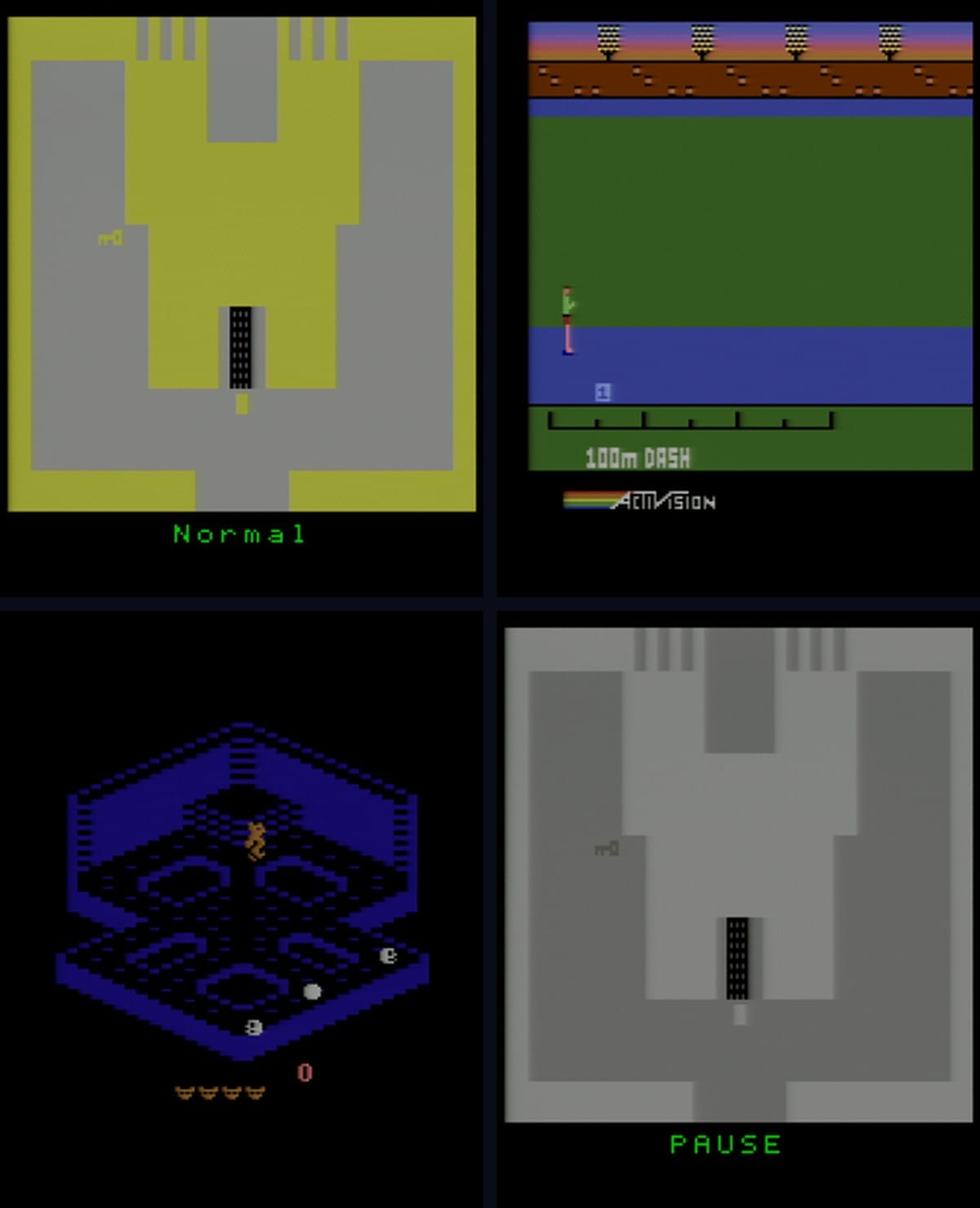
While the newer FXPAK PRO (Mk.III) picked up Atari 2600 support back in September's v2.16 update, older SD2SNES Mk.II owners were left out because of their smaller Xilinx Spartan-3 FPGA. That changed on November 1, 2026, with the public release of sd2snes+ v2.19. The update integrates STorm2600, an open-source core written from scratch by developer AndinhoNFS that replicates the 1977 console's MOS 6507 CPU, TIA video chip, and RIOT chip right on the Mk.II board.
STorm2600 outputs 232 visible scanlines and handles 2K, 4K, F8, F6, Superchip, and Activision's custom FE bank-switching mapper, which means David Crane's 1983 joystick-killer The Activision Decathlon runs alongside standard 2600 carts. Controller shortcuts now match across both Mk.II and Mk.III hardware too: L cycles difficulty, R pauses, X toggles black-and-white mode, and Y swaps between four color palettes with on-screen labels. Larger 32 KB (F4) Atari ROMs still don't fit on the older Mk.II FPGA, and the core remains labeled experimental, though getting a 1977 console running inside a SNES cartridge from a decade ago is already a neat trick while we wait for Link's Wi-Fi firmware to finish testing.
Comments ()