
Sandustry is a falling-sand factory builder coming this August
The 2D automation game turns every pixel into a physical resource you can mine, melt, or run on a conveyor belt.

Latto Games and publisher Hooded Horse are releasing Sandustry into early access on August 13. The 2D factory automation game will launch simultaneously on Steam, GOG, and the Microsoft Store. It will also be available on PC Game Pass on day one. A free demo is currently available on Steam for anyone who wants to test the mechanics before the late-summer launch.
Every pixel matters
Most automation games treat resources as abstract numbers in an inventory window. Sandustry treats them as physical objects in a falling-sand simulation. Every grain of sand, flake of snow, and drop of water is an individual entity on the screen. These materials react to each other and the environment in predictable ways. Heat melts ice into water. Boiling water turns to steam, which rises to the top of the map and eventually falls back down as rain. Sand absorbs nearby moisture and slowly drains limited water reservoirs.
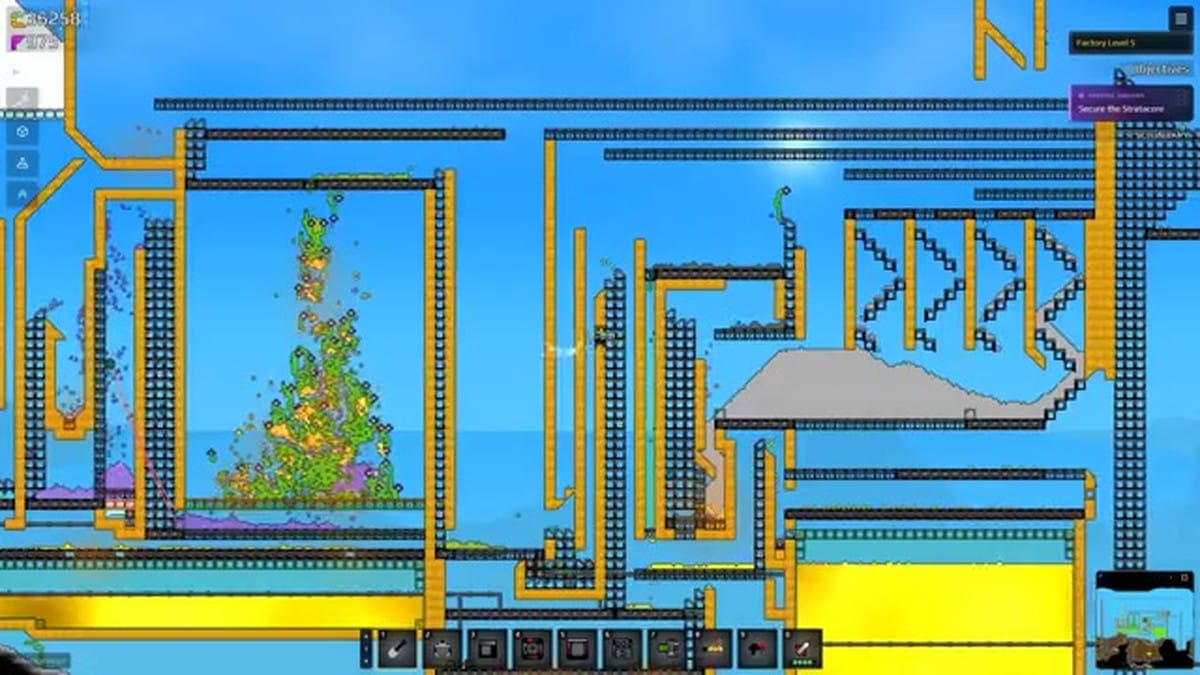
Players start with a simple goal: sifting gold from basic sand. The production chains scale up from there to include conveyor belts, filters, drones, and fluid pumps. Because the resources have physical volume and gravity applies to them, spills and overflows are actual messes. A backed-up production line does not just halt a progress bar. It dumps physical material all over the factory floor, burying nearby machinery under piles of wasted resources. Slag accumulates as a byproduct of the refining process. Players can either let it pile up and block their machines or burn it as fuel to keep the operation running.
Digging deeper
The world is fully destructible. Players can dig through the terrain using standard mining tools or clear out large sections with a rocket launcher. The underground biomes contain new raw materials and artifacts left behind by a dead civilization. Finding these relics is the main structural goal of the campaign.
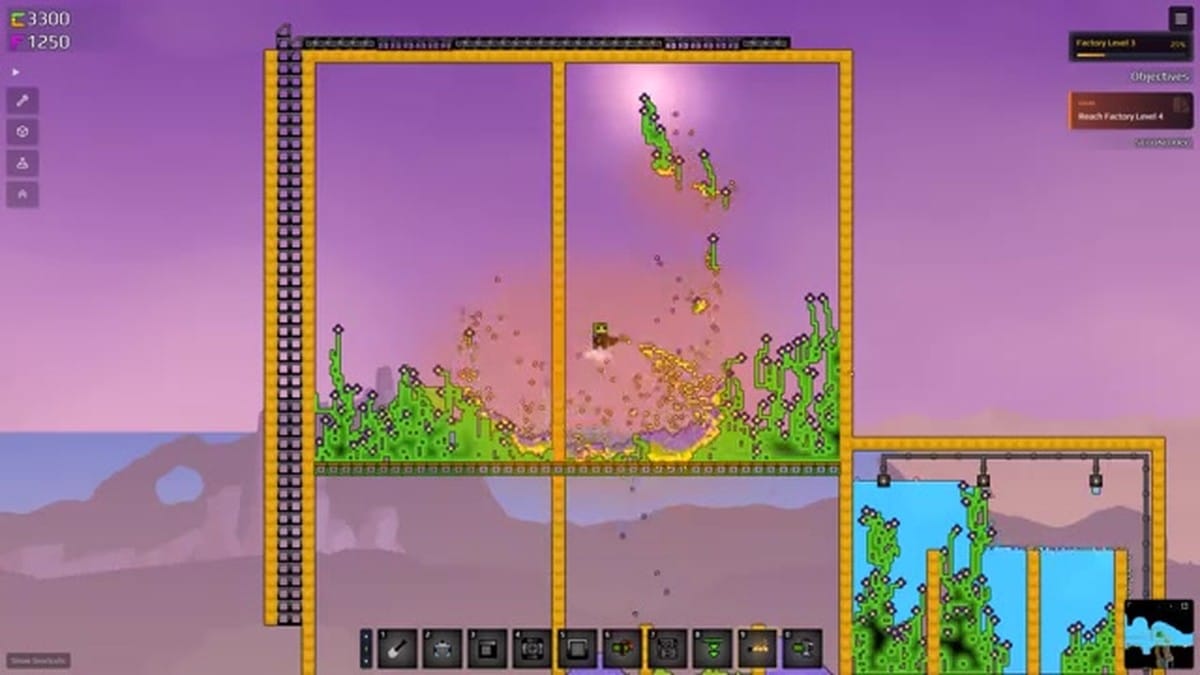
Exploration requires defending the factory and the player character. The subterranean areas hide bosses and puzzles that gate access to key items and advanced technology. Clearing these obstacles unlocks multistep processing methods and structural upgrades for the base. Players have to balance their time between expanding their logistics networks and building a personal arsenal to survive the lower depths. Exploring too quickly without proper equipment will likely end in a quick death underground.
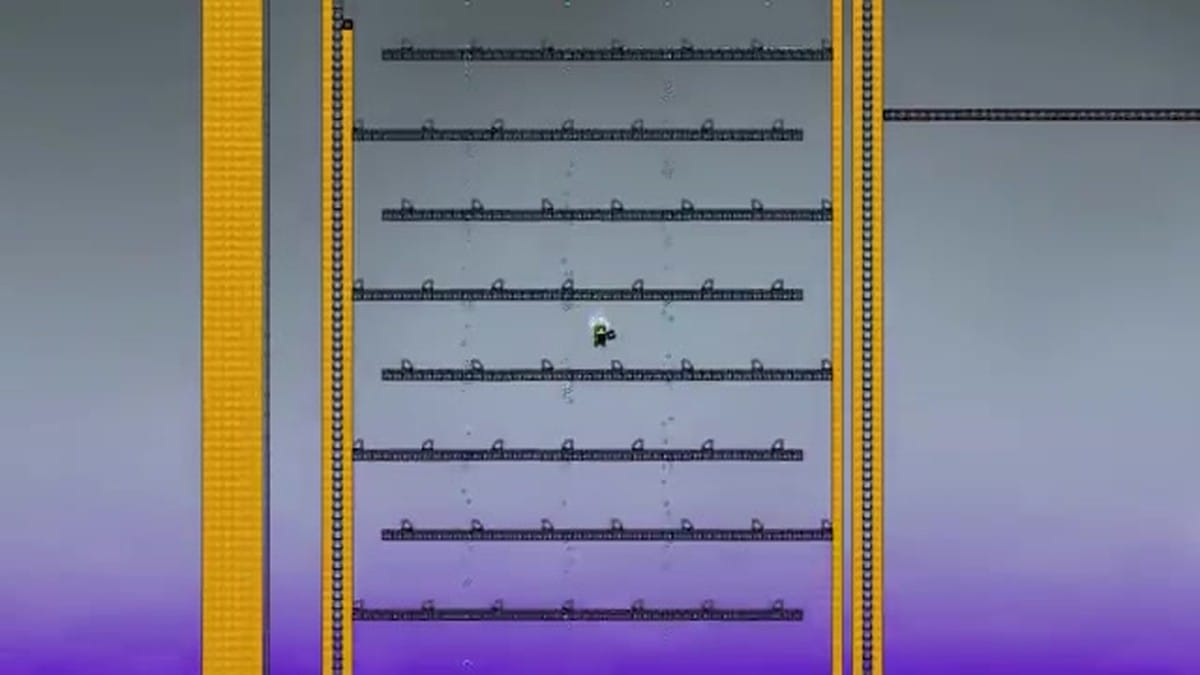
The building tools support both rigid optimization and chaotic improvisation. Players can design pixel-perfect production lines that waste zero material. They can also just build a massive web of conveyor belts and hope the raw materials eventually fall into the correct hoppers.
Managing the mess
Factory games usually demand perfect mathematical efficiency. Adding physics to the raw materials forces players to manage gravity and fluid dynamics alongside their logistics networks. Sand behaves like actual sand. It shifts, falls, and gets stuck in tight spaces. You cannot just route a belt through a solid wall without accounting for how the material will behave when it drops off the edge.
Managing a factory where the resources can literally spill out of the machines is a massive change from the genre standard. It is a messy complication that should make the inevitable spaghetti-belt layouts even more chaotic.


Comments ()