
RPCS3 updates its shader interpreter to stop visual stuttering
Lead graphics developer kd-11 has upgraded RPCS3's shader interpreter, reducing visual artifacts while the emulator compiles shaders in the background.
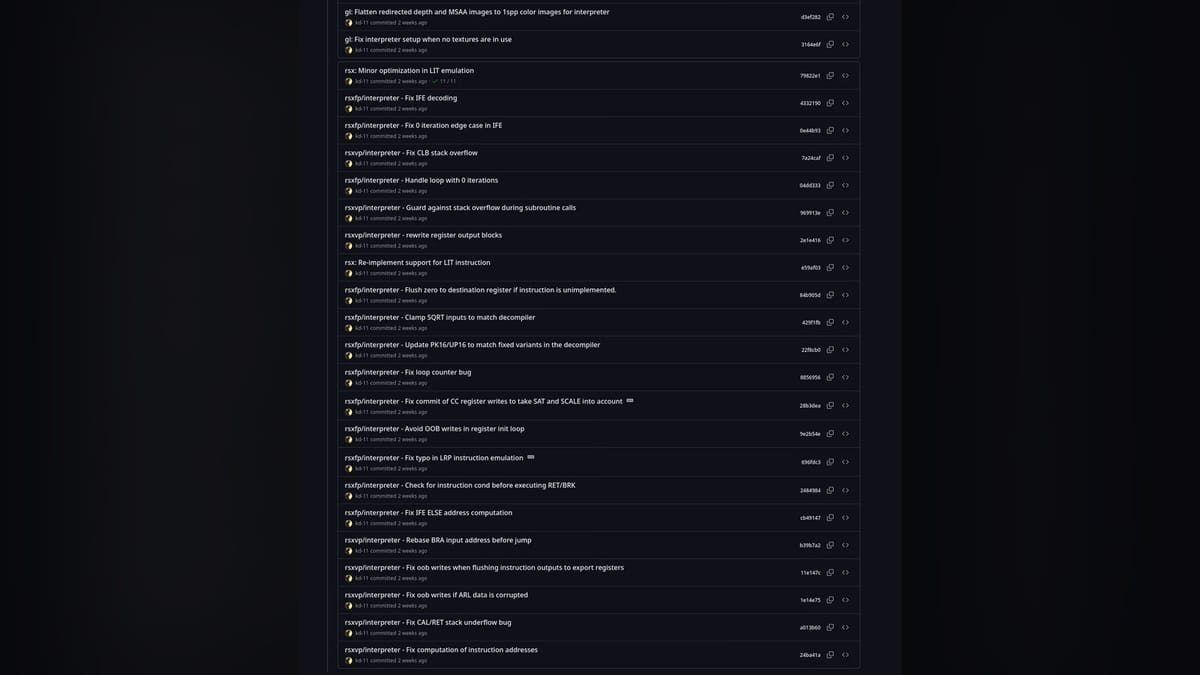
The open-source PlayStation 3 emulator RPCS3 has an updated shader interpreter, improving visual continuity while games compile shaders in the background. According to the RPCS3 team, lead graphics developer kd-11 has upgraded the system's visual quality and stability. The interpreter now displays a better temporary approximation on screen while the actual shader compiles asynchronously.
The stutter problem
Shader compilation is a known bottleneck in modern emulation. When a PC emulator translates console code, it has to build shaders on the fly for the host GPU. Every time a game renders a new visual effect, particle system, or lighting change, the emulator encounters missing shaders. Historically, the software would pause the game to compile them, resulting in a noticeable micro-stutter.
RPCS3 introduced asynchronous shader compilation back in 2018 to bypass this issue. Instead of freezing the action, the emulator simply skips the missing shader and compiles it in the background. The trade-off is visual accuracy. Objects might temporarily pop in, render as black boxes, or display corrupted textures until the background compilation finishes and the correct shader drops into place.
Faking it until it compiles
This update refines how the emulator handles those missing visuals. By improving the temporary approximation, the game looks closer to its intended state while the PC's graphics card does the heavy lifting. The goal is to maintain immersion without the jarring visual glitches that usually accompany asynchronous compilation.
When a player enters a new area in a game like The Last of Us, the engine suddenly needs to render dozens of new materials. Under the old system, those materials might appear completely broken for a few frames. The updated interpreter uses a fast, simplified rendering pass to fill in the gaps. It is not a perfect match for the final shader, but it prevents the screen from flashing with untextured geometry.
Emulating the PS3 is notoriously difficult. Sony launched the console in 2006 with the Cell Broadband Engine and the RSX Reality Synthesizer GPU. That architecture was highly customized and does not map cleanly to modern x86 processors or standard graphics APIs like Vulkan. Translating those complex rendering pipelines requires constant optimization to keep frame rates stable.
Developer kd-11 has spent years rewriting the RSX graphics backend to handle these quirks. Their previous work includes multithreaded shader compilation and Vulkan API integrations, which drastically reduced the CPU overhead required to run PS3 games on standard desktop computers. This latest tweak to the shader interpreter builds on that foundation, focusing on presentation rather than raw performance.
15 years of progress
The RPCS3 project started in May 2011 under original developers DH and Hykem. Over the last 15 years, core maintainers like Nekotekina and kd-11 have pushed the software to a state where it can successfully boot every single game in the official PS3 library.
Currently, over 70 percent of that library is fully playable from start to finish. Smoothing out the visual hitches during shader compilation makes heavy titles like Demon's Souls and Metal Gear Solid 4 feel closer to native PC ports. When games no longer stutter or display broken textures every time a new particle effect loads, the emulation layer becomes invisible to the player.


Comments ()