
RPCS3 adds in-game trophy sorting to its PlayStation 3 emulator
The open-source PS3 emulator now lets you press Triangle to organize your achievements by grade, date earned, or completion status.
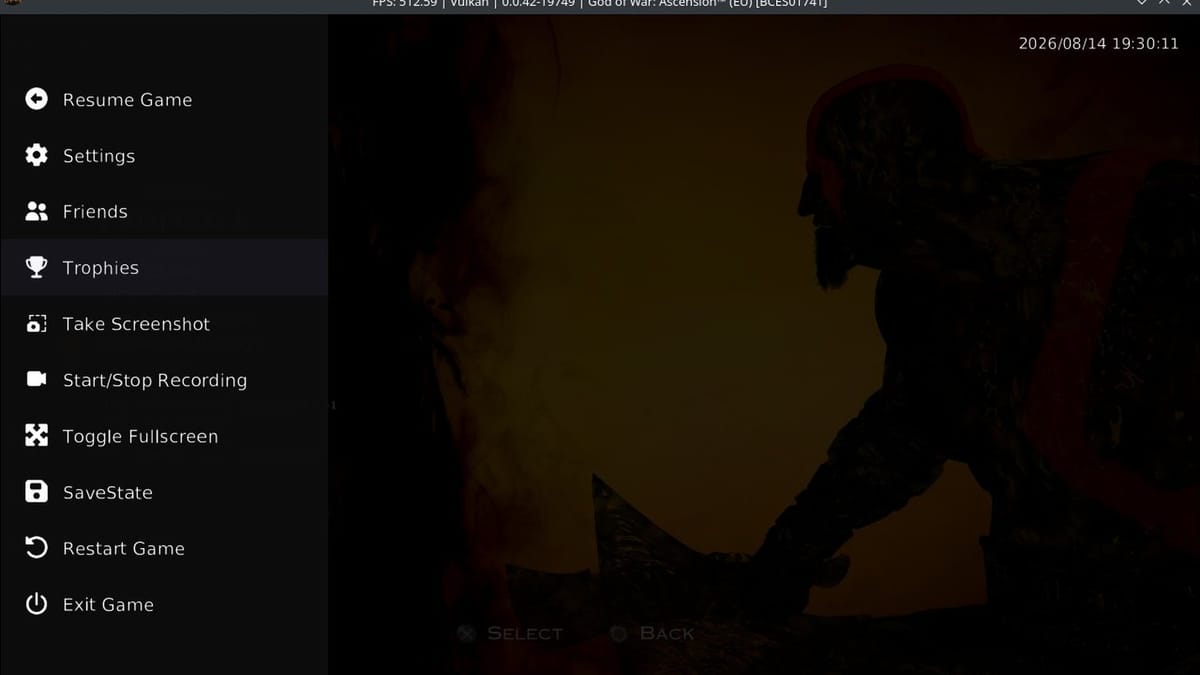
The open-source PlayStation 3 emulator RPCS3 has added a new sorting feature to its in-game trophy menu. According to a brief update posted by the RPCS3 development team, players can now press the Triangle button while viewing the overlay to organize their unlocked achievements.
The new filters allow users to arrange lists by Grade, Earned Date, Not Earned, and the Game Default order. It's a small quality-of-life addition that brings the emulator's local achievement tracking closer to modern console interface standards, making it easier to parse long lists of digital hardware.
Catching up to firmware 2.40
Sony introduced the trophy system to the PlayStation 3 in July 2008 with system software update 2.40. It was a direct response to the Xbox 360's popular achievement ecosystem, categorizing player accomplishments into bronze, silver, gold, and platinum tiers. The original hardware interface for managing those cups was notoriously sluggish. Opening the XrossMediaBar (XMB) to sync or sort large lists while a game was running often resulted in system hangs or long loading pauses.
RPCS3 handles trophies entirely locally. Because the emulator can't connect to the official PlayStation Network, it builds its own offline profile to track unlocks. The RPCS3 overlay is a custom user interface injected directly into the game window. Replicating the PS3's native XMB in-game menu is difficult because the original console reserved specific system memory and a dedicated core on the Cell processor just to run the operating system in the background. Instead of emulating the entire XMB, RPCS3 provides its own lightweight overlay for essential functions.
Until now, players had to rely on the default list order when checking their progress mid-game. The new sorting options, specifically the "Not Earned" filter, make it easier to isolate missing objectives in games like Demon's Souls or Metal Gear Solid 4: Guns of the Patriots without tabbing out to a separate window.
15 years of reverse-engineering
Founded in May 2011 by developers DH and Hykem, RPCS3 spent its early years just trying to make sense of Sony's complex Cell Broadband Engine architecture. Getting a commercial game to boot at all was a major milestone in the early 2010s. Today, the project lists over 70 percent of the PS3's commercial library as fully playable on Windows, Linux, macOS, and FreeBSD.
With compatibility rates sitting that high, the development focus has expanded to include features the original console never had. The emulator already supports high-resolution rendering, custom patch managers, and unlocked framerates for titles that were originally capped at 30 frames per second. Fleshing out the in-game overlay with proper sorting tools is another step in making the PC experience more robust than the original hardware.
The update is live now in the latest builds of the emulator. It requires no extra configuration beyond opening the menu and pressing Triangle on a connected controller.


Comments ()