
RollerCoaster Tycoon Classic is now on PlayStation and Xbox
Atari and Graphite Lab have brought the complete version of Chris Sawyer's theme park management simulation to modern consoles.
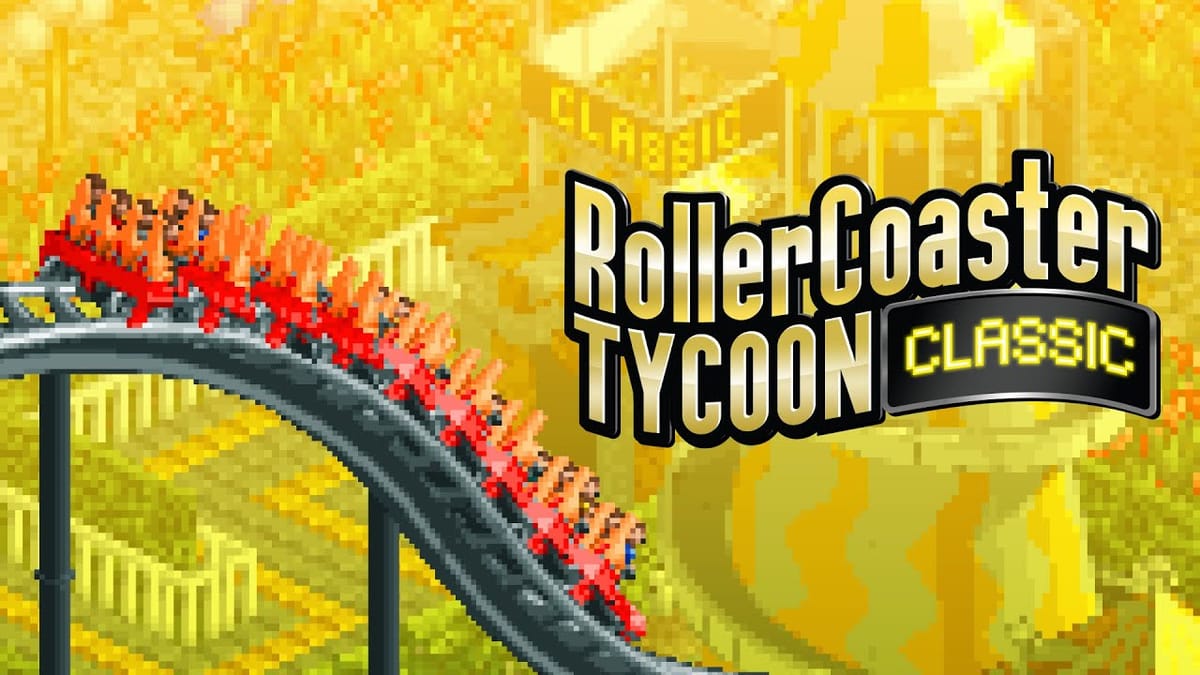
Atari has officially launched RollerCoaster Tycoon Classic on PlayStation 4, PlayStation 5, Xbox One, and Xbox Series X|S. The console port comes from developer Graphite Lab. It adapts the grid-based theme park simulation for modern gamepads and high-definition displays.
I always enjoyed this game. When Chris Sawyer released the original PC titles in the late 1990s and early 2000s, the simulation systems seemed ahead of their time. The guests had individual thoughts and wallet limits. The physics engine strictly governed coaster momentum. The janitors actively hated cleaning up vomit. That underlying complexity is still entirely intact here. You still have to manage staff patrol areas and ensure your food stalls are actually making a profit.
RollerCoaster Tycoon Classic is not a new compilation. Origin8 Technologies originally developed this specific version for iOS and Android devices back in December 2016. Chris Sawyer programmed the first two games entirely in x86 assembly language, an absurd technical feat that allowed the games to run smoothly on older 1990s computers. Origin8 had to rewrite that core code into C++ to make it run on modern mobile hardware. The game later migrated to PC in 2017. Graphite Lab then handled the Nintendo Switch port that launched in December 2024. Today's release finally brings the title to the remaining major console ecosystems.
Everything in the box
The Classic moniker means this release merges the content of RollerCoaster Tycoon and RollerCoaster Tycoon 2 into a single unified engine. You get 95 original park scenarios. The package also includes the Wacky Worlds and Time Twister expansion packs, which add historical and international themes to your ride selection. Players who want to build without financial constraints can use the included Toolkit. This mode includes the scenario editor and a standalone coaster designer where you can test track layouts before importing them into a real park.
Players start with basic objectives in Forest Frontiers and eventually unlock harder challenges. These parks are grouped by difficulty tiers like Ruby, Sapphire, and Coral. The visual presentation retains the original 2D isometric sprite work. Graphite Lab did not replace the art with modern 3D models. They simply scaled the user interface to fit widescreen televisions and cleaned up the text rendering for readability from a couch.
Translating the mouse
The biggest hurdle for any classic PC management game is the control scheme. The original releases relied entirely on rapid mouse movements to place footpaths, hire entertainers, and build custom roller coasters piece by piece. Graphite Lab mapped these functions to standard controller inputs. The shoulder buttons act as modifier keys for quick menu navigation, keeping the screen relatively clean of clutter.
Players can use the D-pad to adjust track inclines or change the banking angle of a coaster turn. The analog sticks handle camera movement across the sprawling park maps. You can still drop down a pre-built junior coaster in seconds. However, the interface fully supports granular construction for custom rides. You can tweak chain lift speeds and brake runs just like you could on a keyboard and mouse.
Simulation games have become much more complex over the last two decades. Modern genre entries offer full 3D manipulation, realistic lighting, and granular terrain deformation. Yet the rigid logic of the older RollerCoaster Tycoon engine still works. The grid-based constraints force you to think creatively about space, momentum, and park layout. It is a pure management puzzle. You just have to make sure your custom steel coaster actually has enough speed to make it over the first hill.
Comments ()