
Raspberry Pi just dropped a 10-inch touchscreen for $80
The new 10-inch Touch Display 2 bumps the resolution to 1200x1920, but the extra pixels mean you will need a newer board to run it.
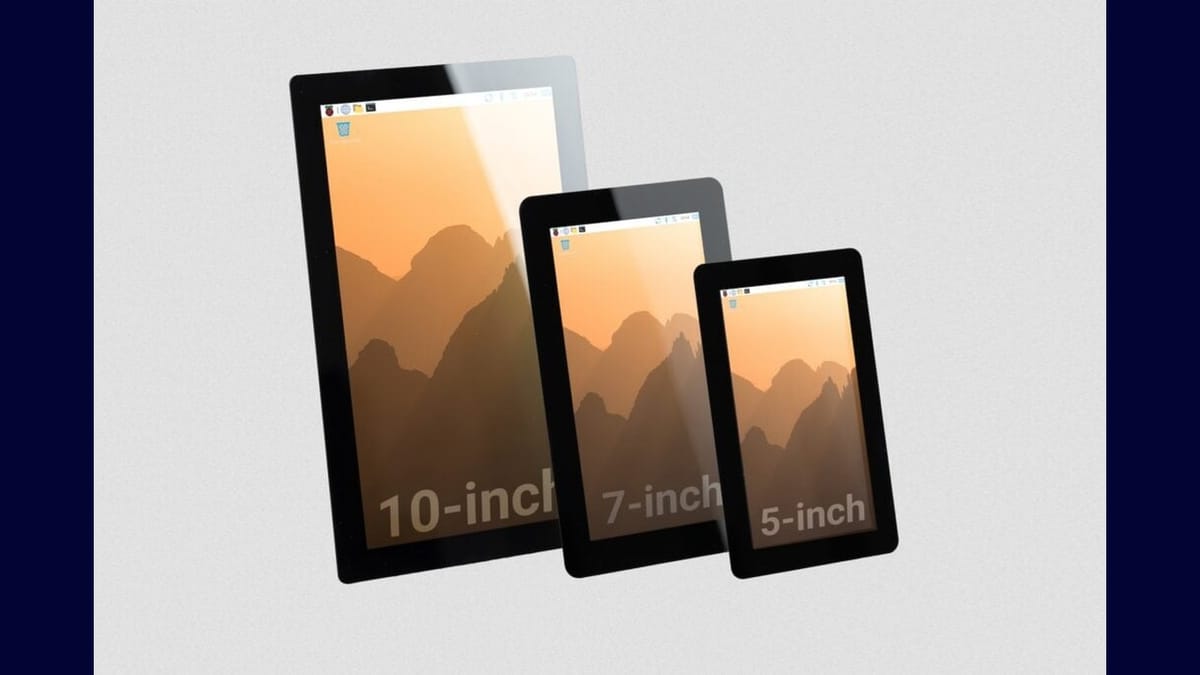
Raspberry Pi has expanded its official screen lineup with a new 10-inch Touch Display 2, available today for $80. The panel bumps the resolution to 1200x1920 and upgrades the capacitive controller to support ten-finger touch, doubling the input points of the smaller models. According to the official announcement, the screen also offers an 85-degree viewing angle.
The official display ecosystem started back in 2015 with the original 7-inch screen. The company refreshed that hardware in 2024 with the 7-inch Touch Display 2, followed by a 5-inch variant. Those smaller panels run at lower resolutions and use two DSI lanes. That lower bandwidth requirement allowed them to work with older hardware going all the way back to 2014's Model B+.
Four lanes mean newer boards only
The 10-inch model breaks from that legacy compatibility. Pushing a 1200x1920 signal requires four DSI lanes. Because of this hardware requirement, the new display will not work out of the box with a Raspberry Pi 4, a Pi 3, or any of the Zero series boards. You need a Raspberry Pi 5, or a carrier board housing a Compute Module 4 or 5.
This restriction makes sense given the target hardware. The Raspberry Pi 5 launched in October 2023 with a 2.4GHz quad-core Arm Cortex-A76 processor and a VideoCore VII GPU. It handles Vulkan 1.2 and pushes enough frames to comfortably emulate PlayStation 2 and GameCube titles. Pairing that much processing power with a larger, higher-resolution screen fits the current trajectory of custom hardware builds.
The screen draws power directly from the host board. It includes all the necessary mounting hardware and ribbon cables to attach a Pi directly to the back of the panel. This creates a self-contained unit without external power bricks or HDMI cables cluttering up the desk. Raspberry Pi OS includes the drivers by default, so it works without manual calibration.
Building bigger tabletop arcades
Touchscreens are a staple for maker projects and retro gaming builds. A 5-inch screen makes sense for a custom handheld emulator. A 10-inch panel at this resolution is better suited for tabletop arcade cabinets, jukebox interfaces, or digital pinball backglasses. The 85-degree viewing angle helps with these specific setups, as players rarely look dead-center at an arcade screen.
The 10-inch form factor fills a gap in the DIY market. Builders previously had to rely on generic HDMI screens from Amazon or AliExpress if they wanted something larger than seven inches. Those generic screens often require separate power supplies and custom 3D-printed brackets to hold the Pi. The official Touch Display 2 solves this by keeping everything on a single power draw and providing factory-machined mounting points.
The upgrade to ten-finger touch also opens up new interface options. Five-finger touch is fine for basic navigation, but ten-finger support allows for complex rhythm game inputs or multi-user dashboard controls.
The $80 price tag puts it at the higher end of official Pi accessories. It still remains cheaper than most third-party HDMI monitors of a similar size, especially when factoring in the integrated mounting system and capacitive touch layer.


Comments ()