
Out Run turns 30: Sega's Super Scaler racer still looks fast
Thirty years after Yu Suzuki drove a BMW across Europe for research, Sega's iconic arcade racer remains a masterclass in sprite scaling and sound design.
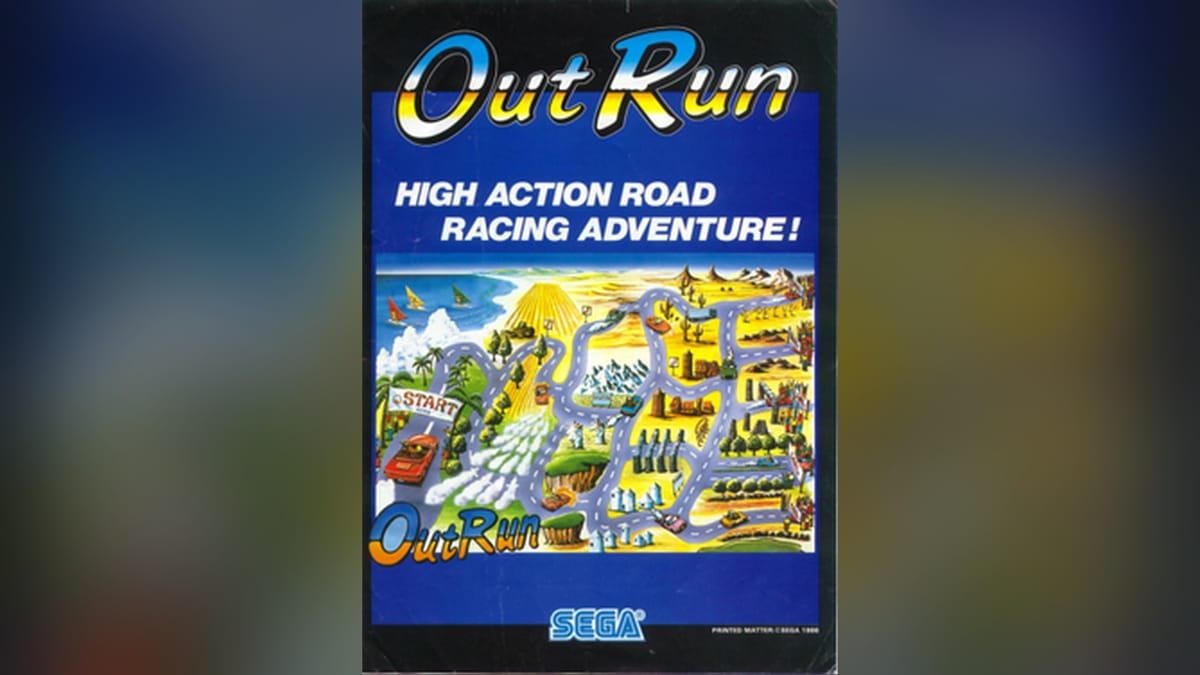
Yu Suzuki spent two weeks driving a BMW 520 across Europe in 1986, looking for the perfect roads. He found them, and a few months later, Sega released Out Run. I spent so much money on this in the arcade. Even though it was sprite scaling, it felt like real 3D at the time. The bright colors, the music, and the fast play were so addictive.
Suzuki originally wanted to base the game on the 1981 movie The Cannonball Run, but he realized the United States was too empty for the kind of racing game he wanted to make. He took a scouting trip to Europe instead, driving through Frankfurt, the Swiss Alps, and Monaco. According to a translated interview with Yu Suzuki, he wanted a game where cars didn't explode on impact. He just wanted players to enjoy the drive.
When he spotted a custom convertible Ferrari Testarossa parked outside a casino in Monaco, he knew he had found the perfect car for his game. Sega didn't actually license the Ferrari brand at first. They paid a settlement fee later to avoid legal trouble.
Super Scaler speeds
The game ran on the Sega OutRun board, a custom setup based on the System 16 architecture. It used Super Scaler technology to move 2D sprites so fast that they simulated a 3D environment. The arcade hardware pushed a massive amount of graphics to the screen, creating a smooth sense of speed that you couldn't easily match in 1986.
Before you even hit the gas pedal, you had to pick a song on the in-car radio. Hiroshi Kawaguchi composed three main tracks: Magical Sound Shower, Splash Wave, and Passing Breeze. Kawaguchi originally named the third track "Passing Wind" before Sega of America pointed out the translation issue. The music defined the game just as much as the graphics did.
The gameplay itself was simple. You just drove. There weren't any laps, pit stops, or sponsors. You just tried to reach the next checkpoint before the timer ran out. At the end of each stage, the road forked. You could choose your own route, leading to five different destinations. Each destination had its own ending animation. Sometimes you got a trophy. Sometimes the Ferrari broke down.
The branching paths meant you could play the game multiple times and see different environments. You started on a beach, but you could end up in a desert, a forest, or a canyon. The deluxe arcade cabinet made the experience even better. It was a sit-down motion simulator that physically moved when you turned the steering wheel. It had force feedback, shaking when you crashed or drove off the road. The game was a massive hit, becoming the highest-grossing arcade game of 1987.
It took forever to get a good port
It took so long for a proper near-arcade port for home consoles to be released. The Master System version arrived in 1987. It was decent for an 8-bit system, but it lacked the speed and roadside detail of the arcade original. The Sega Genesis version looked better, but the hardware still couldn't handle the arcade's scaling effects.
The home computer ports were a mixed bag. U.S. Gold published versions for the Commodore 64, ZX Spectrum, and Amstrad CPC. The Commodore 64 version couldn't handle the branching paths, forcing players to pick a single route before the game started. The Amstrad version was notoriously slow. It works, which is the nicest thing to say about it. Despite the technical limits, the computer ports sold hundreds of thousands of copies in the UK alone.
As Hardcore Gaming 101 notes, the first truly arcade-perfect port didn't arrive until the Sega Saturn release in 1996. That version finally brought the 60 frames-per-second arcade experience into the living room.
Thirty years later, the game is still finding new audiences, including home recreations like Arcade1Up's dedicated cabinet. But the original 1986 arcade board is still the best way to play it. You just need a few coins and a working steering wheel.

Comments ()