
Namco's 1997 trackball game Armadillo Racing is coming to Arcade Archives
Hamster Corporation is bringing the obscure System Super 22 racer to modern platforms, complete with its bizarre bowling minigame.
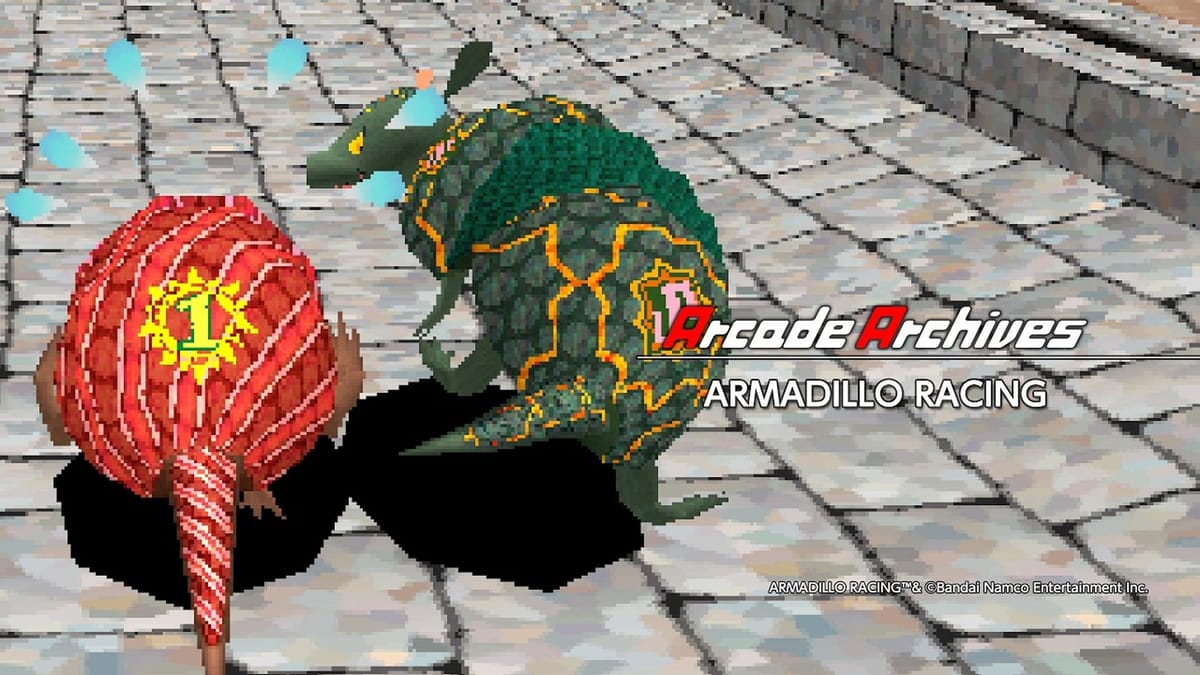
Hamster Corporation has announced that Namco's 1997 arcade title Armadillo Racing is the latest addition to the Arcade Archives lineup. The game will be available on PlayStation 4 and Nintendo Switch. It is one of the more unusual entries from Namco's System Super 22 hardware to hit modern platforms.
As we previously reported with other recent Hamster releases, the publisher continues to dig into arcade history. This particular release rescues a game that never saw a home console port during its original run. Back in the late 1990s, Namco was focused on bringing its major hits like Tekken and Ridge Racer to the PlayStation. Quirky trackball games about racing mammals were left behind in the arcades.
Rolling at high speeds
The original arcade cabinet used a trackball to control the titular armadillo. Players roll their animal through 3D obstacle courses. You have to dodge barriers and maintain top speed. The visuals have that distinct mid-90s flat-shaded polygon look that defined Namco's arcade output before the transition to more complex textures.
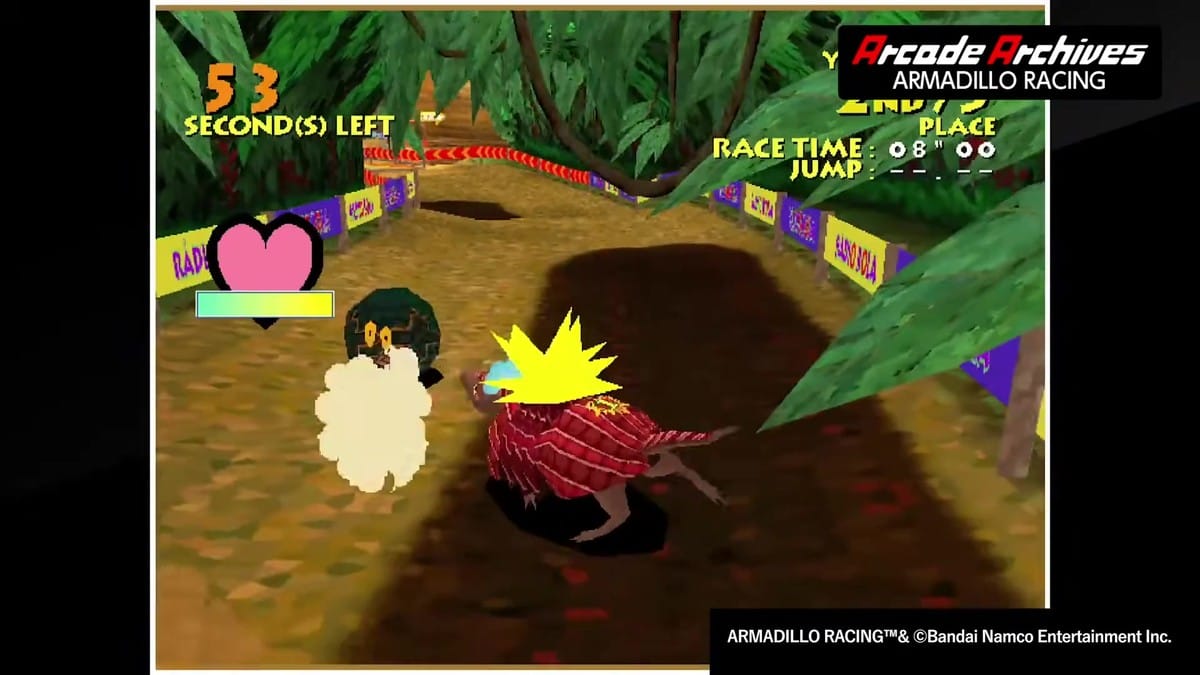
The gameplay loop is straightforward arcade racing, but the main draw is the control scheme. Translating a trackball game to standard analog sticks usually requires some adjustment. Hamster has built a reputation for providing extensive control configuration options in their ports to handle exactly this kind of hardware mismatch. The System Super 22 board was capable of texture mapping and Gouraud shading, which Namco used here to create bright, colorful environments that look completely different from their realistic driving simulators.
Trackball controllers were already becoming rare in arcades by 1997. Most driving games had moved to steering wheels and pedals. Namco's decision to release a trackball racer this late in the decade makes it an interesting historical oddity. It feels closer in spirit to Atari's Marble Madness than to contemporary racers like Daytona USA.
More than just a race
The game is not strictly limited to navigating track barriers. Winning a race in first place unlocks a bonus mode that abandons the track entirely. The game briefly turns into a bowling simulator. The armadillo hurls itself down a lane to knock over oversized wooden pins.
These kinds of minigames were common tricks to keep players dropping coins. If you knew a weird bowling mode was waiting at the end of a successful run, you were more likely to try again after a loss. The end-of-race screens also break down your performance by race time, jump distance, and obstacles cleared.
The audio presentation is pure 90s arcade energy. The announcer constantly yells over a frantic, upbeat soundtrack. It is the exact kind of loud, attention-grabbing audio design that cabinets needed to stand out in a crowded room. You can hear the arcade origins in every sound effect and voice sample.
Like all Arcade Archives releases, this version includes standard quality-of-life additions. Players get save states, difficulty adjustments, and online leaderboards to compare race times and bowling scores globally. The emulation handles the original hardware's specific quirks, ensuring the arcade timing remains intact.
Playing a trackball game with a standard controller is never quite the same as slapping a plastic sphere in a noisy arcade. But since finding a working Armadillo Racing cabinet in 2026 is nearly impossible, analog sticks will have to do.



Comments ()