
Namco's 1994 tank shooter Cyber Commando is coming to Arcade Archives
Hamster Corporation is bringing Namco's 3D arcade sequel to modern platforms this week.
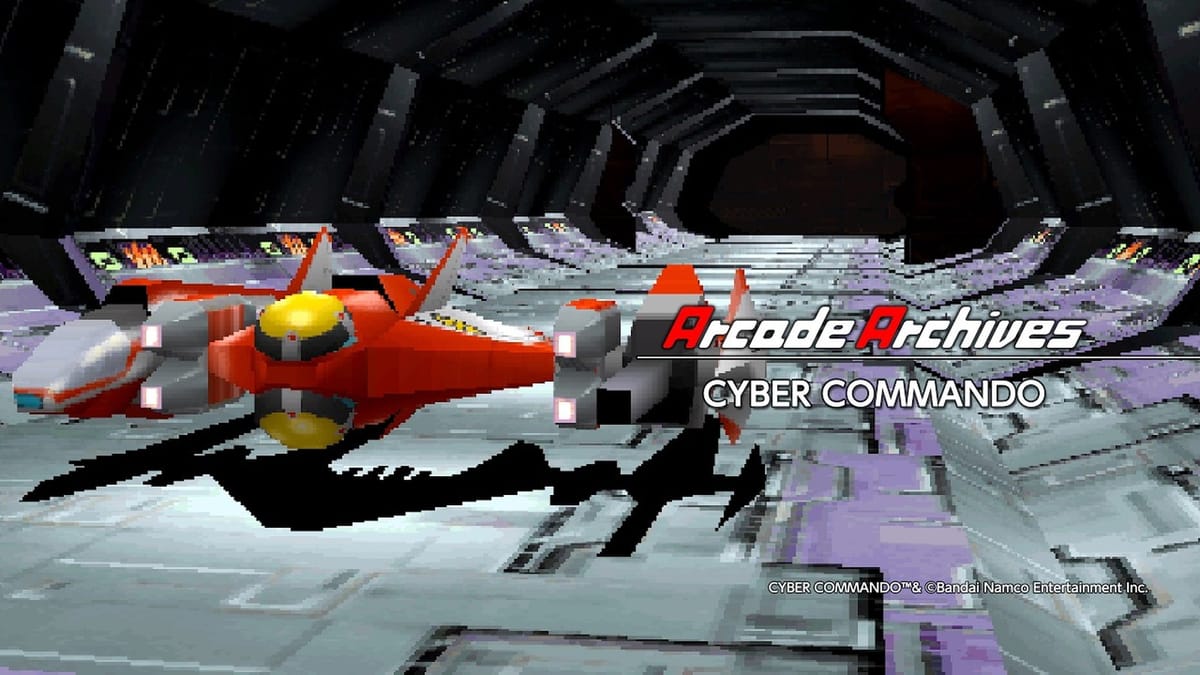
Hamster Corporation is adding Namco's 1994 3D tank shooter Cyber Commando to its Arcade Archives lineup on April 30. The digital release brings the arcade title to modern consoles with Hamster's standard suite of emulation options.
Originally released for the Namco System 22 hardware, Cyber Commando is the direct sequel to 1993's Cyber Sled. Players pilot a futuristic hover tank through a space colony to stop a malfunctioning security computer. Unlike its predecessor (which supported two-player matches), this entry focuses entirely on single-player combat against AI opponents.
The System 22 difference
The jump to the System 22 arcade board gave Namco a lot more processing power to work with. The hardware was the successor to the company's System 21 platform and was famous for powering early 3D heavyweights like Ridge Racer and Time Crisis. It was one of the first arcade boards to handle texture-mapped 3D polygons and Gouraud shading at a smooth framerate.
That hardware bump is obvious in Cyber Commando. The game runs fast, with large polygonal explosions and detailed arenas. The combat revolves around locking onto targets and dodging incoming fire. Players start with a third-person perspective behind their tank, but a dedicated button allows you to switch to a first-person view from the cockpit.
Enemy units like the Murasame, Peace Keeper, and Wild Bear each have different weapons and mobility profiles. The Peace Keeper acts as a heavy defensive unit, while the Murasame is built for speed. Between matches, the game displays technical specification screens for the upcoming boss tanks. The UI is packed with the kind of aggressively detailed wireframe schematics that screamed "high-tech future" in the mid-nineties.
Dual joystick controls
The original arcade cabinet used a specific dual-joystick setup to control the tank's movement and aiming. You pushed both sticks forward to move ahead, pulled them back to reverse, and moved them in opposite directions to rotate the vehicle in place. It was a control scheme borrowed directly from classic arcade games like Battlezone, and it required a bit of muscle memory to master.
Modern controller analog sticks are an obvious substitute for those dual flight sticks. Hamster's releases usually offer extensive control mapping options, which will be necessary here. Getting the sensitivity right for a 1994 arcade game often takes a few trips to the settings menu before the tank stops handling like a shopping cart.
Arcade accuracy
As an Arcade Archives release, the port includes the usual extras. Players can adjust the game difficulty, modify the number of starting lives, and compete on global online leaderboards. The software also includes display filters designed to mimic the look of original arcade CRT monitors, complete with scanlines and slight screen curvature.
Hamster has been steadily working through Namco's back catalog over the last few years, but they usually stick to older 2D titles or early 3D racing games. Seeing a deeper cut like this 3D shooter get a modern port is a nice change of pace. The game carries a Teen rating for violence, which mostly consists of blowing up other mechs and tanks in enclosed arenas.
The Arcade Archives series continues to be the most reliable way to play these stranded coin-op games without tracking down a physical cabinet or dealing with MAME configuration files. Cyber Commando joins a growing list of mid-nineties 3D games that are finally getting official digital releases.



Comments ()