
Jotego just updated the MiSTer FPGA CPS3 core again
The latest Patreon update brings more progress to the Capcom Play System 3 core, following up on last week's Yie Ar Kung Fu release.
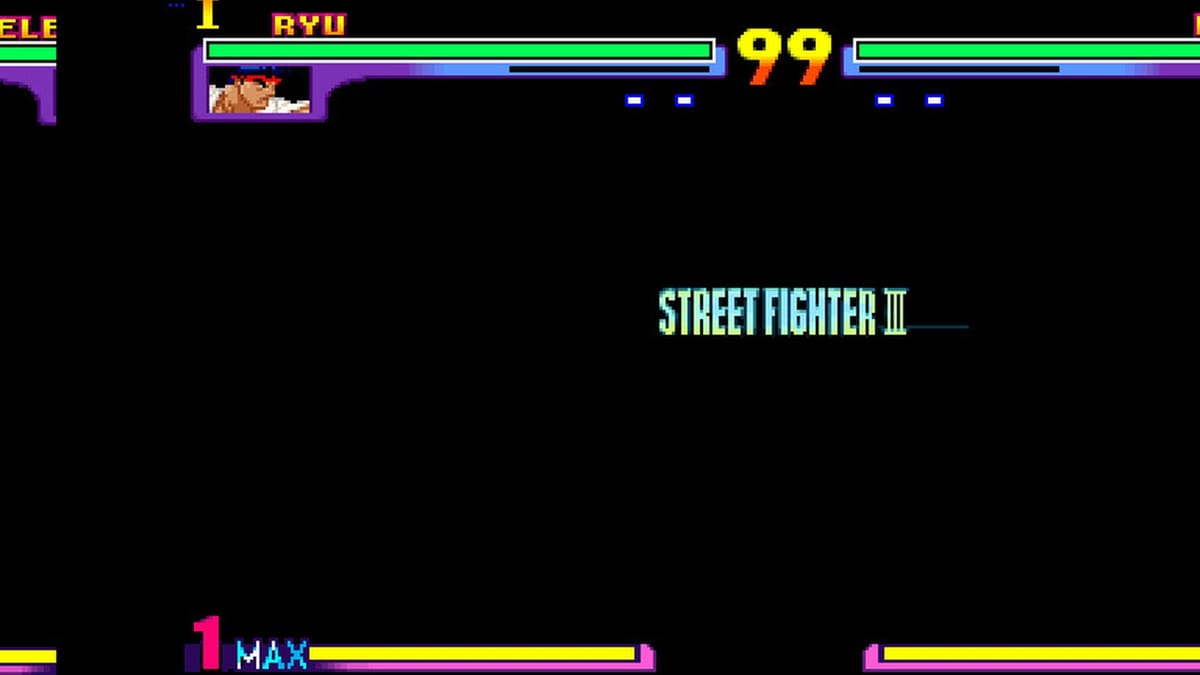
FPGA developer Jotego has released an update for his Capcom Play System 3 core on the MiSTer FPGA project. The details are available on his Patreon page, dated December 1, 2025. As a daily MiSTer and OpenFPGA user, I keep a close eye on these releases.
Jotego is one of the most prolific developers in the FPGA scene. Anyone playing arcade games on a MiSTer is almost certainly using his work. His team has brought over everything from Capcom Play System 1 and 2 to a massive library of Data East and Sega System 16 titles. The CPS3 is his current massive project. It only has six games in its entire library. Three of those games are versions of Street Fighter III, which makes the community demand astronomical.
Six games on a fragile board
The Capcom Play System 3 hardware is notoriously complex. Capcom designed it in 1996 to push 2D graphics to their absolute limit. The original arcade boards used a custom security cartridge system and CD-ROM drives that made the hardware fragile and prone to failure. If the battery inside the security cartridge died, the entire arcade board essentially bricked itself. Getting this hardware running in FPGA form means we get cycle-accurate versions of Red Earth, JoJo's Venture, and Street Fighter III: 3rd Strike without worrying about a dead battery ruining a physical board.
This update continues to refine the core's stability and accuracy. The CPS3 relies on a Hitachi SH-2 CPU running at 25 MHz alongside custom Capcom graphics and audio chips. Getting those custom chips to talk to each other correctly inside the MiSTer's Altera Cyclone V FPGA is a massive undertaking. The team has been reverse-engineering the custom silicon for months to ensure the timing matches the original arcade hardware exactly.
The original CPS3 system also used a unique memory setup. Game data was loaded from a CD-ROM into physical SIMM memory modules before the game could boot. On original hardware, this loading process could take up to 25 minutes every time you swapped a game. Jotego's core handles this memory structure internally. We can load into a match of 3rd Strike in seconds rather than waiting for a virtual CD drive to spin up.
A massive library of arcade cores
Before tackling the CPS3, Jotego spent years building the foundation of the MiSTer arcade library. He is responsible for the CPS1 and CPS2 cores. These brought pixel-perfect versions of Street Fighter II, Alien vs. Predator, and Marvel vs. Capcom to the platform. He also developed the cores for classic Konami hardware. This gave us hardware-accurate Teenage Mutant Ninja Turtles and The Simpsons. He even tackled the complex Sega System 16 and System 18 boards, which finally gave us proper versions of Shinobi, and also developed a core for the dedicated Sega OutRun hardware.
Playing his CPS2 core for the first time was a revelation for me. It felt exactly like the arcade cabinets I played as a kid. The input latency is practically non-existent compared to standard software emulation. That same low-latency performance is exactly why the fighting game community is watching this CPS3 development so closely. Street Fighter III: 3rd Strike requires incredibly precise timing for its parry system. Even a single frame of input delay can ruin a competitive match.
I boot up my MiSTer almost every day. Watching the CPS3 core slowly come to life over these past few months has been fascinating. Last week's update gave us some fun Yie Ar Kung Fu ROM hack additions, but seeing the Street Fighter III games get closer to perfect arcade accuracy is the real draw. We are getting very close to having the ultimate 2D fighting game running perfectly in hardware.
Comments ()