
Mega Cat Studios releases new Sega Genesis shooter ZPF
The aftermarket publisher has launched ZPF, a new physical release for the Sega Genesis promising retro-futuristic mayhem.
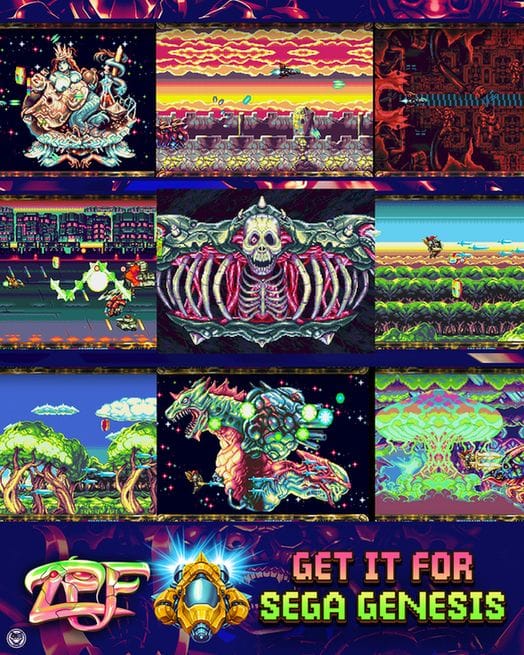
Mega Cat Studios has officially released ZPF, a new horizontal scrolling shooter developed specifically for the Sega Genesis hardware. The publisher announced the launch via social media, confirming that the title is available for purchase immediately.
The game is described by the studio as delivering "unstoppable retro-futuristic mayhem" and is designed to function on original 16-bit hardware. Unlike digital-only homebrew projects that might require flash carts or emulators to run, Mega Cat Studios specializes in manufacturing physical cartridges that slot directly into the console produced by Sega between 1988 and 1997.
The Modern Aftermarket
Mega Cat Studios has established itself as a primary driver in the commercial aftermarket scene. While the Sega Genesis has been technically discontinued for decades, a dedicated community of developers continues to write software for the Motorola 68000 CPU that powered the system. Mega Cat operates in this space not just as a developer but as a publisher for other indie teams, handling the complex logistics of manufacturing plastic shells, printed circuit boards, and paper manuals in an era where digital distribution is the standard.
The studio has previously released titles such as Coffee Crisis, a beat-em-up that saw a crossover release on modern platforms, and Log Jammers. Their business model relies on the fact that for a specific subset of collectors, playing a ROM file on a PC does not carry the same weight as sliding a physical cartridge into a console and hearing the plastic click.
A Legacy of Firepower
Releasing a horizontal shooter, or "shmup," on the Sega Genesis invites comparison to some of the most technically proficient games in the library. The console was famously marketed on the strength of its "Blast Processing," a nonsense marketing term that nonetheless pointed to the system's actual advantage over the Super Nintendo: a faster CPU clock speed. This architecture made the Genesis the preferred home for high-speed arcade ports and intense shooters.
ZPF enters a library that includes genre heavyweights like Thunder Force IV (known as Lightening Force in North America) and M.U.S.H.A.. These titles pushed the Yamaha YM2612 sound chip and the Video Display Processor to their absolute limits. Modern developers like the team behind ZPF often have the advantage of better documentation and development tools than were available in the 1990s. This allows current-year projects to squeeze performance out of the console that original developers might have missed due to tight deadlines or primitive compilers.
Technical Constraints
Developing for the Genesis in 2026 is an exercise in constraint management. The system can typically display only 64 colors on screen simultaneously from a palette of 512. This limitation often resulted in the dithering effects characteristic of the era. Modern homebrew developers often use advanced programming techniques to cycle palettes or layer sprites in ways that create the illusion of a higher color depth.
The release of ZPF suggests that the appetite for new media on obsolete hardware is not waning. While emulation offers convenience and preservation, projects like this prove that the physical hardware itself remains a viable, if niche, platform for active development.

Comments ()