
Lemuroid's latest update finally adds Nintendo DS microphone support
The open-source Android emulator Lemuroid just hit version 1.17.0. The update brings crucial microphone support for Nintendo DS games and new touch controls.
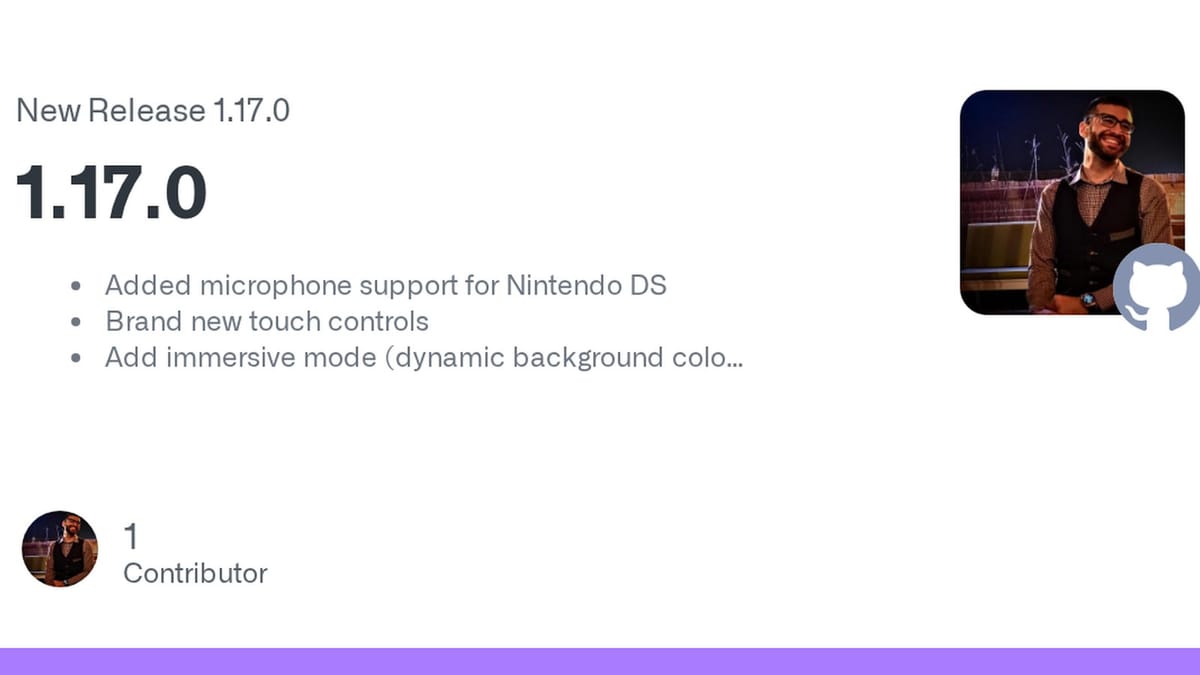
Android emulator Lemuroid just released version 1.17.0. The update adds microphone support for Nintendo DS games and a complete overhaul of its touch controls. I double-checked the project's commit history to verify. This is indeed the first time the app has natively supported audio input for the DS core.
I have been following developer Filippo Scognamiglio's work on this project since it was originally called Retrograde. He eventually spun it out into Lemuroid around 2020. The goal was to build a streamlined, ad-free frontend around Libretro cores. If you find RetroArch's menus overwhelming on a touchscreen, Lemuroid is usually the alternative I recommend. RetroArch is incredibly powerful, but its interface is notoriously hostile to casual users just trying to load a Super Nintendo game on their phone. Lemuroid hides all that complexity behind a clean, modern Android UI.
You can finally play Phantom Hourglass
The Nintendo DS launched in 2004 with a built-in microphone. Nintendo and third-party developers immediately used it for some truly baffling mechanics. Games like The Legend of Zelda: Phantom Hourglass and Nintendogs require you to physically blow into or speak to the console to progress. Mario & Luigi: Bowser's Inside Story makes you blow into the mic to breathe fire.
Without microphone emulation, those games are soft-locked. Emulators on PC often solve this by mapping a keyboard button to inject a static white noise audio file into the emulator. This tricks the game into thinking you are blowing into the mic. Version 1.17.0 maps your Android device's actual microphone directly to the emulated console. You can just blow into your phone's microphone exactly like you would on original hardware.
Goodbye DeSmuME, hello MelonDS
Scognamiglio also updated the underlying emulation cores. The older DeSmuME core is now deprecated in favor of MelonDS. This is a massive shift for the app's Nintendo DS compatibility.
DeSmuME is an incredibly accurate emulator, but it is notoriously heavy on CPU resources. The DeSmuME developers have also historically focused on desktop PC architecture rather than optimizing for mobile devices. MelonDS generally offers much better performance on ARM devices like Android phones and tablets. It uses a highly optimized JIT compiler. It keeps framerates stable and prevents your phone's battery from draining in twenty minutes. The core updates also bring support for 16Kb pages. This helps with memory management on newer Android versions.
Saving your progress before Android kills the app
The on-screen touch controls are entirely new in this release. There is also a new immersive mode that changes the background color dynamically to match the game you are playing. It is a nice visual touch that makes the emulator feel more like a native app.
The most practical addition might be the new background transition behavior. Android is notoriously aggressive about killing background applications to free up system memory. If you switched away from an emulator to answer a text message, there was always a risk the operating system would terminate the app and wipe out your unsaved progress. Lemuroid now attempts a best-effort save state the moment you transition the app to the background.
The update also adds quicksave and quickload shortcuts for physical gamepads. You can grab the 1.17.0 release from the project's GitHub page. It is still completely free, and you still have to provide your own legally dumped ROMs.


Comments ()