
Jotego Updates Yie Ar Kung-Fu Core to Fix Sprite Positioning
FPGA developer Jotego has released a fix for the Yie Ar Kung-Fu core, addressing sprite positioning errors in the classic Konami arcade title.
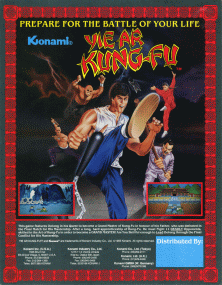
I'll never forget the first time I saw this game. Mr. B's Bar in the Detroit area. A dark and dingy bistro where our parents could have burger and a beer. They'd give us a hand full of quarters and send us off to the back smokey arcade. I never saw a game control like this. Even at a young age, I could tell it was the start of something great. Even though the sprites were small, it felt so much better than Kung Fu Master. This gave is still over $10 from Arcade Archives. That seems a bit much.
FPGA developer Jotego has released a targeted update for the JTCPS project that corrects a sprite positioning error in the Yie Ar Kung-Fu core. The fix was pushed to the repository on January 6, 2026, and resolves a tracked issue regarding visual accuracy in the classic Konami arcade title.
The update specifically addresses issue #1315 within the project's bug tracker. According to the official commit log, the patch "fixes sprite position" for the game identified as "yiear." This ensures that the on-screen character sprites align correctly with the underlying game logic.
The Importance of Pixel Precision
Yie Ar Kung-Fu debuted in 1985. It is widely considered the grandfather of the modern fighting game. While it lacks the complex combos of Street Fighter, it established the one-on-one format. In games of this vintage, visual clarity is paramount. A sprite drawn even a few pixels off can make the difference between a successful hit and a frustrating loss.
Jotego, known formally as JTCPS, specializes in recreating Capcom Play System hardware and other arcade boards via FPGA. This technology allows hardware like the MiSTer or Analogue Pocket to mimic the original arcade circuit boards at a hardware level. This approach usually results in lower latency and higher accuracy than software emulation.
Continuous Improvement
This update highlights the granular nature of FPGA development. It is not always about releasing support for a massive new system. Often, the work involves revisiting existing cores to polish details that were previously overlooked. The "yiear" core has been available for some time, yet the community continues to identify and resolve minor discrepancies.


Comments ()