
Hang-On and Alien Sector hit Jotego's FPGA cores
The latest update from Jotego brings Sega's Hang-On and the arcade shooter Alien Sector to MiSTer and Analogue Pocket, alongside major audio fixes.
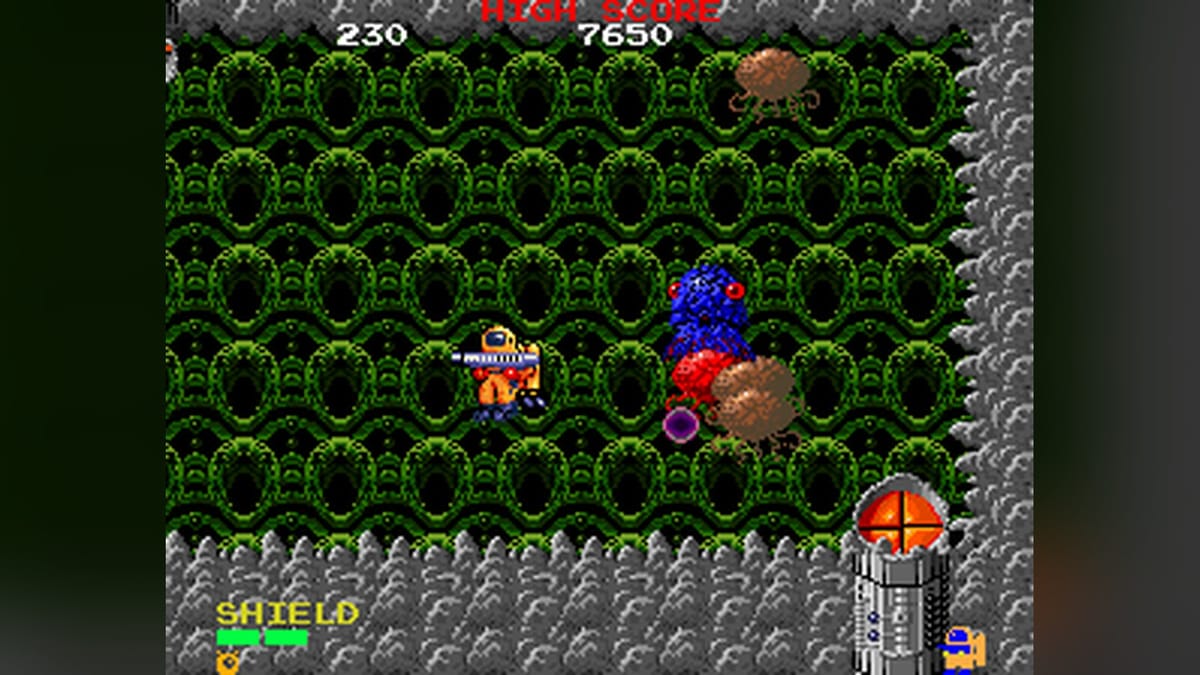
FPGA developer José Tejada, better known as Jotego, has updated his arcade cores to support Alien Sector and Sega's Hang-On. The new releases are available now for the MiSTer FPGA and Analogue Pocket platforms. MiSTer and the Pocket use Field Programmable Gate Arrays to recreate classic hardware at the logic level, offering cycle-accurate performance that avoids the latency of software emulation. This update brings a massive list of bug fixes, audio balance corrections, and control scheme overhauls to Jotego's existing library of arcade hardware.
The JTTHUNDR core now runs Alien Sector. Jotego initially abandoned the game after running into graphics problems, assuming the arcade software expected different hardware behavior, but community contributor Marc Emmerson stepped in and found the missing pieces. It's fully playable today. You'll just see a minor graphics glitch on the title screen. Meanwhile, Sega's 1985 motorcycle racer Hang-On is joining the JTHARIER core this week, courtesy of Chris Watson. Hang-On was a landmark release for Sega. It introduced the Super Scaler technology that defined their 1980s arcade output, and getting it running accurately on modern FPGA hardware is a major win for arcade preservation.
According to the Patreon update, several long-standing bugs are gone. The aspect ratio for PacMania is now 5:4 instead of 4:3, so Pac-Man doesn't look squashed anymore. Asturur fixed an intermittent graphics layer priority issue in Pac-Land, and added screen flipping support to Roc'n Rope and Gal's Panic. That last fix actually uncovered a missing DIP switch in the original arcade documentation. The team reported the omission back to the MAME project.
Lowering the volume
Audio balance received a lot of attention in this patch. GunSmoke and several other Capcom games had their baseline volume set high enough to be a genuine threat to anyone wearing headphones on an Analogue Pocket. The minimum volume has been dialed back to a safe level. Combat School got its FM and PSG sound balance corrected, and the relative PCM volume is louder. Konami games like Run'n Gun also had a simple but vital fix. The left and right stereo outputs were swapped, and they're now facing the correct directions.
Mapping left and right
Jotego overhauled the default gamepad mapping for 16 different arcade games that use directional action buttons. Titles like Double Dragon 2 and Renegade feature separate buttons for attacking left and attacking right. The new default scheme maps the Y button to left actions and the A button to right actions. The shoulder buttons handle turning. This layout applies to both the MiSTer and the Analogue Pocket, and it makes far more sense than the previous default.
Under the hood, a crash in level 4 of Thunder Hoop is gone. Fixing it revealed a discrepancy between the expected CPU speed and the actual speed the FPGA core was achieving. The timing is much tighter now. This resolves issues across multiple sensitive games. Super Street Fighter II Turbo on the CPS2 core is still running slightly too fast, but Jotego confirmed the CPU isn't the culprit, and the team is investigating other components.
Opening up Pocket development
With more contributors submitting code, Jotego is streamlining the development pipeline. The files required to compile cores for the Analogue Pocket are now available in his public GitHub repository. Previously, these files were only available on demand. Moving them to the public repository makes it much easier for new developers to build and test Pocket-specific features without waiting for access. The scan doubler, which broke in a previous update, has also been restored across all cores.
Comments ()