
Evercade Nexus screen defects traced to a factory fault
Blaze Entertainment visited its Shenzhen factory after Evercade Nexus buyers reported screens popping out, dead pixels, and control faults.
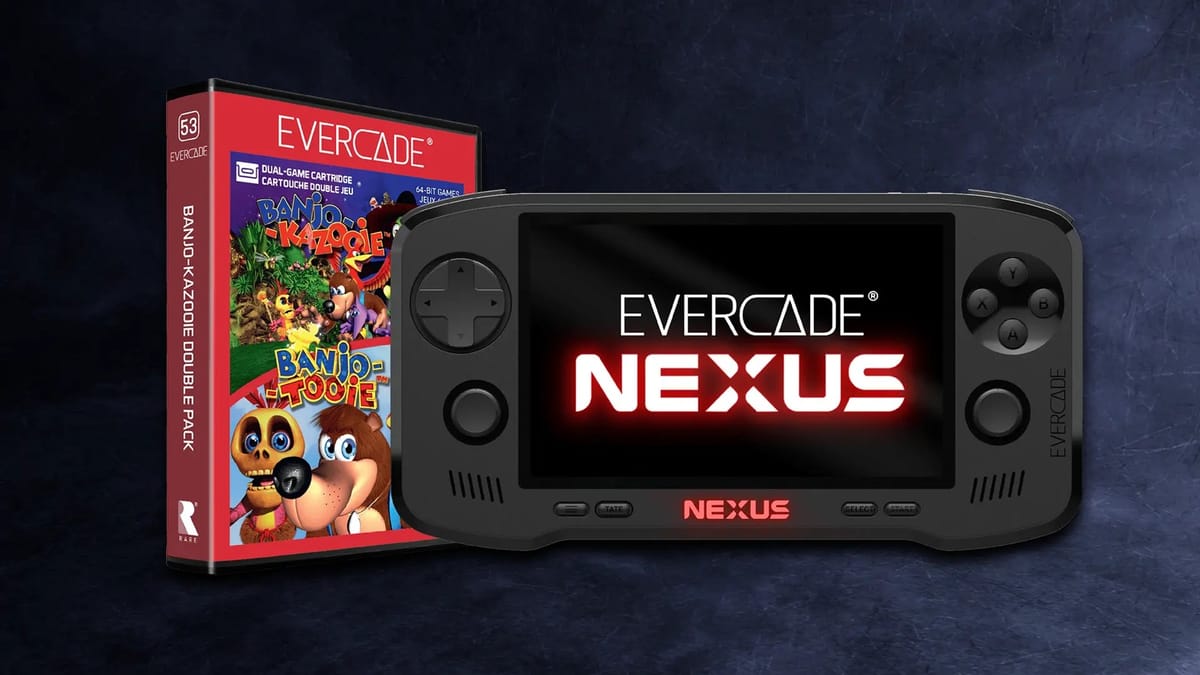
Blaze Entertainment has traced the protective screen glass problem on its newly launched Evercade Nexus handheld to a factory assembly defect. Writing from Shenzhen, China, where the team is inspecting assembly lines in person, CEO Andrew Byatt confirmed on the Evercade blog that the fault has been corrected on the production floor and replacement consoles are ready for affected buyers.
First announced in March, the Evercade Nexus launched worldwide on October 30 for $199.99 (£169.99 / €199.99). Within days of units arriving on doorsteps, buyers began posting photos and videos of protective screen glass lifting or popping out of the plastic shell, alongside complaints about dead pixels, faulty buttons, and malfunctioning analog sticks.
What went wrong in Shenzhen
Byatt flew to China alongside Blaze's design and development leads to audit the production and quality control lines directly after promising an investigation on November 5. The primary culprit behind the loose displays was a manufacturing fault in how the protective glass was fitted into the casing, which the factory has since rectified.
According to Byatt, the volume of consoles with bad glass fittings is much smaller than forum threads and Reddit polls have made it look, noting that "the majority of Nexus owners should not be worried." That's a standard reassurance during any hardware launch, though I'm curious whether Blaze's updated quality control checks will also bring down the dead pixel and control complaints that didn't get top billing in the Shenzhen report.
Replacements for sold-out limited editions
Blaze says it already has standard Evercade Nexus stock set aside to swap out defective units, and the company has also secured like-for-like replacements for its sold-out limited edition models. Collectors tend to panic when a numbered or special-edition shell needs a warranty return, since getting a plain black standard console back defeats the whole point of preordering early.
Having exact matches on hand is a smart move.
Growing pains at $200
Hardware growing pains hit harder when you're charging $200. Since launching the original budget-friendly Evercade handheld in May 2020, the UK-based company has built a comfortable niche for physical media collectors across the Evercade VS home console, the EXP handheld, and the Alpha bartop arcade cabinets, building a library of more than 80 licensed multi-game cartridges along the way.
The Nexus is Blaze's priciest portable to date, adding a 5.89-inch IPS display (at an unusual 840x512 resolution), Wi-Fi 6, and dual analog sticks built to handle 32-bit and 64-bit games like its bundled Banjo-Kazooie Double Pack or the DOOM Edition. Paying two hundred bucks for an officially licensed cartridge machine is an easy enough sell when the hardware feels solid, because open-source emulation handhelds already pack sharper screens for less money. A screen popping out of the bezel right as you boot up Banjo-Tooie doesn't do that pitch any favors, so getting factory fixes and like-for-like swaps moving before the holiday rush was the only play Blaze really had.


Comments ()