
Jotego releases new JTHARIER FPGA core for Space Harrier and Enduro Racer
The latest update brings Sega's classic Super Scaler hardware to MiSTer and Analogue Pocket, alongside CPU timing fixes for Capcom CPS arcade boards.
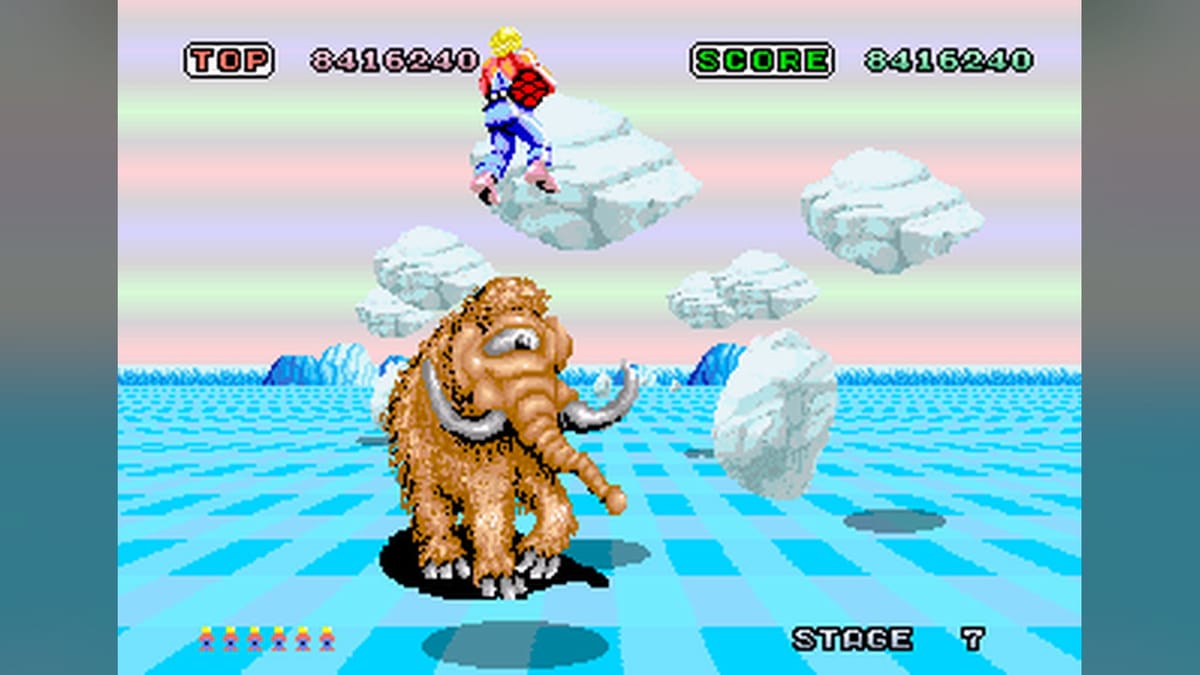
FPGA developer Jotego has released an early update introducing the JTHARIER core, bringing Sega's classic arcade hardware to the MiSTer, Analogue Pocket, and SiDi128. Developed in close collaboration with Chris Watson and finalized by Jotego, the core currently supports two major Sega releases: Space Harrier and Enduro Racer.
Space Harrier is a landmark arcade title. Debuting in arcades in December 1985, it utilized Sega's Super Scaler technology to push fast pseudo-3D visuals using a dual-Motorola 68000 setup alongside a Zilog Z80 sound processor and custom Yamaha FM chips. Recreating this architecture at the silicon level on modern FPGA boards is a massive technical undertaking. The original hardware delivered fluid perspective shifts and blistering sprite effects that home consoles of the era simply could not match.
According to the release notes on Jotego's Patreon, the core is now well aligned with both the original hardware and the JT framework.
Not exactly plug and play
The arcade cabinets for both games relied on specialized analog controls, which means setting them up at home isn't exactly a seamless process.
The Space Harrier core includes DIP switch options to handle the original flight stick. You can toggle the stick direction for airplane-style inverted controls or standard up-is-up movement. There is also a d-pad toggle that activates a console mode. This keeps the character in their current position rather than gravitating back to the center of the screen, making digital controllers viable. Finally, a "V Glyph Fix" patches a visual bug present in the original arcade ROM. It defaults to off, but you'll probably want to enable it.
Enduro Racer is more complicated. The 1986 arcade cabinet used a physical dirt bike frame that players leaned side to side. To replicate this, the core requires a gamepad with three analog axes. The left stick handles steering and leaning, while the right stick manages acceleration and braking.
There is no digital d-pad support for Enduro Racer yet. If you are playing on an Analogue Pocket, you will need to plug it into the dock and connect a dual-stick controller to play. I am curious to see how the Enduro Racer mapping evolves, but for now, trying to map a hydraulic dirt bike to a standard d-pad is a puzzle with no good answer.
Capcom CPU speed fixes
Alongside the Sega releases, the Jotego GitHub repository has been updated with improvements for Capcom arcade boards. The CPS1, CPS1.5, and CPS2 cores now use the same SDRAM contention management as the rest of the JT framework.
These early Capcom cores bypass some standard framework features to handle low-level tasks, which meant they were falling behind newer releases in certain areas. The updated memory management translates directly to more accurate CPU speeds across the board. If you play a lot of Street Fighter II or Alien vs. Predator on your MiSTer, the timing is now closer to the original hardware.


Comments ()