
Jotego's MiSTer CPS3 core just got support for Kai revisions
The latest Patreon update from the prolific FPGA developer adds community-modified arcade ROMs to the Capcom Play System 3 core.
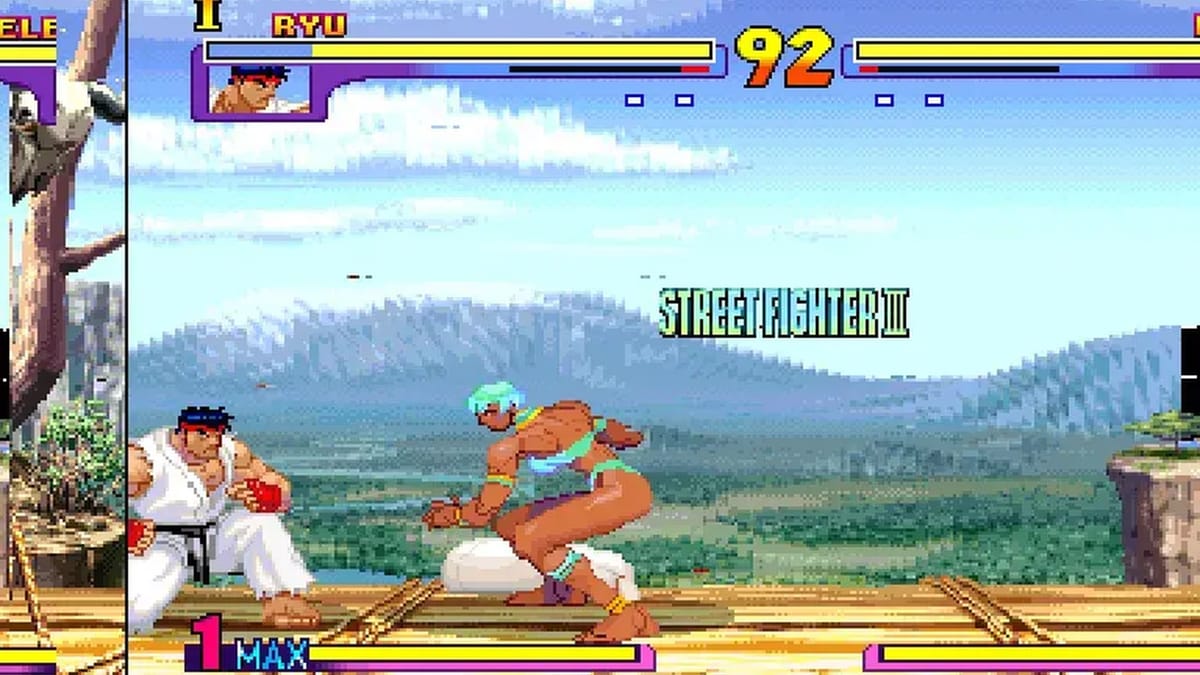
MiSTer FPGA developer Jotego has released a new update for the Capcom Play System 3 core that adds support for several "Kai" game revisions. This specific update expands the library of playable titles beyond the official Capcom releases to include popular community modifications.
The Capcom Play System 3 is a notoriously complex piece of arcade hardware. Released in 1996, it powered some of the most visually impressive 2D games ever made, including Red Earth, JoJo's Bizarre Adventure, and the Street Fighter III trilogy. The hardware was designed to push massive, fluidly animated sprites that earlier boards simply could not handle. Elena's idle animation in Street Fighter III has more frames than some entire characters in older fighting games.
The original arcade boards relied on a convoluted system involving a CD-ROM drive and a security cartridge equipped with a suicide battery. If the battery died, the decryption keys vanished, and the game became a paperweight. Capcom also used proprietary SIMM modules to load the game data into memory before boot. Getting this entire architecture running accurately on the MiSTer's Cyclone V FPGA chip took years of reverse engineering. Jotego had to map out custom graphics chips and figure out how to stream data exactly like the original CD drive did.
More than just 3rd Strike
The new update focuses on Kai versions. In the arcade community, a Kai release usually refers to a modified ROM that tweaks gameplay, unlocks boss characters, or fixes bugs. Street Fighter III: 3rd Strike Kai is the most famous example. It allows players to select the boss character Gill without entering complex codes and introduces new practice options. There are also Kai variants for JoJo's Bizarre Adventure that rebalance the fighting mechanics.
Supporting these modified ROMs requires adjustments to the core's memory handling. The FPGA needs to know exactly how to load and execute the altered code without breaking the delicate timing of the original hardware simulation. Jotego updated the core files to properly recognize and boot these specific variants.
From MiSTer to the AES+
Jotego is best known for his open-source MiSTer work, but his hardware expertise is bleeding into official commercial products. He recently helped design the custom ASIC chip for the upcoming Neo Geo AES+ console.
I have been following the FPGA scene for a long time, and seeing a community developer get tapped to build the silicon for an official SNK product is incredibly cool. The AES+ needs to perfectly replicate the original 16-bit hardware on a modern chip. Jotego already spent years mapping out the Neo Geo architecture for his MiSTer core. He understands the exact timing quirks of the Motorola 68000 processor and the custom Z80 audio setup. Translating that knowledge into a physical ASIC means the new console should avoid the emulation lag that plagued previous SNK plug-and-play devices.
Comments ()