
The Mega95 handheld is going back to the factory for fixes
Hyperkin has rejected the latest hardware samples for its portable Sega Genesis, pushing the Mega95's release date further into the future.
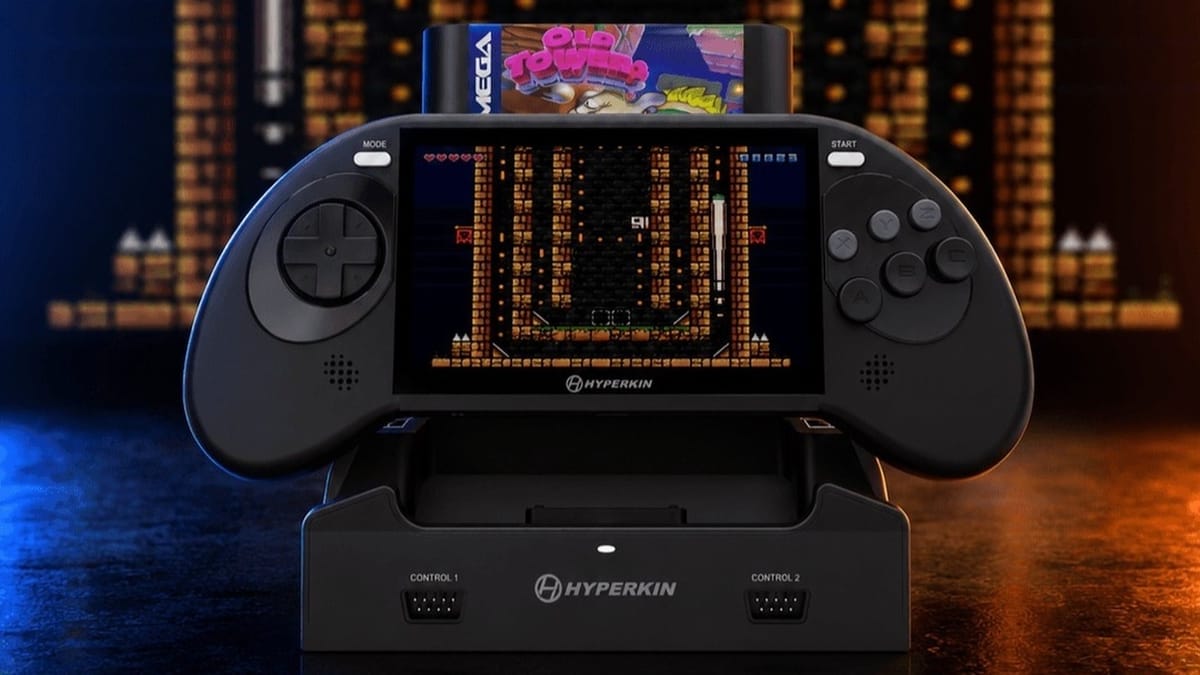
Hyperkin has delayed the Mega95 portable Sega Genesis handheld after rejecting the latest batch of hardware samples from its manufacturing partner. The company sent the prototypes back to the factory to correct major issues, pausing plans to distribute the units to local testers.
Hyperkin told followers on Facebook that the tooled samples simply did not meet the standards required to move forward. Rather than rushing the product to show progress, the hardware team opted to halt the testing phase until the factory can supply units that actually represent the final vision. The company has been relatively quiet on X and other platforms recently, which this factory setback explains. The Mega95 remains in active development, but there is no updated release window.
A modern Sega Nomad
The Mega95 was originally unveiled at CES 2024. It is essentially a modern take on the Sega Nomad, the battery-hungry 1995 handheld that let players take their Genesis cartridges on the road. The original Nomad was notorious for draining six AA batteries in roughly two hours. Hyperkin's version includes a modern rechargeable battery and a five-inch display. It also has a hardware toggle switch to swap between the original 4:3 aspect ratio and a stretched 16:9 widescreen mode.
The package includes a USB-C dock for television output, supporting extra controllers for couch multiplayer. Playing original 16-bit cartridges on a portable device requires precise pin connectors and reliable voltage regulation. If the tooling on the plastic shell or the motherboard alignment is off by a fraction of a millimeter, games will crash the moment the console is bumped.
In hardware manufacturing, receiving "tooled samples" means the factory has actually cut the metal molds for the plastic shell and produced a physical test run. If those samples are flawed, the buttons might stick or the cartridge slot might grip the games too tightly. Fixing these issues requires modifying the expensive molds, which naturally adds months to the production timeline.
Hyperkin explicitly stated they would rather take the extra time now than bring a product to market that falls short of expectations.
It is a frustrating wait, especially since the community is eager for a dedicated Genesis handheld that does not rely on software emulation ROMs. But rejecting sub-par factory samples is exactly what a hardware developer should be doing at this stage.
Building on the SupaBoy
Hyperkin has been in the peripheral business since 2006. The Los Angeles company built its reputation on the RetroN series of multi-platform clone consoles and the SupaBoy, a handheld designed for Super Nintendo cartridges. The RetroN 5 was a massive hit in 2014 for allowing players to output NES, SNES, and Genesis games to modern televisions via HDMI.
The SupaBoy went through multiple hardware revisions over the years to fix audio buzzing and screen issues. It seems Hyperkin is trying to avoid that iterative repair process with the Mega95 by getting the initial launch right. The factory will need to produce a flawless sample before the handheld can finally move into the hands of local testers.
Source: x.com

Comments ()