
Hideki Sato, the engineer who designed every Sega console, has died at 77
From the SG-1000 to the Dreamcast, Sato's engineering decisions defined Sega's hardware legacy. He passed away on February 13.
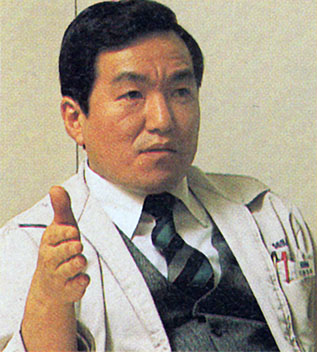
Hideki Sato, the former Sega president and lead architect behind the company's entire run of home consoles, passed away on February 13, 2026, at the age of 77. His death was announced by the Japanese gaming history publication Beep21.
Sato joined Sega in 1971, back when it was still primarily a U.S.-owned entity focused on jukeboxes and slot machines. He stayed long enough to see the company rise to dominate the 16-bit market and eventually exit the hardware business entirely. If you have ever played a Sega console, from the obscure SG-1000 to the beloved Dreamcast, you have used a machine built on Sato's blueprints.
Sato's hardware designs spanned nearly two decades of gaming history.
Adapting the arcade
Sato's most significant contribution to the industry was the Mega Drive (Genesis). In the late 1980s, Nintendo held a stranglehold on the home market with the NES. Sato's strategy was to bring Sega's arcade dominance into the living room. He adapted the company's System 16 arcade board, specifically a prototype designated MK-1601, for home use.
This required the Motorola MC68000 processor, a powerful chip that was far too expensive for a consumer toy at the time. In a move that has become part of industry folklore, Sato negotiated with Signetics (a Motorola manufacturer) by bluffing about the volume Sega could move.
"If you agree to sell it to us at that price, we'll buy 300,000 right now."
The gamble worked. Sega secured the chips at roughly 10% of their market price. This allowed the Genesis to launch with a two-year head start on the Super Nintendo, establishing the console war that defined the early 90s. Sato also insisted on the console's aesthetic, choosing the sleek black finish and gold lettering to mimic high-end audio equipment, despite the gold paint being expensive to produce.
Engineering the Saturn and Dreamcast
Sega Saturn, released in 1994, was originally designed around sprite-based 2D graphics. When details of Sony's PlayStation emerged, Sato and his team had to pivot. They added a second SH-2 processor to handle polygons, a decision that gave the Saturn raw power but made it notoriously difficult for developers to program.
He followed this with the Dreamcast in 1998, a machine that corrected many of the Saturn's architectural missteps. It was an elegant, developer-friendly system that pioneered online console gaming. It was also the last console Sato, and Sega, would ever make.
The difficult years
Following the death of Sega chairman Isao Okawa in 2001, Sato stepped out of the engineering lab and into the role of company president. He led Sega during its most painful transition: the withdrawal from hardware manufacturing. The "Father of Sega Hardware" was ultimately the one who had to shut down the assembly lines.
His presidency (2001 to 2003) was turbulent. He managed the company through four consecutive years of losses and fought off takeover attempts from Electronic Arts, Microsoft, and Namco before negotiating the merger with Sammy Corporation. He eventually resigned in 2003, handing the reins to Sammy's Hajime Satomi.
Sato's passing comes just months after the death of Sega co-founder David Rosen in December 2025. The generation of creators who built Sega from a coin-op importer into a global superpower is leaving us, but the hardware they built is still running in living rooms around the world.


Comments ()